


«You have no imagination, no heart, no balls, no sap.»
Stéphane (Daniel Auteuil) is a violin maker. He works for his friend Maxime (André Dussollier), who leaves Stéphane and his apprentice alone to touch the violins. Maxime takes care of running the shop, selling instruments, unearthing rare pieces and finding customers, accompanying them «like patients». This is how he meets the talented young violinist Camille Kessler (Emmanuelle Béart). Maxime leaves his wife. He tells his friend Stéphane, who, as usual, remains indifferent.
But he's not so indifferent to Camille's beauty; «here's a man who's been touched by grace», he even says of his friend. Camille is not indifferent to Stéphane's elusive, discreet personality. But when a heart is in winter, it stays in winter. And if she ever had the strength to get out of it, it would be too late to taste the joys of spring, which will have already passed. Gone.
Sautet and his literary cinema
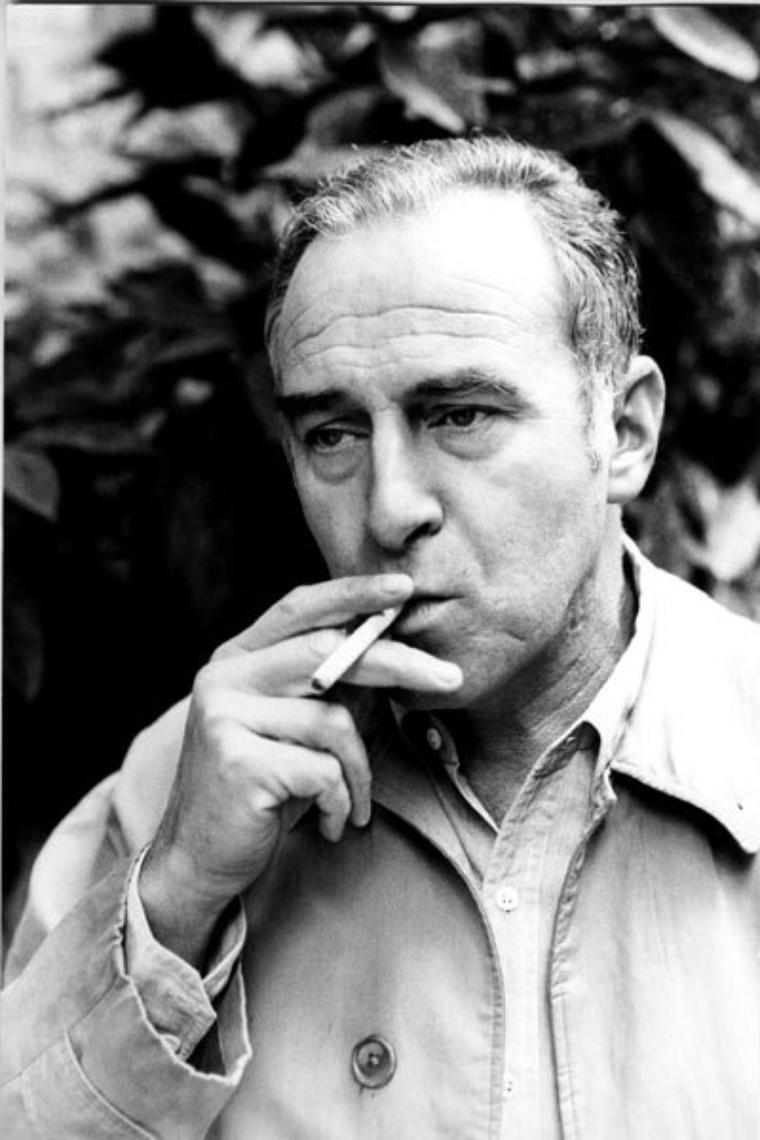
Claude Sautet is true French cinema. At least the French way of yesteryear. Drawing its lifeblood from literature, great French cinema reads like a novel, but in images, sound and music. Stéphane's introductory narration is reminiscent of the opening of a literary work. A heart in winter is also inspired by a 19th-century Russian Romantic novelth century, A hero of our time (1840) by Lemontov. Sautet adapts it very freely, updating it as he sees fit, so that Stéphane remains a true anti-hero of «our own time».
Sautet's cinema is above all literary in its lines. Fine, precise in their hesitations, highly written without being theatrical. They rarely say everything a character wants to express, yet they say so much, so long. It's all about suggestion. Thanks to the perfect use of suspension points. In a novel, these reflect either the mediocrity of the author, who no longer knows what to get his characters to say, or his genius, who lets the most intimate thoughts shine through in these three little dots.
«I feel like... I feel like... It's true... It's there. All the time.»
Brewery, wine, cigarettes and sonatas
A heart in winter, A French film, especially a Parisian one. The brasserie where the protagonists meet is sufficient in itself to bring the charm of Paris to the screen. In fact, it was recreated in the studio. Daniel Auteuil must have thought of it, with a touch of nostalgia, on the set of The Belle Epoque (2019). This brasserie is a place of movement, of life, where we drink red wine, eat simple meals with tablecloths and cloth napkins, have coffee at all hours, and smoke.
A Parisian film that's no less musical for that. If the Parisian brasserie is the setting in which the plot takes shape, it's the music that gives rhythm to the story. The Ravel sonatas that Camille prepares for her recording don't let the script out of their sight. But they don't steal the show. The violin is calm in the appeasement of the characters, in the flow of their daily, habitual lives. But the anguish of the pizzas and the even more dramatic intervention of the piano announce the passion ready to erupt. When the crisis comes, the stage is silent. All that's left is for the actors to seize the script and transcend it with their acting.
Béart and Auteuil
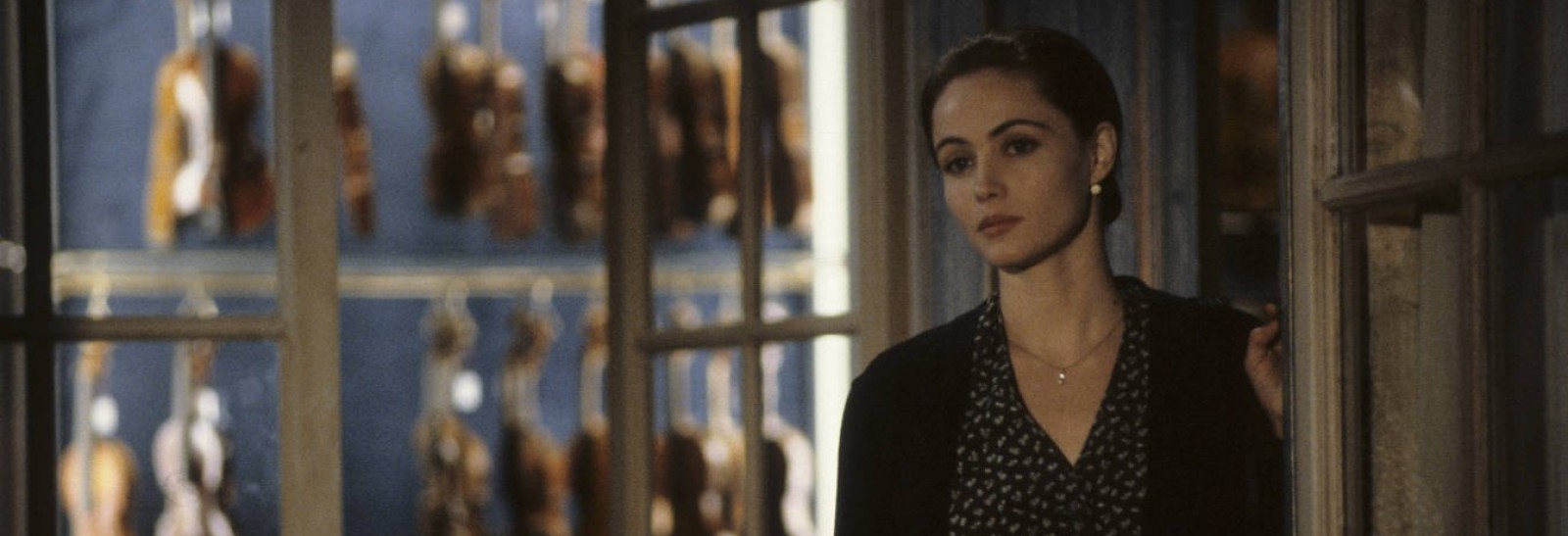
André Dussollier has won the César for Best Supporting Actor, playing Maxime. He undoubtedly deserved it in view of the film, whose director won the César for Best Director. But it's Emmanuelle Béart and Daniel Auteuil who dominate the screen. She's not yet thirty. She's pure. Hard and cold. Her blue eyes speak louder than her lips. A look that makes her supple and warm when she stares into Stéphane's eyes. But he's evasive. Then absent. Then he returns, his face petrified of a suffering he doesn't show, but which nevertheless imposes itself. Staring into space, he thinks of all he's missing. The love he doesn't know how to give and doesn't even know how to receive.
To fill the gaps, Stéphane goes to work. He sands, glues and assembles with a precision supported on screen by the sounds of the noble material and the close-ups of the luthier's handiwork. Yet Stéphane manages to experience a love that is sometimes paternal with a little boy he's always thinking about, Vincent, and with his apprentice luthier, Brice; sometimes filial with his old violin master, whom he visits regularly. It's as if Stéphane hasn't grown up, remaining the lonely teenager he briefly talks about himself, who loves his father like a kid; or if he's grown old too quickly, nurturing for these two youngsters an affection of an old master, father or grandfather in his turn.

A heart in winter
Perhaps it's not even a question of age, but simply of being out of step. Stéphane is unable to really love Camille, even though he loves her in his heart, because he's always out of step with «the scary reality». Stéphane is afraid of life. He's afraid of the present. And the passion between him and Camille is real, carnal, present. Everything that is impossible for a heart that freezes alone in winter. And stays alone. The film's final shot sees Stéphane sitting motionless in the brasserie, unhappy and resigned, filmed from the outside: the reflection shows life moving ahead, and life moving behind him in the café.
Camille could have been that moment of life to seize. She humiliated herself by declaring her love for him in scandal. He refused, even though he burned with envy for her. Then, when he made her understand what she'd already understood - that he loved her - it was too late. Misalignment. Never in time for love. It's either too early or too late. While the world turns to spring, Stéphane remains in his winter; I remain in mine. A heart in winter leaves me in tears.
«I have something inside me that doesn't live. I can't make it... I've been late for so long.»
Write to the author: loris.musumeci@leregardlibre.com
Photo credit: © Studiocanal
You have just read an open-access article from the file «Love in the movies». Debates, analysis, cultural news: subscribe to support us and get access to all our content!
 French
  German
  English