

Cinema Wednesdays - Loris S. Musumeci
This year's FIFF (Festival International de Films de Fribourg) took a special form: the films were programmed, but could be viewed online. No need to tell you why. Needless to say, despite everything the organizers have put in place, no home screen can replace the big screen. Even if the films are good, and often very good indeed. The FIFF never disappoints. Known for selecting great films from all over the world, it allows us to discover faraway regions and explore cultures as rich as they are exotic, as well as offering the experience of a cinema that is particularly attentive to form, that speaks from elsewhere, that speaks within.
A cinema experience in the light of Sudan
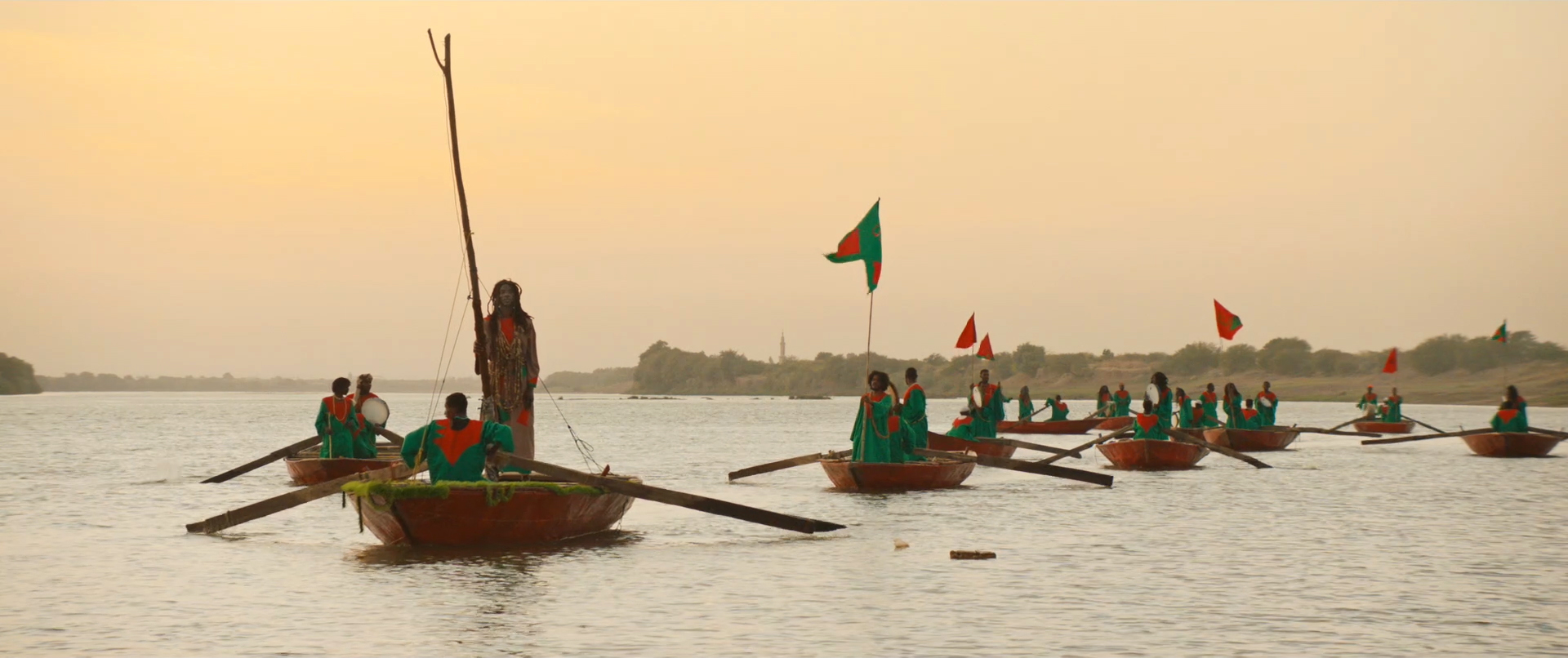
You Will Die at 20 by Sudanese director Amjad Abu Alala, winner of this year's FIFF Grand Prix, speaks from elsewhere, saying something universal. It speaks for itself, through its images. Among the great vintages that the FIFF reserves for us at each edition, this is a very great vintage. A sublime work, both in its subject matter and in its form. In fact, especially in its form. Not that the content is mediocre, but it's really the camera work that stands out more than anything else.
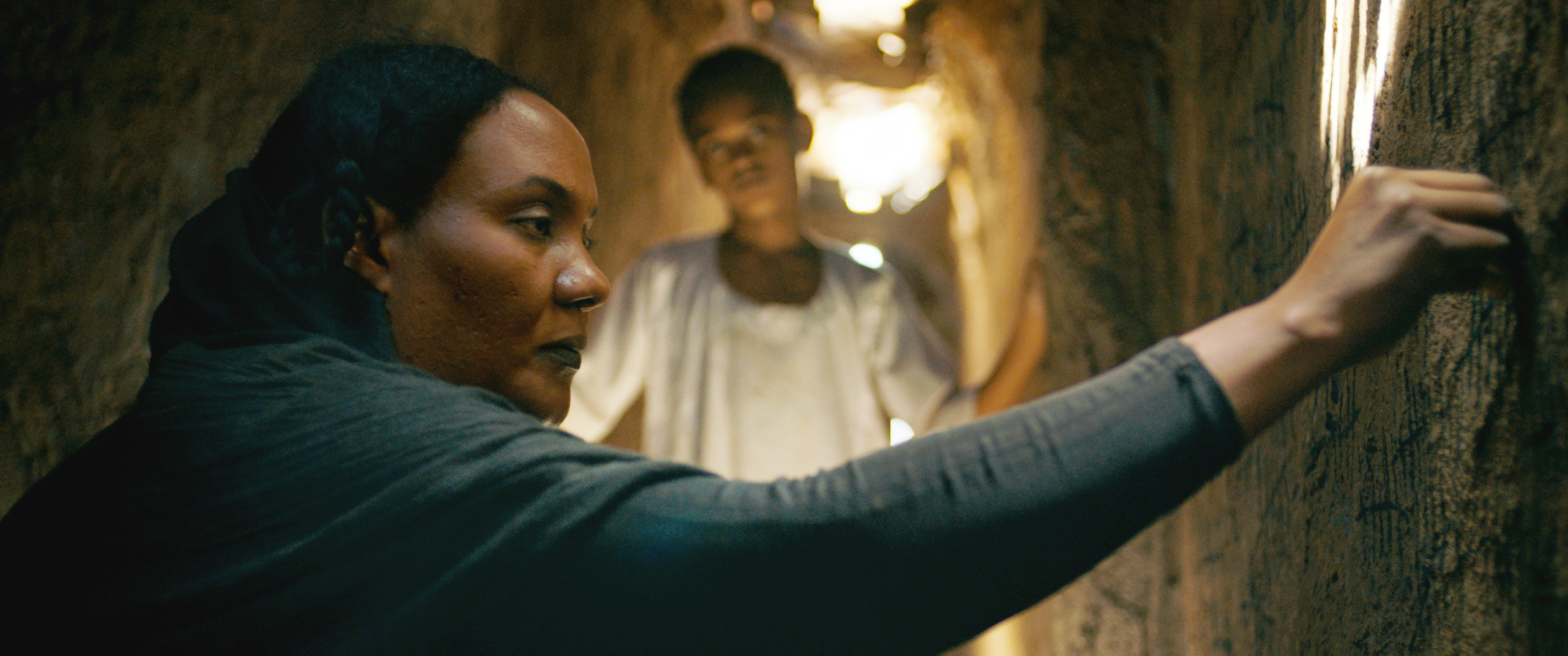
Photography fascinates first and foremost with its emphasis on light. The light outside is warm and serious, yet the sky is clear blue, fresh and light. In the interiors, shadow dominates, leaving the viewer's senses with a feeling of unbearable reclusion, or of tender, reassuring protection from the world and its dangers. When beams of light penetrate a particular room in the main character's house, the dust visible in these beams rises and hovers in the air, plunging the scene into a dreamlike, mystical atmosphere.
Light, again, that gives the features of bodies a sensual precision, that highlights the colors of skin. It also highlights the colors of every element in the setting: from the blue sky to the dry beige of the clay, from the burgundy of a shop's stalls to the red of a vegetable dish, from the cheerful variegation of the women's clothes - except when they're dressed in black, in mourning - to the pure, resplendent white of the men's clothes.
Last but not least, the film's cinematography stands out for its elegant and highly significant mastery of alternating sharp and blurred images. All this under the director's loving, yet uncompromising gaze. In cinema, form is not only what is presented to the eye, but also to the ear. While the music remains very discreet, the soundtrack of this work concentrates above all on singing, in particular Koranic recitation, as well as on the musical effect it gives to its noises, giving pride of place to the sound of the beating heart. You Will Die at 20 immerses us in a totally gripping and sensitive atmosphere. A true cinematic experience. A cinema that is nothing less than beautiful.
A cinema experience with Muzamil
When a work is truly beautiful in form, it is usually also beautiful in content. The beauty of substance is called intelligence. A sublime, intelligent work. No grand theories, no thesis films either. The film's intelligence lies in a script that tells a simple story. The story of a young boy, Muzamil, who has been told he will die on his twentieth birthday. According to a local tradition, Muzamil's mother takes him to a sheik just after his birth for a blessing.
No sooner had the blessing been pronounced than one of the dervishes, dancing according to the rite around the square where the sheik receives the faithful, fell to the ground as he pronounced the number twenty. For the baby's mother, it's clear. God has spoken. Her son would live to be twenty. She overprotects him during his childhood, until the village imam insists that the child should leave home, socialize with other children, learn to read and know the Koran. «Isn't a life worth being beautiful just because it only has to last twenty years?» It's the whole question of human dignity that the imam puts forward.
Muzamil is growing up, a handsome young man approaching his twenties. He confines himself to a pure, pious life. He is the only boy in the village to have passed his «recitation» at the mosque: he learns the Koran by heart. Devoted, serious, yet always serious because he knows he doesn't have long to live. He makes love with a young girl without kissing - or just a little for the road... - or caressing, in total modesty, despite his burning body and heart. After all, they'll never be able to marry: death is approaching. What's the point of commitment? Why risk sin? Love is impossible.
The encounter with an old outsider who lives in the «English house» away from the rest of the villagers has to happen. The two meet because of what is considered sinful. The owner of the small business for which the young man works asks him to deliver «something», camouflaged in a bag, to the man in the English house. Muzamil discovers that this something is alcohol. He is horrified. And yet, a deep bond develops between the two men. Through the objects in the house he lives in, the old outsider introduces him to the dream of the West. He introduces him to photographs of women. He introduces him to cinema. And freedom. It's up to Muzamil to seize it. Death or no death to come. Muzamil to live at last. Sin or no sin. Without denying his faith, his background, his village or his family, Muzamil reaches his twentieth birthday and gets a taste of life. Death threatens, but life carries him on.
You Will Die at 20 is dedicated to those who gave their lives for the Sudanese revolution.

Write to the author: loris.musumeci@leregardlibre.com
Photo credit: © Trigon-Film
 French
  German
  English