




«La vita è bella»
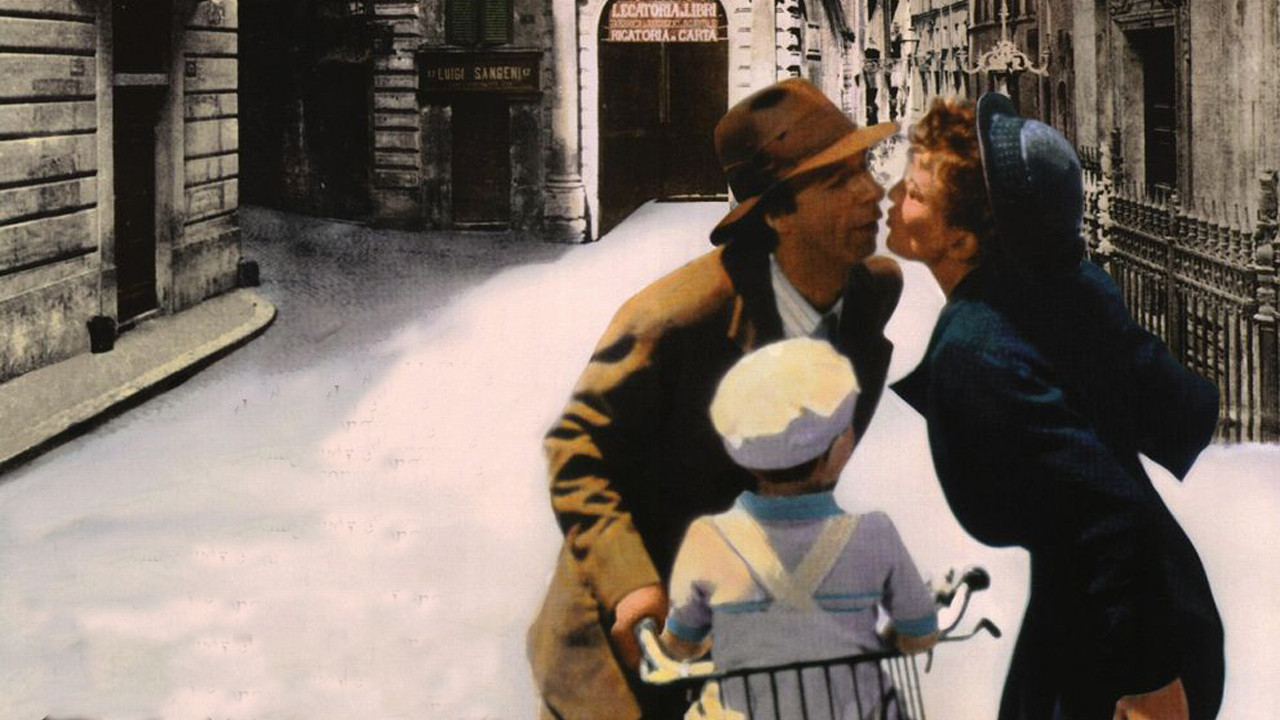
«Opening. Fog. Sound of wind.
VOICE OVER: This story is simple, yet it's not easy to tell. Like a tale, it's painful, and like a tale it's full of wonder and happiness.»
Life is beautiful. Roberto Benigni's 1997 cinematic masterpiece could hardly have been better titled. It's true that life, like this story, is full of pain, but it's also full of wonder and happiness. Life is beautiful. However, this ambitious title might seem paradoxical given the tragic context in which the film is set. How can one sing this hymn to life in the midst of such a dramatic period for humanity as the Shoah? Benigni achieves this in a way that is both exceptional and simple: he speaks to the heart, treating this drama with gentle, poetic tragicomedy, between tears and smiles.
In 1938, Guido Orefice, a cheerful young Tuscan, leaves the countryside with his poet friend, Ferruccio, to work in the city of Arezzo. The two stay with Guido's uncle Eliseo, manager of the Grand Hotel (where Guido later works as a waiter). Once in town, Guido falls madly in love with a charming little schoolmistress, Dora. She too feels a certain sympathy for him, but unfortunately she's already promised in marriage to Rodolfo, an unsympathetic fascist bureaucrat. So, on the day of the engagement at the Grand Hotel, Dora decides to escape with Guido.
He then ’abducts« her at the great moment of the ceremony, at the cake, after which the two lovebirds take refuge in Guido's home, and from this love Giosuè is born. After an ellipse of five years, the Orefice family appears in perfect serenity. However, the political and social situation rapidly deteriorates, as racial laws become more numerous and severe, especially for Jews, and Guido is a Jew. The little family remains unaffected by this difficult context, until the day of little Giosuè's fifth birthday, when he, his father and great-uncle Eliseo are captured and deported.
Dora, not being Jewish, was not arrested, but demanded to be deported with her family. When they arrived at the concentration camp, Eliseo was sent with the old men, Dora with the women, but Giosuè and Guido remained together. Guido, wanting to protect his son's infantile innocence from the horror of the tragic reality in which they find themselves, makes him believe that it's all a game, and that the first to reach a thousand points wins a real tank...
The film is obviously «divided» into two parts: the first tells Guido's happy, romantic story and the serene family life of the Orefices, while the second bears witness to the protagonist's real mission to save his son from the horrors of the Holocaust. You might think, then, that from the «first» to the «second» part there's a shift from comedy to tragedy, but that's not the case. And therein lies the heart of the film's understanding. Admittedly, the context is highly dramatic (and the film shows this at every turn, suggesting the horror but never exposing it), but the story is not sad, in fact it's profoundly funny. happy.
And it is the «unconditional» love (even the horror of the Holocaust is not a condition) of a father for his son that gives the film all its Happiness and Beauty. Indeed, what could be more beautiful than complete self-sacrifice? Guido gives his life for his son, to save him, to save Hope. There's a certain «madness of love» here, a Christ-like love. One of Christ's most beautiful sayings comes to mind: «Greater love hath no man than this, that a man lay down his life for his friends. (Jn 15:13)
In fact, Life is beautiful is nothing less than a testimony to the omnipotence of Love, which resists and strengthens even in an extermination camp, and as Benigni said in concluding an interview during filming: «The film is a hymn to the fact that we are poetically condemned to love life: because life is beautiful.»
You'll also like

 French
  German
  English
Leave a comment