




«One Piece»: good adaptation, bad series
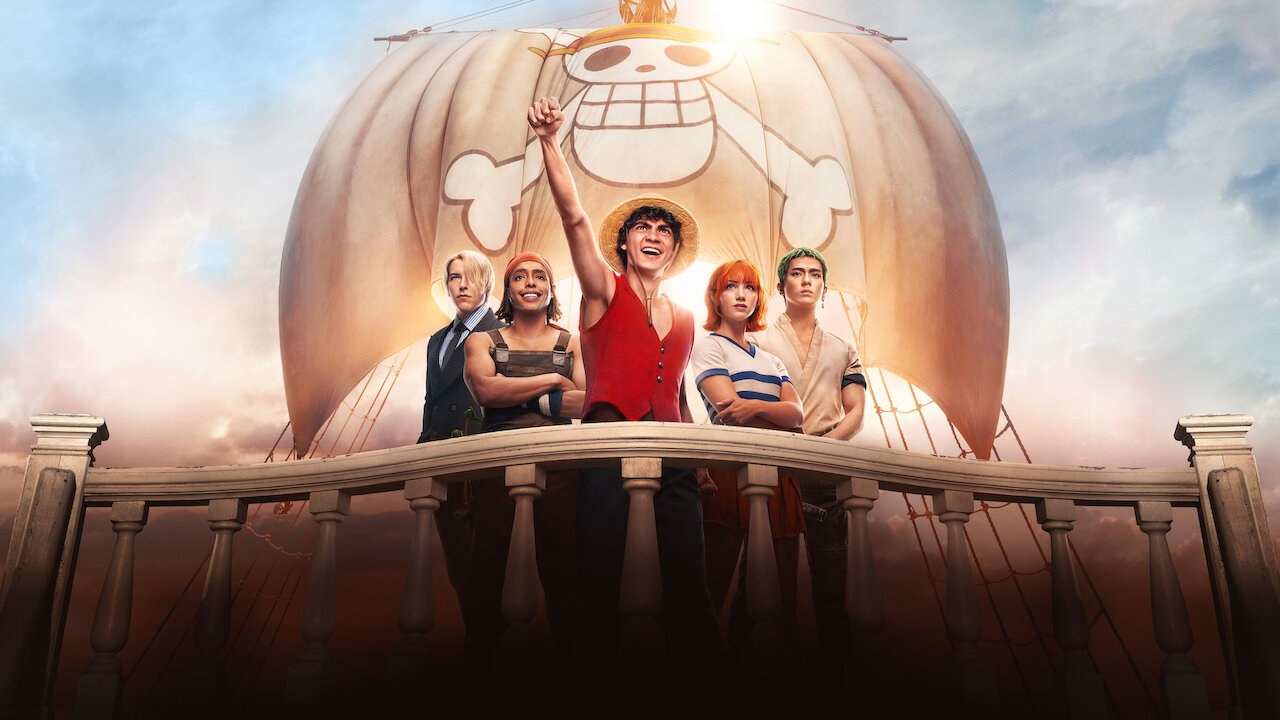
«One piece», the adaptation of the most famous manga in history © Netflix
When Eiichirō Oda, author of the best-selling manga in history, announced plans to adapt his work as a live action, and on Netflix, its readership was up in arms. Since then, the first images have reconciled some of them. But is faithfulness to the source material enough?
Twenty years ago, Gold Roger, the greatest of pirates, was arrested and killed by the navy. Before he perished, he left the world a message of hope in the form of a treasure to be discovered: the one piece. Whoever gets his hands on it will be crowned King of the Pirates. An unprecedented wave of piracy ensues, including Luffy, a young boy made elastic after ingesting a demon fruit that confers powers to those who consume it. But he and his crew aren't the only ones looking for the treasure. And the navy is watching.
From the summary alone, it seemed impossible to adapt a manga such as One Piece. Add to this the zany characters, grotesque sets, numerous powers and other special effects. In fact, these were some of the elements that fans had been complaining about: how could they possibly do justice, in pictures, to the work they'd been following for over twenty years?
The second black mark on this adaptation was, of course, the platform that was to produce it: Netflix. While everyone is familiar with the streaming, more and more people are also realizing that its original creations are often failures. Not to mention the fact that the channel's recent attempts at adaptation have been disastrous (Death Note and Cowboy Bebop in mind). And yet, it's clear that the financial and artistic resources were put into the series, and that this adaptation is not the taskmaster it was made out to be.
Does a good adaptation have to respect everything?
The manga One Piece spanning more than twenty years, and with its multiple, complex plots, the simple idea of adapting the first arc of the series (i.e. some 8 volumes) was a bold one. The general context, the main characters and a host of enemies all had to be transcribed. In this respect, the choice made by Netflix was probably the wisest: cut out everything superfluous. Only those passages in which Luffy meets the members of his crew were retained, and this works very well indeed. On the other hand, what the series gains in fluidity, it loses in character depth. The relationship between the heroes, central to the original work, is so superficial here that it's almost suggested. They become friends as soon as they meet, swear allegiance to each other in five minutes, and seem to have known each other forever.
The problem lies in a simple strategic choice on the part of the platform: to fit the first season into just eight episodes. While the overall cost of the series makes this choice understandable (around 18 million per episode, one of the most expensive series ever created), it's obvious that even two more episodes would have given One Piece the full extent of its ambition. But another problem spoils the exercise.
Artistry spoiled by technique
Betting on a casting and plausible, Netflix has secured one of the vital credibility aspects of any adaptation; by banking on a casting As well as being virtually unknown, the platform has also ensured that it won't use up all its budget on salaries. And the savings have not been wasted: the series' artistic direction is truly respected, and a pleasure to see in today's all-digital world. Most of the sets have been reconstructed to scale, the costumes are (almost all) faithful, and the locations resemble those imagined by Eiichirō Oda. In fact, Oda participated in the entire creative process, which explains the closeness between the two works.
And yet, in the midst of all this respect, the adulterated odor of the cosplay, These are the realistic costumes worn by fans of pop culture works at conventions. While an aficionado's handmade costume is always respectable (if only because of the labor involved in making it), when it comes to an international series with a budget of blockbuster, this is not acceptable.
While the crew of heroes more or less pull through, it's the secondary characters who are the real problem: from ugly wigs to garish make-up and fake accessories, it's hard to tell what's been going on upstream. And this feeling is mainly due to the series' photography and color grading. Shot in a flat, grayish grain, with a camera that lacks any formal audacity, all creative wills are nipped in the bud once they've been transcribed to the screen. The same goes for the fights, central on paper, which are an abysmal bore and whose epic force here is mutated into parody.
In short, if One Piece at live action could be very frightening, the series comes off honorably with its artistry and investment. But all this goodwill is extinguished when the production fails to keep up. Fans of the original series may be surprised, and even pleased, but it's a prerequisite that they're not cinephiles.
Write to the author: mathieu.vuillerme@leregardlibre.com
You've just read an open-access review. Debates, analyses, cultural news: subscribe to support us and get access to all our content!
You'll also like
 French
  German
  English
Leave a comment