



That innocent little drop of LSD
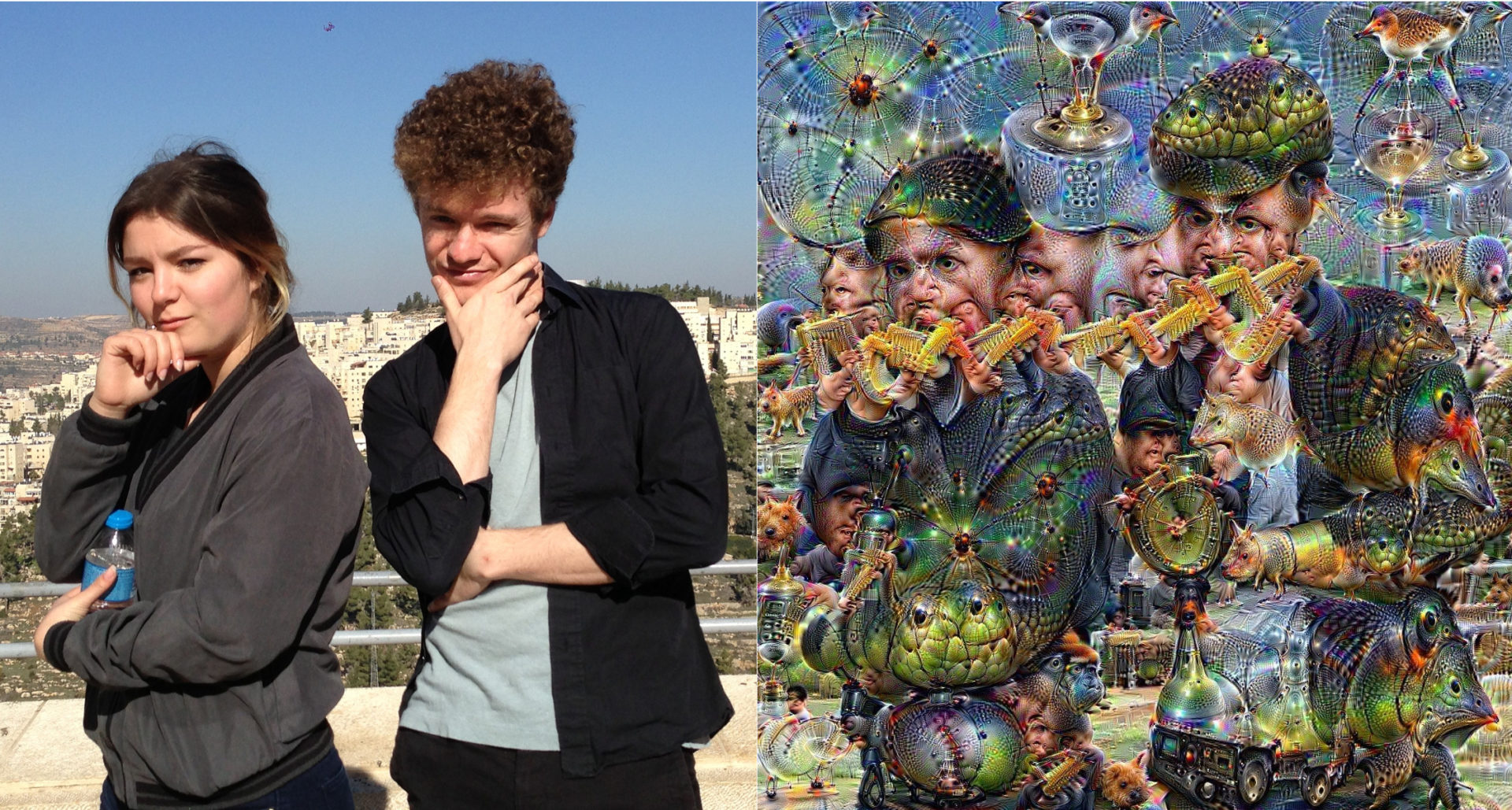
The pleasure of acid consumption lies in the excess of perception it brings. Here, too, lies its great danger, for the magic lies in the things themselves, not in this ultra-perception.
Before describing his personal experience with LSD, the author wishes to warn against the following dangers of using such a substance and is in no way intended to encourage the reader to try it. Consumption of this highly potent psychotropic drug can have serious consequences for the psyche, right from the very first «trip».
One of the first signs that you've entered this ultra-poetic LSD state is, without doubt, what is vulgarly called «HD vision» by psychedelic travel enthusiasts. Everything around you comes out with greater clarity, infinitely more detail, brighter colors and such charm that you find yourself moving to the curves of a simple doorknob. The beautiful melodies are magnified to such an extent that listening to them sends waves of shivers through your body, bringing tears of emotion to your eyes. The rousing rhythms grab you and plunge you into states of trance previously thought to be the preserve of a few primitive peoples. Unpleasant sounds, on the other hand, are to be avoided whenever possible, as they not only disturb you, but oppress you to the very depths of your soul.
Your environment, amplified in this way, seems to be staged, offering itself to you in all its theatricality. A simple stroll through your sleepy village is infinitely more entertaining than any action movie. The streets and neighborhoods you walk through every day appear spectacular, in the literal sense of the word. Everything is presented to you in the form of a series of scenic compositions whose beauty sometimes overwhelms you to the point of stupefaction. We have to admit that there's something ridiculous about standing in awe, breathless, in front of the simple lighting effect of a street lamp on a sidewalk. And yet? Is it really so unreasonable to shake off the banality of everyday life to finally appreciate our surroundings in all they have to offer? Because that's how the word present should be understood: a gift given to you.
Read also | Faced with the lure of drugs, the taste of taste
Suddenly aware of your condition, you realize - only partially - what you've gotten yourself into by ingesting that innocent little drop. Before consuming such a substance, it's hard to imagine just how vast and mysterious the human psyche really is, so complex and meandering that when you venture into it without the Ariadne's thread that is our material, everyday, shared reality, you're almost guaranteed to get lost? And what could be more terrifying than getting lost in your own mind? Here you are, physically in the midst of people, but psychically miles away, literally overwhelmed by thoughts and reasoning you'd never have imagined possible.
The barrier between the self and what surrounds you gradually evaporates beyond your ability to resist. In Artificial paradises, Baudelaire describes this phenomenon with brilliant finesse: «It sometimes happens that personality disappears and that objectivity, which is the hallmark of pantheistic poets, develops in you so abnormally that the contemplation of external objects makes you forget your own existence, and you soon merge with them. For yes, your mind merges with your environment, you feel naked and devoid of the usual mental boundaries that protect the intimacy of your thought. You have this curious feeling that your friends can read your mind and you can read theirs. And, in a way, they can. Because your non-verbal communication betrays you, your tense face or the distortion of your sneer revealing all your emotions to the sharp minds of your traveling partners.
These states of ultra-sensitivity often lead to comical, if not perfectly ridiculous, situations when too many people are gathered together in a space insufficient to contain this disproportionate swelling of the psyches. Everyone's thoughts seem to physically clash in the air. Words become rarer, calculated and weighed so as not to offend anyone's heightened sensitivity. A single misinterpreted sentence can send the whole group into a fit of uncontrolled laughter, or, less happily, into a state of irrational, overpowering unease. The best thing to do then is to go back outside.
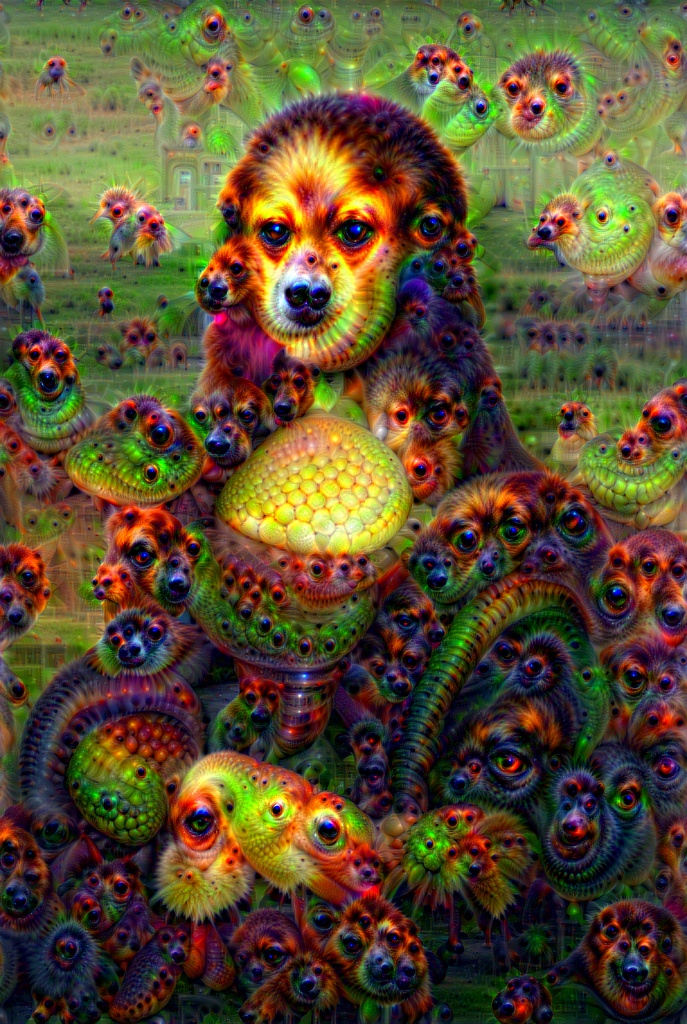
The relief the fresh outside air brings to your psyche is instantaneous. You decide to let your mind drift with the magic that surrounds you. At this point, your surroundings are no longer theatrical, but magical. Your vision of the world is once again that of the mystics of the dawn of humanity. Like an animist, you perceive the Spirit behind everything. Everything around you takes on a deeper meaning, rooted in a reality infinitely more vast - but also far more intimate - than the one you were used to. This state, probably the most ecstatic and pleasurable for a mind driven by intellectual inquiry, makes you feel with certainty that every phenomenon is oriented towards an end, and that this end is part of a perfectly organized whole. But, once again, it's a sensation that overwhelms you rather than an intellectual conclusion. It's both exhilarating and frustrating, because this almost omniscient understanding of the world is at your fingertips, yet your rational brain can't grasp it. Because - let's be clear - you're not in a rational state, but in an exacerbated poetic state where metaphorical and analogical thoughts weave and link together with disconcerting ease and obviousness.
You're just getting used to this mystic-poetic way of thinking when, with a glance, you catch the wall of the house opposite breathing. A quick glance at your hand, whose ridges and furrows move and merge, will confirm that your senses are now altered by your mind. Far from the colorful, explosive hallucinations of mescaline or MDMA overdoses, these emerge with such subtlety that artifice seems natural.
But the confusion isn't just visual: one after the other, all the distinctions that organized your perception of reality break down: past and present; here and beyond; sound and light; living and inert; and finally, self and environment. This stage is critical. If you take fright or try to resist this little drop, which has turned into a rogue wave in your mind, you run the risk of sinking into what is all too lightly referred to as a "state of mind". bad trip. A bad trip? Anyone who has seriously experienced it once can attest that if it's a journey, it's one to the eighth circle of Dante's Inferno, one pit of which is reserved for the sorcerer's apprentices and soothsayers you thought you could play with. The metaphor here is not just literary, but psychological, for there's something downright hellish about being lost and isolated in your own psyche, trapped in a distortion of reality that, inverting the bliss initially sought, reveals only ugliness, evil and lies. All you have to do is wait for the curse to pass, with the constant fear of «being left high and dry» and a sense of time that can turn five minutes into several hours. Take heart...
But fortunately, this time, the conditions are right, and you resignedly let your ego be swept away, or dissolved. You notice that the flowers in the neighbor's garden are not only moving, but reliving their life cycle: from seed to bloom! Is this the past or the present? Does time even exist? Is it the power of the flower actualizing itself before my eyes? In your head, it's a flood. The questions and reflections jostle each other, bouncing off each other and bringing up all the things you've read all week, knitting them into explanatory diagrams whose validity you'll never have the chance to verify.
Back in your apartment, you're still pondering this prodigious hallucination when, already, something else is attracting your attention with its unusual behavior. The painting on the living room wall is calling to you. The scene it illustrates has been activated. The trees shiver in an imaginary wind, the clouds swell and distort and the water reflects small reflections of light. The immersion is such that, in a flash of lightning, you suddenly have the impression of having perfectly understood the author's intention and thought.
This rediscovery of your everyday environment ultimately returns you to the constant state of wonder typical of young children. Everything is once again conducive to arousing your curiosity, because everything becomes fantastic again. And then, little by little, you realize that reality as you've always defined it has dissipated to make way for something immensely deeper... with all the scary and mysterious depths that entail. Welcome to the infinite intricacies of the human psyche, and try not to get lost!
***
It would still be tempting to describe to you all sorts of situations, reasoning and perceptions that are specific to this ultra-poetic state, but words have their limits and can in no way describe all the mad wisdom - if I dare use this oxymoron - that even the mind struggles to grasp when immersed in it. On the other hand, after such a tantalizing description, it's essential to describe the perverse effects that this state brings with it.
One of the most common is substance addiction. But please note that this is not a physical or even psychological addiction. It's purely spiritual. Anyone who has tasted this ultra-poetic state without taking the necessary distance from it risks falling into a classic trap: that of seeing the substance as magical when, in the end, it merely exacerbates your perception. In reality, what is magical lies around you and in your mind, not in the substance itself. This distinction may seem trivial to some, but it's of crucial importance to those who, driven by their taste for the infinite, are desperately seeking in drugs what, in fact, has always surrounded them.

What's more, as Baudelaire's expression suggests, there's something inherently excessive about this state. It's no coincidence that our brain, in its state of equilibrium, naturally sorts and reduces the stimuli bombarding us from our environment. Altering the opening of this diaphragm can have dramatic consequences. Just as an excess of light can damage the retina of our eye, an excess of stimuli can damage our psyche. The risk is all the greater with a mind that is already slightly unbalanced or, in medical terms, predisposed to schizophrenia. In this situation, the consumption of psychoactive substances can have dramatic consequences from the very first use.
Finally, the modification of an equilibrium state involves, de facto, the need for rebalancing. A recurring problem, particularly among young infinity seekers, is the over-regular consumption of these substances. Without realizing it, as they travel more and more, they are less and less able to re-establish themselves in their shared, everyday reality. It should be pointed out that, while psychoactives are known to affect perception, they also have an impact on the ability to interpret reality. Hence the hallucinations, which are simply an overflow of interpretative capacity onto perceptive capacity. Disconnected from reality, but swollen with pride, believing themselves enlightened in relation to the masses, these budding shamans often end up marginalizing themselves, in fine, their internment in a psychiatric ward.
D. V.
«Let the people of the world and the ignorant, curious about exceptional pleasures, therefore know well that they will find nothing miraculous in hashish, absolutely nothing but excessive naturalness.»
Baudelaire, Artificial paradises
You have just read a testimonial from our DROGUE file, published in our print edition (Le Regard Libre N°99).

Vous aimerez aussi




 French
  German
  English
Laisser un commentaire