



How «Le Peuple» designed an RTS Observatory
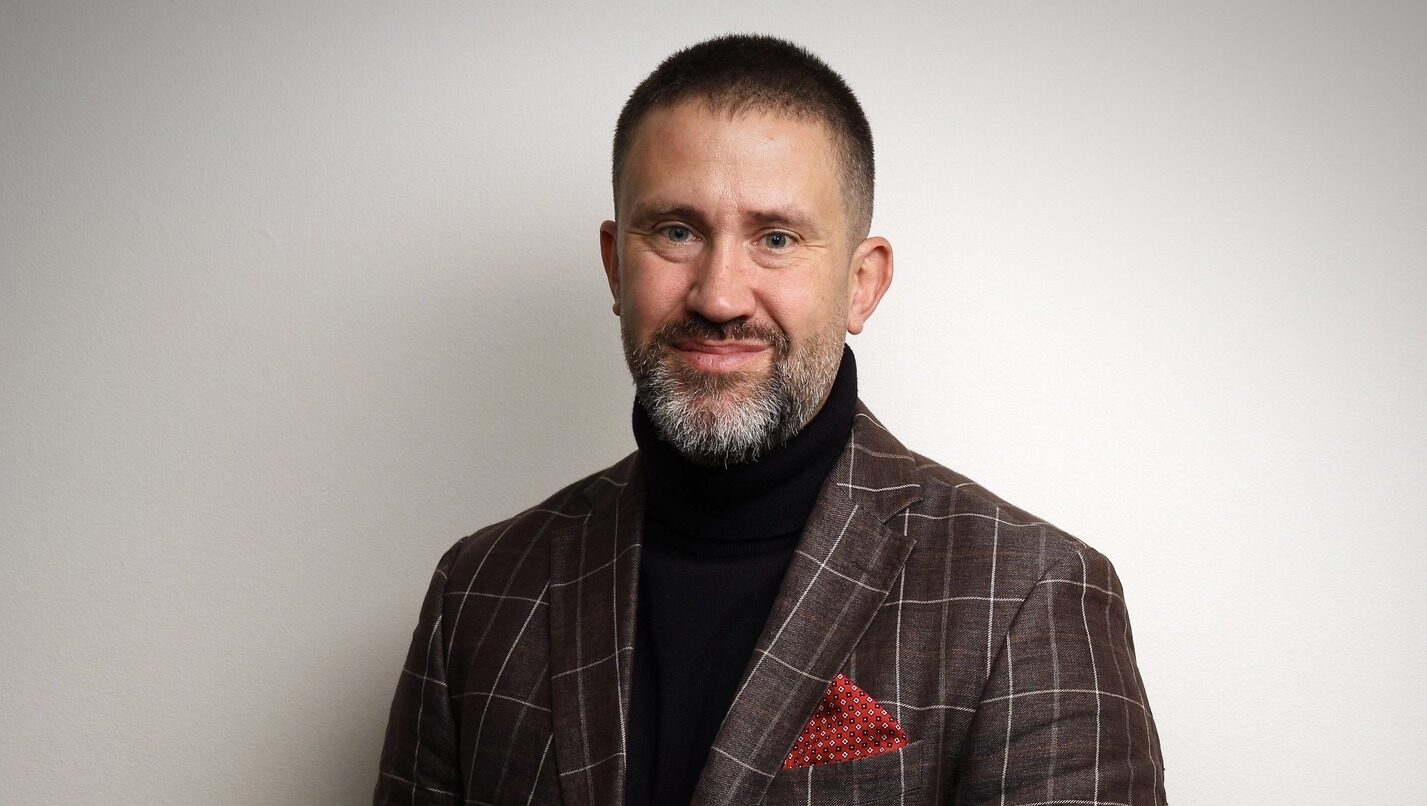
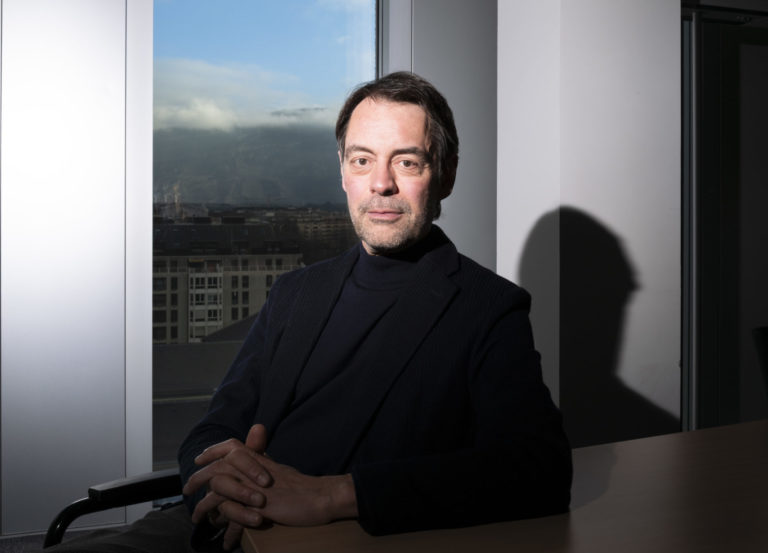
Raphaël Pomey, editor-in-chief of «Le Peuple». Photo: Thomas Masotti.
With Agora, the French-language Le Peuple has launched an unprecedented observatory of RTS news production, based on a public and reproducible methodology. Journalist Raphaël Pomey describes the genesis, results and democratic issues involved.
«Why aren't the newspapers talking about Agora? What you've done is crazy.» We heard this remark a lot in the days following the launch of the Observatoire de la Radio Télévision Suisse (RTS), conceived by the medium Le Peuple. It expressed both surprise and incomprehension: how could a project of this scale, unprecedented in French-speaking Switzerland, elicit so little reaction from the media?
Agora is based on a simple idea: systematic, reproducible observation of public service news production. Designed on an entirely voluntary basis, the tool automatically analyzes, day after day, the main news programs of the radio channel La Première. This is neither a pamphlet nor a statement of intent, but an analytical tool. The latter, moreover, has its origins in our internal debate as to the line to take regarding the future of the licence fee.
Read also | Pascal Crittin: «We don't steer the debate».»
The platform's methodology is public (read the commentary at the end of the article). The technical framework, the evaluation criteria, the precise instructions given to the artificial intelligence (AI): everything is accessible, documented and verifiable. Anyone can consult the system, discuss its limitations - or reproduce it. So why such a discreet welcome?
It would be dishonest to deny that Le Peuple claims a conservative orientation. In a media landscape where neutrality is often mistaken for ideological interdependence, this label is sometimes enough to discredit any initiative. But the question deserves more than reflexes: it calls for an examination of the facts. Over a full year, Agora analyzed 1,588 programs and almost 15,000 segments. The scope selected deliberately excludes overtly militant or editorialized programs - such as «Gender question» - in order to measure not the margins, but the core of information production.
Agora's key findings
The results, presented in the 2025 report available on agora.lepeuple.ch, reveal several major findings.
First of all, the good news: raw news - newspapers, newsflashes, factual treatments - remains solid overall. Professional standards are largely respected, and ideological bias is much less marked than in interpretative formats.
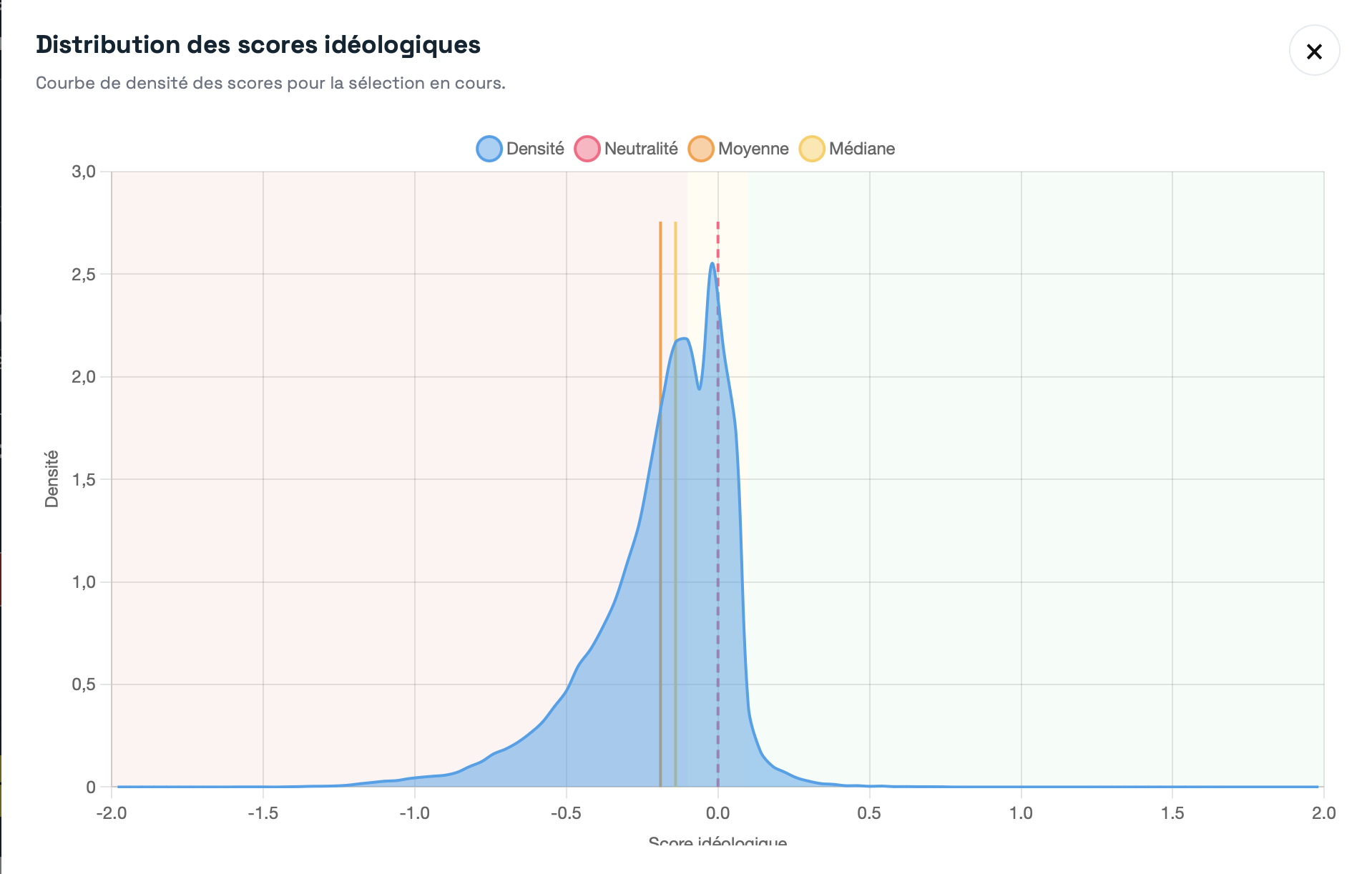
Point two is more disturbing: some theme programs have a clearly identifiable structural ideological orientation, stable over time. These are not occasional slips, but coherent editorial lines.
Thirdly, the entire production analyzed reveals a slight left-wing progressive slant. Nothing caricatural, nothing extreme - but a regular, constant, measurable trend.
And here's the most important point for us: our work reveals that the plurality of points of view comes mainly from the guests, and much less from the journalists themselves. In other words, when contradiction does appear, it is most often brought in from the outside. The editorial framework, on the other hand, tends to privilege an implicit ideological coherence, tending towards the left.
Finally, our analysis shows that the emission of «High Frequency» is the one with the most left-wing ideological coloration - even more so than other RTS content devoted to religious issues. If we put this in relation to the relative neutrality of humorous interventions, a curious observation emerges: neutrality is fun; being left-wing is sacred.
Should we cry scandal? Let's be careful: a public service is not a neutral object in the mathematical sense of the term. It is the product of a culture, an environment, a history. But precisely for this reason, it deserves to be observed, questioned and documented.
Agora is not a tool against RTS. It's a tool for democratic debate. In an open society, transparency about what everyone must Paying is not a threat: it is a condition of trust. To refuse any form of external evaluation in the name of the supposed virtue of institutions would be a mistake - and an illiberal temptation.
What next?
The infrastructure we have developed is not limited to the analysis of RTS. It can be mobilized to examine other media, specific themes or the treatment given to certain circles or personalities in the written press, radio or television. From now on, we intend to offer these customized media audits to support and perpetuate our business.
In addition, the creation of a stand-alone site reproducing our systematic analysis of RTS «TV» - one of our medium-term objectives - would represent an estimated investment of between 10,000 and 15,000 francs, depending on the scope chosen. Will we be able to raise this amount in the run-up to the vote on the licence fee? Impossible to say, but we'll be proud to have contributed to a debate based on facts, not emotions.
Raphaël Pomey is the founder and editor-in-chief of the Le Peuple.
You have just read an open-access article, from our dossier «Quel service public?», published in our print edition (Le Regard Libre N°123). Debates, analysis, cultural news: subscribe to support us and access all our content.
The linchpins
The Agora team worked with the GPT-5.1 language models, the latest from OpenAI. «The aim was to get the best possible understanding of relatively long texts,» explains Raphaël Pomey. The journalist says he surrounded himself with «geeks» and «engineers» from his association Le Peuple, without giving further details. J.F.

You'll also like

 French
  German
  English
1 comment
Critically observing a public service medium is obviously legitimate, and can fuel useful debate. But on reading this article, several points need to be put into perspective.
First of all, claiming to be «the people» while at the same time claiming a conservative orientation already raises an initial question. In a democracy, the people are never homogeneous, and no political sensibility can reasonably claim to speak on their behalf.
Secondly, in a country like Switzerland, whose political balance has historically tended towards the center-right, it's hardly surprising that critical journalism can sometimes be perceived as «progressive». Questioning public policy and power relations is also part of the normal role of journalism.
Finally, there's the question of method. The analysis focuses primarily on La Première radio programs, but the conclusions then seem to be extended to «RTS» as a whole. The generalization seems a little hasty.
This is all the more true given that academic studies of the Swiss media landscape - notably the annual reports of the Center for Audience and Society Research at the University of Zurich - tend to show a media system that is generally pluralistic and relatively politically balanced. This is not to say that everything is perfect, but it at least invites us to place these results in a broader context.
Leave a comment