



Le Regard Libre N° 32 - Jonas Follonier
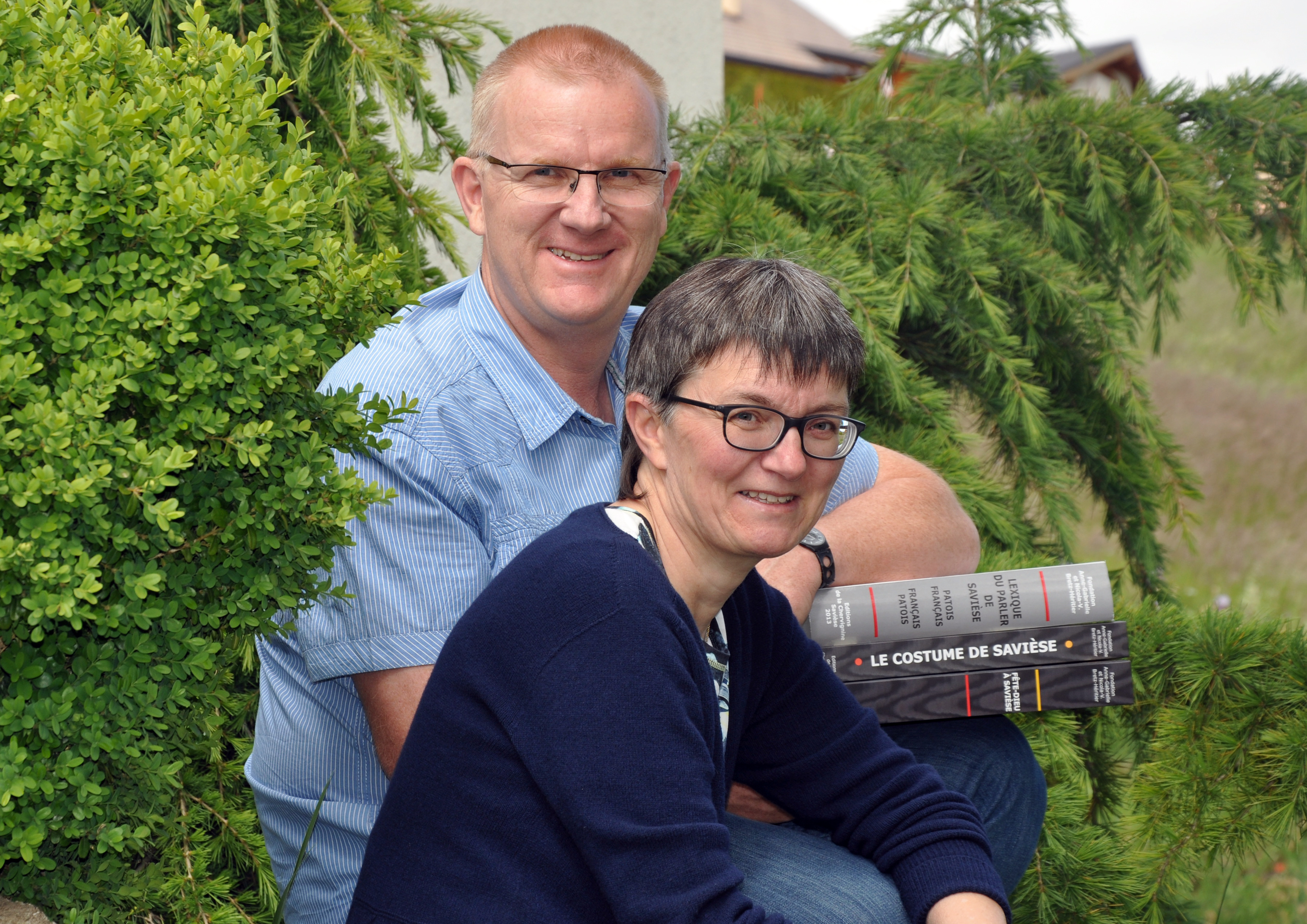
For the past twenty years, Anne-Gabrielle Bretz-Héritier and her husband Nicola have made it their mission to safeguard the heritage of their commune, Savièse. To this end, they created the Bretz-Héritier Foundation. To celebrate this anniversary, the Foundation is organizing its Troisièmes Rencontres on the theme of Savièse identity. This is the story of an extraordinary local adventure.
Jonas Follonier: Where did the idea of creating a Foundation come from?
Anne-Gabrielle Bretz-Héritier: My parents were Savièse people and have always been passionate about village things, both tangible and intangible. They passed this passion on to me. I married my husband Nicola in 1988, and at first it was a small private business. As villagers began to come to us asking for archives, books and information, the idea of founding an organization germinated within us. In 1997, out of our desire to separate the public from the private, we decided to create a clear, autonomous entity. We chose to set up a foundation, rather than an association, because we wanted to create something that was our own and that could be sustained over time.
What is the purpose of your foundation?
The aim is to safeguard Savièse's heritage through the written word, images and sound. As a foundation, we are obliged to fulfill the purpose we have set ourselves. In our case, the supervisory body is the Savièse Communal Council. We didn't want to set up a museum, as the intangible was one of the most important aspects for us.
Is your target audience exclusively from Savoie? Is this commune of interest to everyone?
Over the past twenty years, our open-mindedness has grown. Although Savièse is our base of work and our primary interest, we enjoy bringing together a wider public than before, and linking our customs, objects and so on with other places in the Alpine arc. But our anchor remains Savièse.
The rural history that shaped our little corner of paradise until the 1960s is likely to be of interest to many, especially in Alpine regions.
You have published several works with the Foundation. Corpus Christi in Savièse (2008) is one of the most important. What does this festival mean to you?
This Catholic celebration of the Eucharist, which takes place on the second Thursday after Pentecost, is experienced in a very special way in Savièse. The procession, the traditional costumes and the presence of the company give the «Féita-Djyo» its spiritual and dynamic aspect. If there's one great Savièse tradition with a strong identity, it's Corpus Christi. It brings together all strata of the population, all ages, all genders, all parties, young and old, locals and newcomers. The festival is recognized as one of Switzerland's living traditions. It was this living history book, published to coincide with our Second Meeting, that really put the Foundation on the map. We needed a reference manual. We set ourselves the goal of producing one. Of course, as a living tradition, Corpus Christi evolves imperceptibly. It changes little by little, to keep pace with society.
An example of developments since 2008?
Women are now admitted to the company on an equal footing with men. This is an impressive fact, especially as it was the men who initiated this decision.
The theme of the Foundation's third Rencontres will be Savoie identity. If identity is difficult to define, it remains above all linked to the concept of culture: what are the important elements of Savoyard culture?
First of all, an essential component of our village culture is Corpus Christi, which we've already mentioned. In terms of culinary heritage, I'd like to mention the tarte saviésanne, known in local dialect as «flon», originally made with apples, but now available with all kinds of fruit. In the same vein, there's the gâteau saviésan, made with leeks, potatoes and bacon, all wrapped in pastry. Now that's feeding your man! There's also gruel soup, with vegetables from the kitchen garden, for autumn and winter. A lot of people also come to Savièse for brisolée, although you can't really say it's from here. As for wine, there used to be a lot of talk about Savièse Muscat. All this has evolved, from the time of my father, who was a winegrower, to the present day. For me, the symbol of this winegrowing memory is a family object: the wine press.
Another facet of identity is language. In Savièse, some people still speak patois. How many people does this represent?
Absolutely, patois is truly a language. Until around 1945, parents spoke patois with all their children. When siblings continued to live together after the war, the pattern was often as follows: the first siblings spoke patois with their parents and were polite to them; the second siblings spoke French with them and were polite to them. There's been a big change. In 2000, a federal census was carried out in the commune of Savièse: out of a population of 5,300, some 600 people still spoke patois on a daily basis, i.e. 11.3% of the population. Today, out of Savièse's 7,500 inhabitants, I would estimate that 200 people still speak Patois on a daily basis, i.e. 2.7%. After that, you have to bear in mind that these figures represent the tip of the iceberg: there's also my generation, which understands Patois but doesn't speak it, and which unfortunately won't be passing it on either.
Why is it so important for you to defend this linguistic heritage?
My passion for Savoie dialect began in the 90s, when I realized that I belonged to the generation that would see the extinction of a language spoken by so many generations before. Perhaps there's something absurd about committing oneself to the patois when it's on the verge of extinction, but I see it as a fine challenge.
It's often said that Saviezans are very demonstrative people, who like to compete with their neighbors and do things in a big way. Cliché or reality?
The Saviésan likes to do well. He's relatively gruff, or at least very proud, but that's not without his great quality: he's hospitable. Voluntary work is very present in Savièse; people are always helping each other out. Basically, these traits apply to all Valaisans, but Savièse people are perhaps a little more boastful than others.
In a few words, why come to the Rencontres du 18 novembre?
First of all, to share a convivial moment, and discover what took our various speakers so long to prepare. Their personal accounts, once assembled, will give a picture of what Savièse is now. Because Savièse in 2017 is not the same as Savièse in 1960, nor Savièse in 2030. These encounters will create a time to stop and think, in a positive and constructive way, rather than turning in on ourselves.
Do you already have another project in mind?
I'd like to explore the theme of death. I'd like to look at how villagers understand this passage from earth to heaven. I began this research in 2011, when the Savièse cemetery was being restructured: when I learned that a thousand graves were to be disused, I knelt down in front of each of them with my camera, to immortalize them.
Visit Saturday, November 18, 2017 will be held at the Troisièmes Rencontres de la Bretz-Héritier Foundation, in the auditorium of the Centre scolaire de Moréchon (Savièse, VS). Several speakers will address the theme of Savièse identity through personal accounts. A publication will be released in conjunction with the event. Jonas Follonier will present Le Regard Libre. Link to the event : The Savoy identity.
Write to the author : jonas.follonier@leregardlibre.com
Photo credit: © WikiValais

Vous aimerez aussi
 French
  German
  English
Laisser un commentaire