




News Mondays - Hélène Lavoyer
Science fiction in all fields has fantasized about their arrival, the consequences of their presence, the dangers or simplification they could play a part in. Present for the first time in a play by Czech playwright Karel Capek[1], Robots are now an inherent part of many fields, from automobiles to cooking.
While the field of robotics has been transformed and extended into everyday life, what the future holds opens up possibilities that have hitherto existed only in the human imagination.
In fact, the era of artificial intelligence (abbreviated «A.I.») robots, capable of learning and simulating a human brain, reacting to its environment in real time or linking events to deduce the subsequent situation, has already begun.
Although not yet part of our daily lives, research such as that carried out for the Blue Brain from the Ecole Polytechnique Fédérale de Lausanne (EPFL) or the Hanson Robotics - Research combining the knowledge of neurologists, biologists, computer scientists and engineers, among others - is bringing the idea of life with robots unlike any other to the fore.
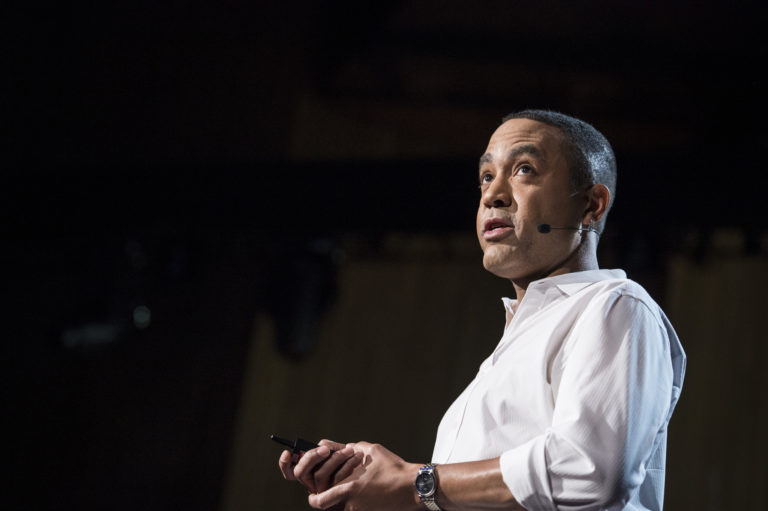
David Hanson, founder of Hanson Robotics, which has caused quite a stir in recent days. Him, or rather his creation, Sophia. This robot, anthropomorphized to copy a human face inspired by Audrey Hepburn, has been awarded citizenship by Saudi Arabia. It was able to make a big impression at events such as the Fintech Ideas Festival (2017) or RISE (2017), and even the cover of the magazine ELLE Brazil for the December 2016 issue. Citizen«, from the Latin civis, is a member of a city, a status with rights and obligations.
Just when it seemed that humanity was an indispensable criterion for citizenship, what could be more fundamental than that, and how will we deal with humanoid robots in the future?
This raises ethical, sociological and semantic questions, as the very concept of citizen is called into question, and risks being transformed or replaced.
In dialogue with its creator on the occasion of the Fintech Ideas Festival, Sophia boasts that she can analyze the financial markets better than anyone else, thanks to her computing power (something that would probably be wrong to contradict, since the markets are already controlled by computers); robots like Sophia are therefore able to work in the service of society.
The financial sector is just one example of the many fields in which artificial intelligence systems can operate, from guiding the blind to performing surgery on their own.
In addition to Sophia's technical skills, there are what she calls «human skills».«people skills»she alludes to in the same interview in the Fintech Ideas Festival. These qualities, such as emotions, self-awareness and the ability to interact with other humans (and therefore adopt different roles depending on the context), have been put forward to differentiate our species from other, simpler ones.
What will happen to the concept of humanity when a robot can simulate it? Although it's safe to assume that Sophia won't feels not fear in reality, his understanding of what fear and all the other emotions imply for someone - joined to all his other abilities - could enable him to assist the sick, direct therapy or educate people. Perhaps then we'll have to conceptualize the «trans-citizenship».
In these hours of critical importance for «global society» - and on absolutely diversified levels - our choices must be directed towards the future, towards a shift in our ways of living and conceiving order; technologies such as artificial intelligence could impact great changes, but are we ready to use it conscientiously and inclined towards living together, or will its use only be offered to the military or financial sectors?
Write to the author: lavoyer.helene@gmail.com
Photo credit: © Daily Wire
[1] http://les-robots-sont-nos-amis.over-blog.fr/article-la-naissance-du-robot-88951643.html
Vous aimerez aussi


 French
  German
  English
Laisser un commentaire