




Entrepreneurs are freer people
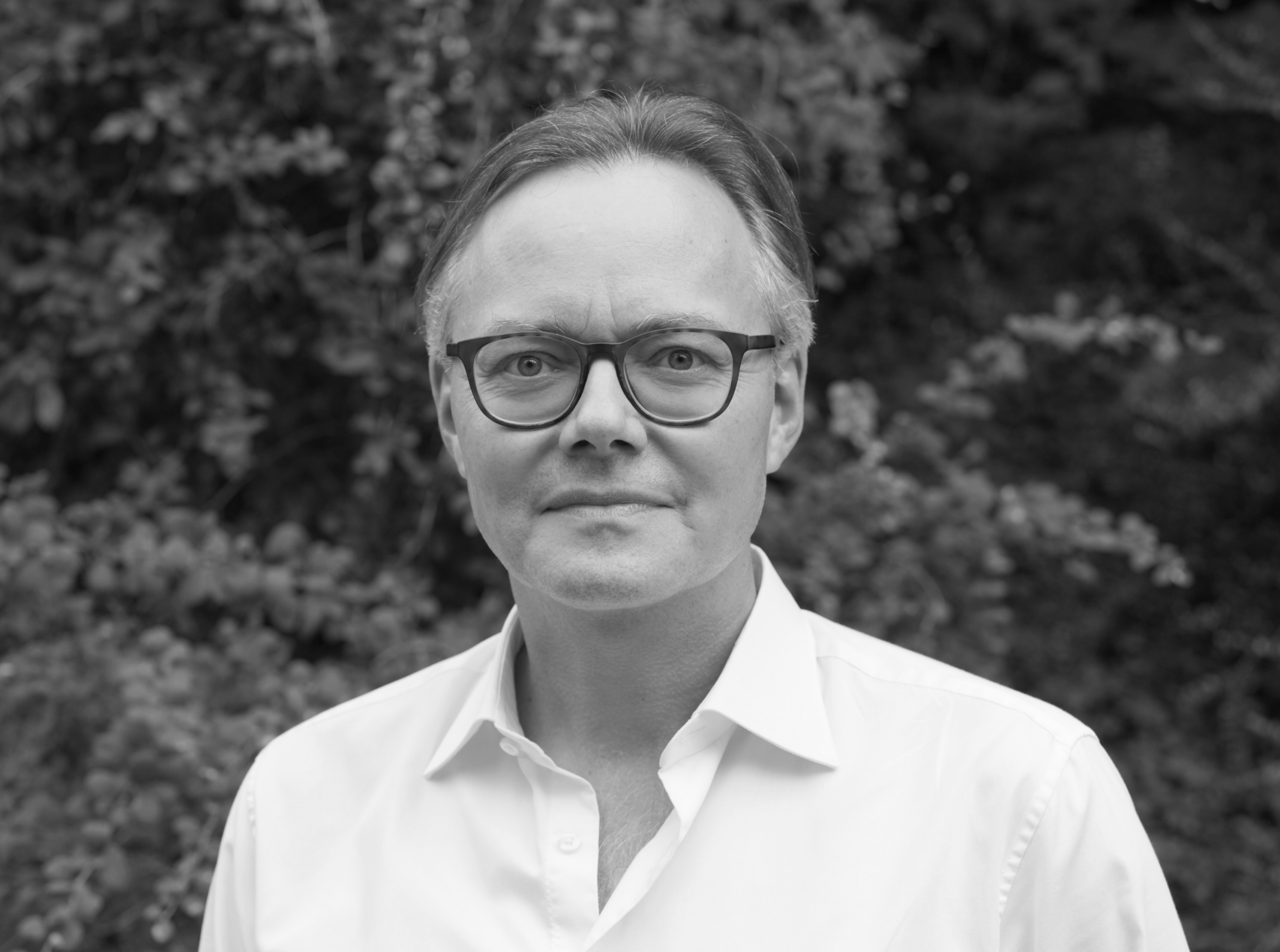
Entrepreneurs see the world differently. A declaration of love to a minority that deserves protection, as seen through the eyes of a media professional.
One of the great things about being a journalist is meeting so many fascinating people. Many of them are celebrities: presidents, business leaders, politicians or sportsmen and women. Early on, as a young journalist, I realized two things. Firstly: people, and therefore my articles, don't automatically become more interesting when my interviewees are famous. The opposite is often true. Secondly: the encounters that made the greatest impression on me were almost always those with entrepreneurs. That hasn't changed to this day.
A conversation between equals
I remember my very first assignment as a freelancer for the Basler Zeitung. I'd been sent to a rather austere event organized by an association of young building contractors. In the city's equally austere exhibition district, masons, painters, plasterers, plumbers and other building professionals had gathered for an informal exchange.
All ran their own SMEs. Their guest speaker was the owner of a chemical plant in Graubünden: Christoph Blocher, then National Councillor and CEO of Ems-Chemie. At the time, I had a more critical opinion of him than I do today. That evening, however, he spoke about the economy - and in that field, he was an authority. Even his opponents didn't challenge him.
What impressed me that evening were not the outward signs of success, such as the chauffeur-driven Audi A8 parked confidently on the sidewalk, in which he had driven from Bern that day.
I was more impressed by the time he devoted to Basel's young entrepreneurs, his curiosity and his availability. He deliberately kept his speech short to leave more time for personal discussions. He was successful and extremely wealthy; the others were neither. Neither the age difference nor the fact that they worked in completely different sectors – one global, the others regional – seemed to play a role. For all their differences, they were talking as equals, entrepreneur to entrepreneur.
Executives
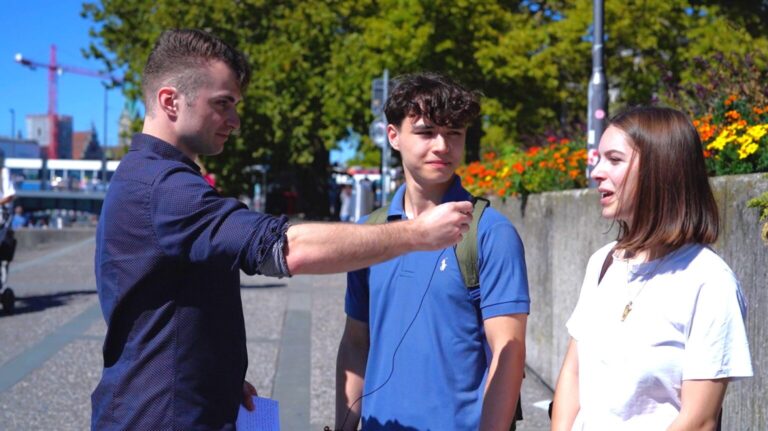
From the point of view of media professionals, the differences between true entrepreneurs, who take risks with their own money, and managers – i.e. executives in the top salary segment – are also interesting, if not striking. Seen from the outside, they may seem to play in the same category, as shown by the street surveys of young people carried out by the Schweizer Monat and Le Regard Libre. Many people equate entrepreneurs with managers. Wrongly so.
Managers – even CEOs and board chairmen of multinationals – are caught up in a powerful web of internal and external stakeholders that must be taken into account. This inevitably has an impact on their behavior.
Salaried managers therefore express themselves more cautiously, always taking care not to offend anyone. Often, after a relatively forceful statement, they use the next three sentences to immediately soften it. They relativize, formulate ambiguously, water down, and miss no opportunity to integrate the sophisticated slogans of their marketing departments into the conversation. They are often assisted by press officers (almost always women) who watch every word and, if necessary, call the boss (or journalist) to order.
It's also the press officers who provide journalists with a pre-established list of questions, and who define the framework of the conversation with a negative list, i.e. with subjects that are out of the question.
Top executives and journalists alike abide by the rules of this «corporate censorship». I've never seen that with entrepreneurs. There are reasons for this, which I fully understand. Obviously, in big business, there are more important things than a journalist's observations. What I'm saying is that these constraints don't automatically make every top executive a first-rate interlocutor.
Casual nonchalance
Business owners, on the other hand, are a different breed. They seem more relaxed, more sovereign, more incisive, often bolder too, carried along by a laid-back nonchalance not found in managers, who often seem standardized. Of course, entrepreneurs are not totally free either. They too are subject to constraints and must show consideration. However, they are much less concerned with convention, have something of a rebellious streak, and act with more discernment than many of their managerial colleagues – keyword: salary excesses. Instead, entrepreneurs make their own way. They don't try desperately to «fit in» with a system, but stand out from the crowd – consciously or unconsciously.
Entrepreneurs see the world through different eyes. Their senses are more alert, they're dreamers, they think in terms of potential rather than assets. They want to create, not simply manage, as do so many managers, expatriates or diplomats who have settled comfortably into the cocoon entrusted to them, and who are above all careful not to be noticed, if not in an excessively positive way, at least not in a negative one. Entrepreneurs are discreet do-it-yourselfers or creators who, often ahead of their time, are working on their next big project. Above all, they are perhaps the most interesting people to talk to.
No prosperity without entrepreneurs
Switzerland has every interest in looking after its entrepreneurs. Thanks to their innovative strength and performance, they keep Switzerland competitive, finance the state at all levels and, to a large extent, create jobs and thus prosperity. So you can never have enough. The Swiss can only be healthy if entrepreneurs are healthy. There is no prosperous country where entrepreneurs do not prosper.
The Swiss are well aware of this, with the exception of the political left with its class warfare rhetoric and propaganda against «the rich». As part of the «Entrepreneurial spirit», After numerous discussions with entrepreneurs, we have identified two constants concerning Switzerland. Let's start with the good news: the Swiss Confederation continues to offer excellent framework conditions for entrepreneurship.
Entrepreneurship is still very much alive in Switzerland. This is also confirmed by the «GEM Switzerland National Report» study published at the end of January by Fribourg University of Applied Sciences. The rate of «start-up entrepreneurial activity», i.e. companies in existence for less than three and a half years, was stable in 2024, at almost 10% of the working population.
According to the same study, around 56.2% of those surveyed also said they knew someone who had set up their own business in 2024, compared to just 44.6% in 2020. These results indicate that entrepreneurship is gaining in visibility in Switzerland, which is encouraging.
Switzerland must act urgently
Switzerland offers many advantages. The population is well-educated and hard-working, the infrastructure is that of a high-performance country, taxes are moderate, the labor market is liberal and regulations are more business-friendly than elsewhere. However, caution is also called for. What's more, improvements are essential, because nothing is more dangerous for a country or a company than complacency.
Which brings us to the bad news. It's precisely in wealthy Switzerland that venture capital and risk-taking investors are in short supply. This has fatal and far-reaching consequences: ambitious, capital-intensive and particularly risky ideas have a hard time in Switzerland. They are either seldom, if ever, realized, or carried out directly abroad. The UK and the USA occupy pole position here.
This invisible «brain drain» needs to be addressed on the political stage. What needs to be done in concrete terms? A tax exemption for venture capital investments, as in the UK, would be a good start. Whereas in Switzerland, such investments are included in assets and taxed accordingly, in the UK, venture capital can be deducted from income. It's also worth looking at the USA: there, pension funds are allowed to invest in venture capital funds, bringing additional liquidity to start-ups. There is also a need to encourage entrepreneurship in education, so that people acquire the knowledge and confidence to set up their own businesses. To be continued.
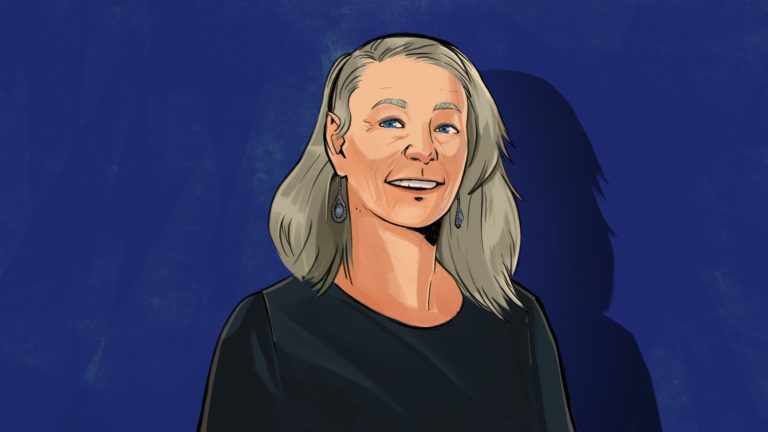
The journalist Fabian Gull is an editor at Schweizer Monat.
You have just read an open-access article from our print edition (Le Regard Libre special issue N°7). Debates, analyses, cultural news: subscribe to support us and access all our content.

You'll also like

 French
  German
  English
Leave a comment