




«Ten little anarchists», a tribute to Swiss emigrants
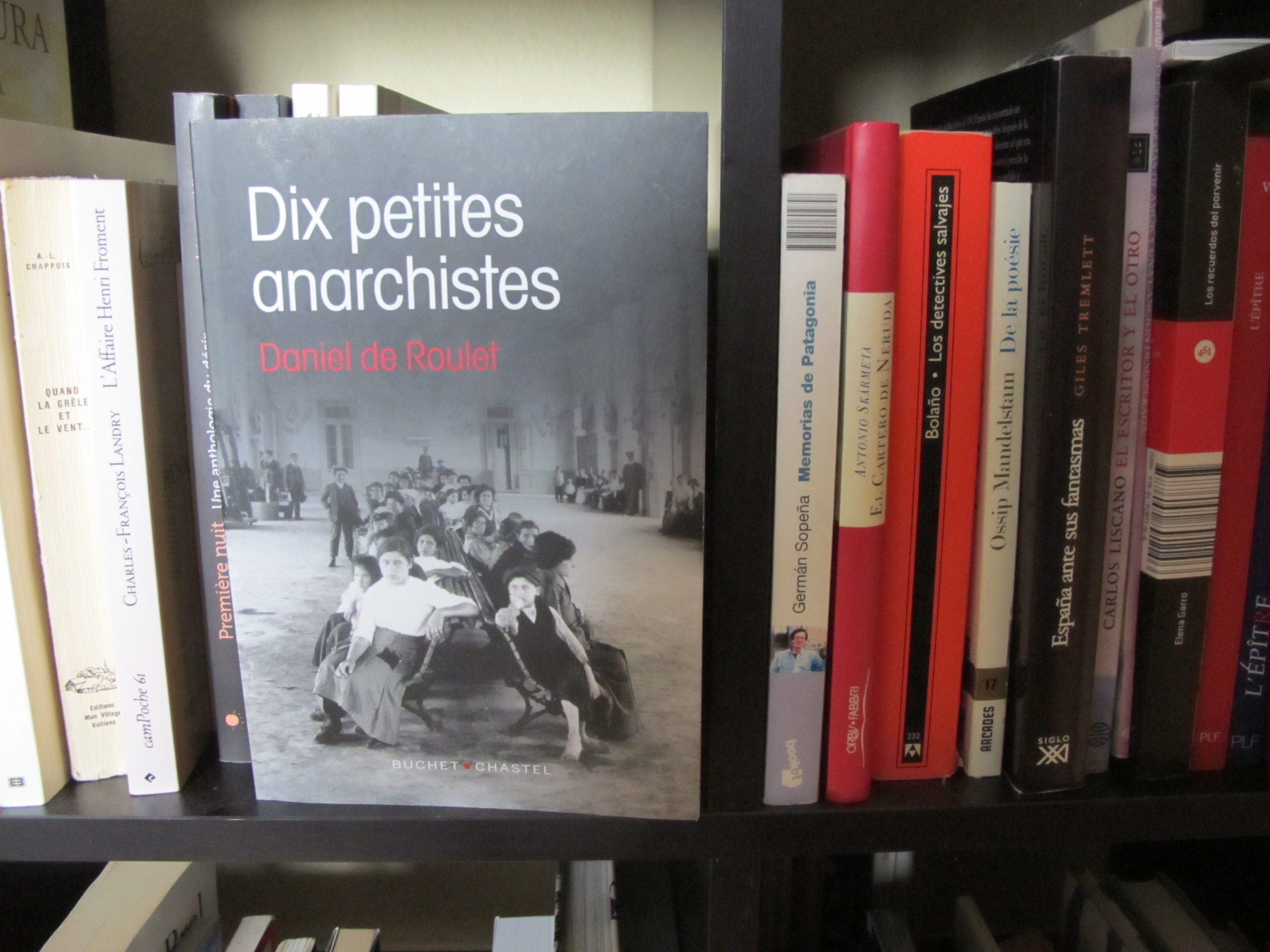
The bouquins du mardi - Alexandre Wälti
«The anarchist attitude is our wisdom. For the centuries to come, we envisage neither a world free of all power nor one finally enlightened by universal anarchy. Instead, we imagine them populated by anarchists. Revolt will give meaning to their lives, just as it has given meaning to ours.»
So speaks Valentine Grimm, Daniel de Roulet's narrator. It implies a possible response and a plausible attitude among others: to question and profoundly change an unequal, patriarchal, voracious and predatory economic system that is running out of steam, before it collapses once again as it did in 2008. A necessity which, as in the days of the Imier writer's ten little anarchists, has never been more topical than it is today: the gilets jaunes in France, the climate marches in Switzerland, the #MeToo phenomenon worldwide, Occupy Wall Street in the USA, the 15-M movement in Spain, and so on.
Admittedly, all the civil mobilizations of recent years have not always shared the same demands, but they do demonstrate a growing fed-upness with a certain conception of human existence. As Valentine, Colette, Juliette, Emilie, Jeanne, Lison, Adèle, Blandine, Germaine and Mathilde express so well throughout the novel. Thinking about another reality is what they all agree on.
A documentary novel
Daniel de Roulet today received the Lifetime Achievement Award from the International Literature Commission of the Cantons of Berne and Jura. All the more reason to discover Ten little anarchists. Ce roman se base d’une part sur des documents historiques et démontre d’autre part une inventivité intelligente, en cela qu’elle interroge directement le lecteur sur ce qui l’entoure aujourd’hui.
What are we talking about? Firstly, the lives of ten Swiss emigrants, and then their shared desire to experiment with the freedoms and attitudes theorized by Bakunin and Kropotkin. Kropotkin, for example, proposed a definition of anarchist philosophy in his Moral«Don't bow to no authority, however respected; accept no principle, so long as it is not established by reason.»
C’est le XIXth siècle à Saint-Imier, vallon alors prospère grâce à l’horlogerie. Dix femmes quittent la région pour vivre autrement. Elles fuient certaines institutions comme le mariage, qui était un objectif de vie pour une partie de la population, et l’emprise de l’Eglise sur la vie quotidienne, tout comme sur l’éducation des petits Imériens. Colette et Juliette sont les premières à fuir ce contexte contraignant et dogmatique pour vivre librement leur amour sans devoir se cacher ou risquer une quelconque condamnation. Les huit autres femmes suivent ensuite cette impulsion malgré la disparition tragique des deux amantes et embarquent avec leurs enfants dans un navire pour Punto Arenas en Patagonie. Rude traversée de l’océan atlantique durant laquelle Émilie perd la vie en accouchant.
«As Émilie was a free-thinker, we didn't want the priest from Haute-Saône to get involved. So several of us wrote a few lines, which Mathilde read to the assembled passengers. Not: »Dear Emilie, goodbye in heaven. Just: "You deserved to see Patagonia, we'll take your memory with us.»
They arrive in Punto Arenas and find that there is only a Chilean military barracks, a few dwellings, other landless immigrants, the biting Patagonian wind and prisoners, mostly communards. They ignore the authoritarian local government and organize themselves to survive in spite of everything. What may seem like an initial disillusionment to the reader, however, soon proves to be an additional driving force behind their shared determination to live differently.
From then on, they built their own homes, lived freely with their sexuality, raised their children as they wished, and earned a living thanks to the skills they had acquired in the Saint-Imier watchmaking factories. They eventually set up a bakery cooperative, convincing one resident after another. The little money they earned in this way enabled them to continue the anarchist experiment and form a libertarian colony on the island of Robinson Crusoe, before facing the repression of police chief Falcon's troops in the streets of Buenos Aires. It is in this same city that they finally discover the truth about Colette and Juliette's disappearance, without for a second denying their anarchist attitude.
«Liquidation des liquides, annonce Mathilde, levant son verre bien haut avant de nous lire un extrait de la dernière lettre de Benjamin. En grande forme, celui-là: »Être gouverné, c’est être, à chaque opération, à chaque transaction, à chaque mouvement, noté, enregistré, recensé, tarifié, timbré, toisé, coté, cotisé, patenté, licencié, autorisé, apostillé, admonesté, empêché, reformé, redressé, corrigé. » On lève nos verre à la santé de notre éternel fugitif.»
Daniel de Roulet does justice to these ten women, most of whom really existed but have been partially forgotten by history, like all the often tragic but hopeful destinies of Swiss emigrants in the 19th century.th siècle – comme tous ceux qui émigrent encore aujourd’hui de gré ou de force. Il embarque son lecteur dans un voyage dur et fabuleux grâce à une écriture fluide et dense. La fluidité se trouve dans sa manière de raconter parfois proche du conte, évidente et enthousiasmante. En parallèle, l’auteur construit une vraie densité grâce aux nombreuses pistes de réflexions qu’il ouvre au lecteur. Il nous invite par conséquent à réfléchir plus activement à notre temps en racontant le destin de dix femmes avides de liberté.
Daniel de Roulet
Ten little anarchists
Buchet/Chastel
2018
135 pages
Write to the author: [email protected]
Photo credit: © Alexandre Wälti for Le Regard Libre
You'll also like




 French
  German
  English
Leave a comment