




«Camus's »L'Etranger": what if Meursault's trial was the wrong one?

Les bouquins du mardi - The retrospective - Anais Sierro
For the young woman that I am, somewhat lost and outside this world, the reading of The Stranger was my greatest literary revelation. A life-changing experience! At a time when The Plague has been reread by thousands of readers and brought up to date «Covid-19», it was important for me to highlight this other Camusian masterpiece. It's sometimes covered with a crude disdain. Now, as so many of us studied it in our student days, let's forget our textbooks for a moment of criticism, for a moment of daring. Let's leave aside, in part, the trial of Meursault, the criminal of hardly feeling any emotions. And let's put the accused on the stand for inciting murder and apathy: the sun.
«It was the same sun, the same light on the same sand that continued here. It had already been two hours since the day had moved on, two hours since it had dropped anchor in an ocean of boiling metal. On the horizon, a small steamer passed and I guessed its black spot at the edge of my gaze, because I hadn't stopped looking at the Arab. I thought I'd just have to turn around and that'd be it. But a whole beach, vibrant with sunshine, was pressing in behind me. I took a few steps towards the source. The Arab didn't move. Even so, he was still quite far away. Perhaps because of the shadows on his face, he seemed to be laughing. I waited. The sun burned my cheeks and I felt drops of sweat gather in my eyebrows. It was the same sun as the day I'd buried Mom and, just like then, my forehead especially ached and all her veins throbbed together under the skin. Because of this burning I could no longer bear, I made a forward movement. I knew it was stupid, that I wouldn't get rid of the sun by moving a step. But I took a step, just one step forward. And this time, without lifting, the Arab drew his knife and presented it to me in the sun. The light splashed on the steel and it was like a long, gleaming blade reaching my forehead. At the same moment, the sweat gathered in my eyebrows poured suddenly onto my eyelids and covered them with a thick, tepid veil. My eyes were blinded behind this curtain of tears and salt. All I could feel were the sun's cymbals on my forehead and, indistinctly, the glaring sword sprang from the knife still in front of me.»
The sun, that burning star
So yes, you'll tell me that the subject of the sun and its importance in the story were also part of school text studies. Fair enough. But through his trial, I don't want in any way to point out what has already been pointed out, but to swear with my right hand and share my experience as a witness to the Meursault affair. For one of the elements of this writing that most resonated with my existence was the description of solar power.
Burning, sharp and deafening, the sun is presented as a kind of puppeteer. At its whim, it determines the actions of a man in thrall to its power. A puppeteer/director who sets the scene for a murder that seems inevitable: a beach of burning sand, a rough, noisy sea and a blazing sun. So how can Meursault be master of himself in such a setting? And therein lies the question of his trial. Before judging whether he's guilty, let's take a closer look at whether the sun is guilty or not.
Anecdote. On several occasions, in the middle of a scorching summer, I've uttered this phrase to fellow terrace dwellers, while changing places to find lost shade: «If there were an ultimate torture, I think that standing in the sun for hours on end, motionless, would be an excellent candidate for that title.» The sun's rays scorch my skin and its heat sends me into a suffocating frenzy.
And the most interesting impact here would be that it turns me into a bonfire of raw nerves. Here's my point. As someone who lives with hyperesthesia on a daily basis, I have no trouble accusing the sun of inciting me to madness, since the pain of certain sunny situations is so distressing to me and could lead me to thoughtless acts. But are they really so thoughtless as to commit murder? No. Nothing justifies taking a man's life. Especially since this man is as similar to the Stranger as Meursault is to the world. He is an Arab and, by his very existence, condemned to death.
Sure, but what's it all for? That explains the upheaval I experienced when I read The Strangerthe representation of several individualities, some of them familiar. The apathetic man and the Arab, of course, but also the hyperesthetic. And if all this doesn't appeal to you, for someone who doesn't understand the physical events of the last category, this work has a second reading, and not the least.
Meursault is guilty of murder. And if Camus« absurdity can already be seen in the murder of one stranger by another, what can be said of the absurdity caused by what seems to be the only »reason" for the murder: the power of a blazing sun?
«It seemed to me that the convoy was moving a little faster. All around me was the same bright, sun-drenched countryside. The brightness of the sky was unbearable. At one point, we passed over a section of road that had recently been resurfaced. The sun had shattered the asphalt. Our feet sank into it, leaving its shiny pulp open. Above the carriage, the coachman's hat, made of boiled leather, looked as if it had been kneaded in the black mud. I was a little lost between the blue and white sky and the monotony of these colors, the slimy black of the open tar, the dull black of the clothes, the lacquered black of the carriage. All this, the sun, the smell of the car's leather and manure, of varnish and incense, the tiredness of a sleepless night, was blurring my vision and my thoughts. I turned around once more: Pérez seemed far away, lost in a cloud of heat, and then I saw him no more. I looked for him and saw that he had left the road and gone across the fields. I also noticed that the road ahead was turning. I realized that Pérez, who knew the country, had cut the road as short as possible to catch up with us. At the bend he had caught up with us. Then we lost him. He started again across the fields, and like that several times. I could feel the blood pounding in my temples. Everything happened after that with such haste, certainty and naturalness, that I don't remember a thing.»
The sun, a star of mad charm
Having finished with the murder trial, let's get on with judging the potential other wrongs of the star that illuminates our days and darkens our nights. One of them could be to divert Meursault's attention. As we read above: «Everything happened afterwards with such haste, certainty and naturalness, that [Meursault remembers nothing].» «You're welcome», The narrator has just told us the minutest details of the procession. Details that most mourners would never see.
We are witnessing an inversion of attention. Judged as such during Meursault's trial: suffering from apathy, he is only capable of remembering the landscape and the current weather. Now, once again, as we're putting the sun on trial, wouldn't the following sentence sound just as correct: overly interpellated by the elements surrounding the procession, he forgets his duty of sorrow?
How twisted is that thinking? I'll grant you that. But if we continue with this observation of a representation of a panel of minorities, we're witnessing a spotlight on those who know how to observe and marvel. A great shortcut? Perhaps, but so what... Who remains supreme judge in the crime of not respecting what is «normal»? Who possesses the rules and laws that could make each of our «abnormal» acts culpable? Who can say that majorities have always been the norm? And in view of this holy normality that has evolved so much over the ages, how can we derive an unchanging truth from a mutable reality?
So I accuse the sun and its surroundings of being too beautiful, too intriguing, too effective for the sensitive and observant. On the other hand, I declare Meursault innocent of apathy. And above all, I accuse the idiot judge who condemns the abnormal in the name of his vile normality.
For in this book, Albert Camus defends all the strangers of everyday life: the apathetic, the Arab, the hyperesthetic... the abnormal. A man's intelligence at the service of a difference.
«That burning sword gnawed at my lashes and searched my aching eyes. Then everything flickered. The sea carried a thick, fiery breath. It seemed as if the sky was opening wide to rain fire. My whole being tensed and I clenched my hand on the revolver. The trigger gave way, I touched the polished belly of the stock and it was there, with the dry, deafening sound, that it all began. I shook off the sweat and the sun. I realized that I had destroyed the balance of the day, the exceptional silence of a beach where I had been happy. So I fired four more shots into an inert body, where the bullets sank in unnoticed. And it was like four short blows that I knocked on the door of misfortune.»
So, in the trial of the sun, I find it guilty because it represents the absurdity of the world, but not guilty for the riches it offers in the face of this absurdity.
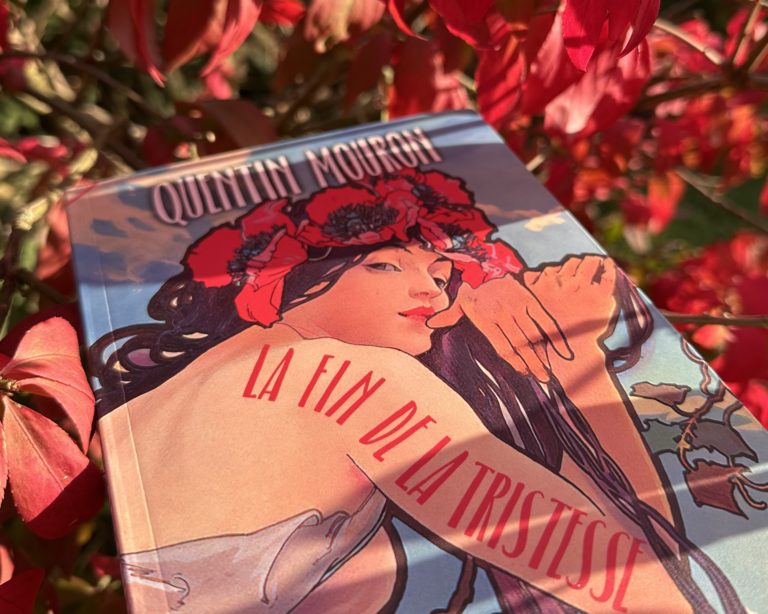
Photo credit: © Anais Sierro
Write to the author: anais.sierro@leregardlibre.com

Albert Camus
The Stranger
Editions Gallimard
1972
186 pages
Vous aimerez aussi



 French
  German
  English
Laisser un commentaire