

Without fear or reproach, Jean-Michel Olivier paints thirteen subjective portraits of personalities who are now ghosts. Marc Jurt, René Feurer, Simone Gallimard, Vladimir Dimitrijevic, Bernard de Fallois, Michel Butor, Nicolas Bréhal, Jacques Chessex, Louis Aragon, Jacques Derrida, Roger Dragonetti, André Dalmas and Juste Olivier are featured.
In life, or rather in the night, there are two kinds of ghosts. There are those who haunt us with terror, and others who haunt us with tenderness because we love them. The reader who loves bloodshed, graveyards and screams of terror, who idolizes The Thousand and One Ghosts of Dumas, can close this book. The other reader, who prefers a handshake to murder, can open it without delay. Because Jean-Michel Olivier's new book is all about thirteen friendly greetings - the triskaïdékaphobes had better watch out! Thirteen subjective portraits, sketched in pen, according to the high tides of memory. Their strength lies in the fact that they take the form of simple anecdotes, as they happen to you or me, to him or her, to the next-door neighbor or the hairdresser. And the beginning of the chapter on Jacques Chessex could be a twisted friendship, experienced by the reader, or a story overheard at the local café: «Three times, at least, we were friends. Then angry. Then reconciled. Then confused. Then very close again.»
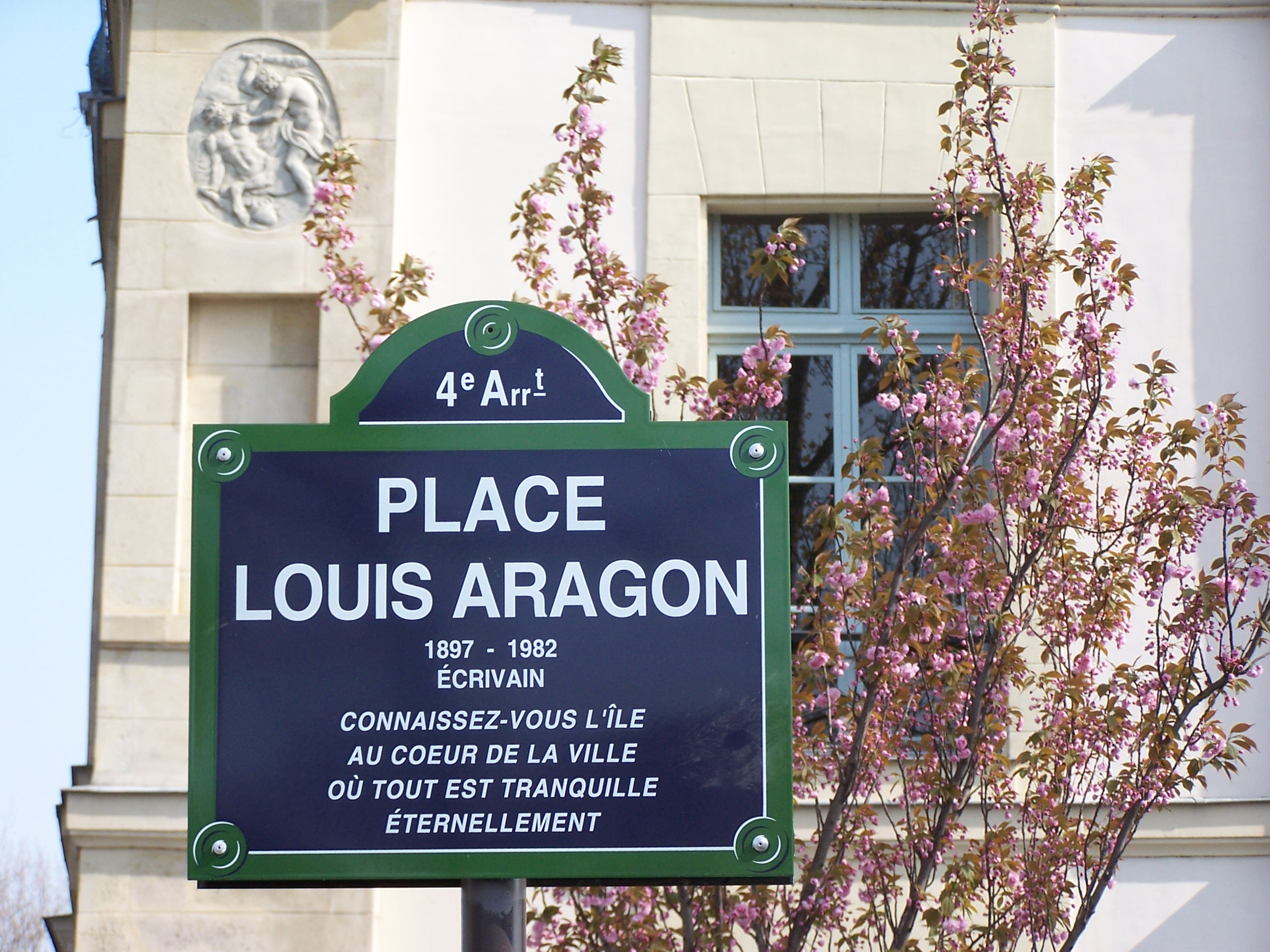
When it's not a story that the reader has heard or experienced, the advantage is that he or she can discover beautiful stories about great names, details that history doesn't remember. As is the case with Aragon, whom everyone knows as an illustrious poet of the twentieth century.th, No, readers will discover Aragon through the prism of Jean-Michel Olivier, who, at the age of twenty, met him several times on Wednesdays at Monsieur Boeuf's on rue Saint-Denis in Paris. And what the author saw as real, the reader also sees, discovering an Aragon «marked features, a face burnished by the sun (he's just come back from vacation)».» who moves his lips to say: «For many people, I am to have been. The one we met in Venice, I don't remember... As if I had been drawn by the events of my life, the trips, the dinners we had together.»
Around these anecdotes, the author's reflections on art are particularly enriching. The art of writing, the art of engraving, or both when they merge: «Engraving, writing: isn't it the same gesture?» Or, on another level, his reflections on the art of being a father: «We know today: it's the child who makes the father. Before the child, there is the man and the woman, united and separated, for better or for worse. But it's the child that gives birth to both of them, unwillingly.» And let's not forget the reflections of all kinds that punctuate the text, on society for example:
«The sixties ushered in the age of the videosphere. The cult of the visible replaced the legible. Images took the place of imagination. Then the digital age, which reduced the world to a series of binary numbers, replaced paper, the printer, the broadcaster and soon the publisher with a simple digital footprint.»
In this book, we move from one portrait to another naturally and seamlessly. There's a great deal of spontaneity in the writing of these anecdotes. The simplicity of Jean-Michel Olivier's words, combined with the accuracy of his recollections, makes the trick work. The reader is transported as close as possible to the writer Michel Butor, this «a man of a thousand books, always curious to place his words on an artist's work».», Vladimir Dimitrijevic, «You're forty-six years old, you've got a thousand publishing projects in mind, and you've got inexhaustible energy.», Bernard de Fallois, Simone Gallimard or the words of engraver Marc Jurt:
«In Bali, I learned to engrave on lontar leaves. In Australia, I harvested the earth that I now use in some of my paintings [...] The further I advance in my work, the more I feel I'm becoming an artist-anthropologist.»
During these transports, the spell is on. The reader, on his or her couch, suddenly softer and silkier than ever, moves forward into someone else's life, encountering the ghosts of the past as they lurk and lose themselves in conjecture. Sometimes they're familiar, sometimes foreign. Whatever the case, they're always affable, with open arms. So, during the encounter, don't let yourself be overcome by fear, stay zen, breathe in and out, and above all, don't conjure up these ghosts, for they mean you well.
Jean-Michel Olivier
In praise of ghosts
Editions L'Age d'Homme
2019
200 pages
Write to the author: arthur.billerey@leregardlibre.com
Photo credit: Wikimedia CC 3.0
 French
  German
  English