


Tuesday's books - Lauriane Pipoz
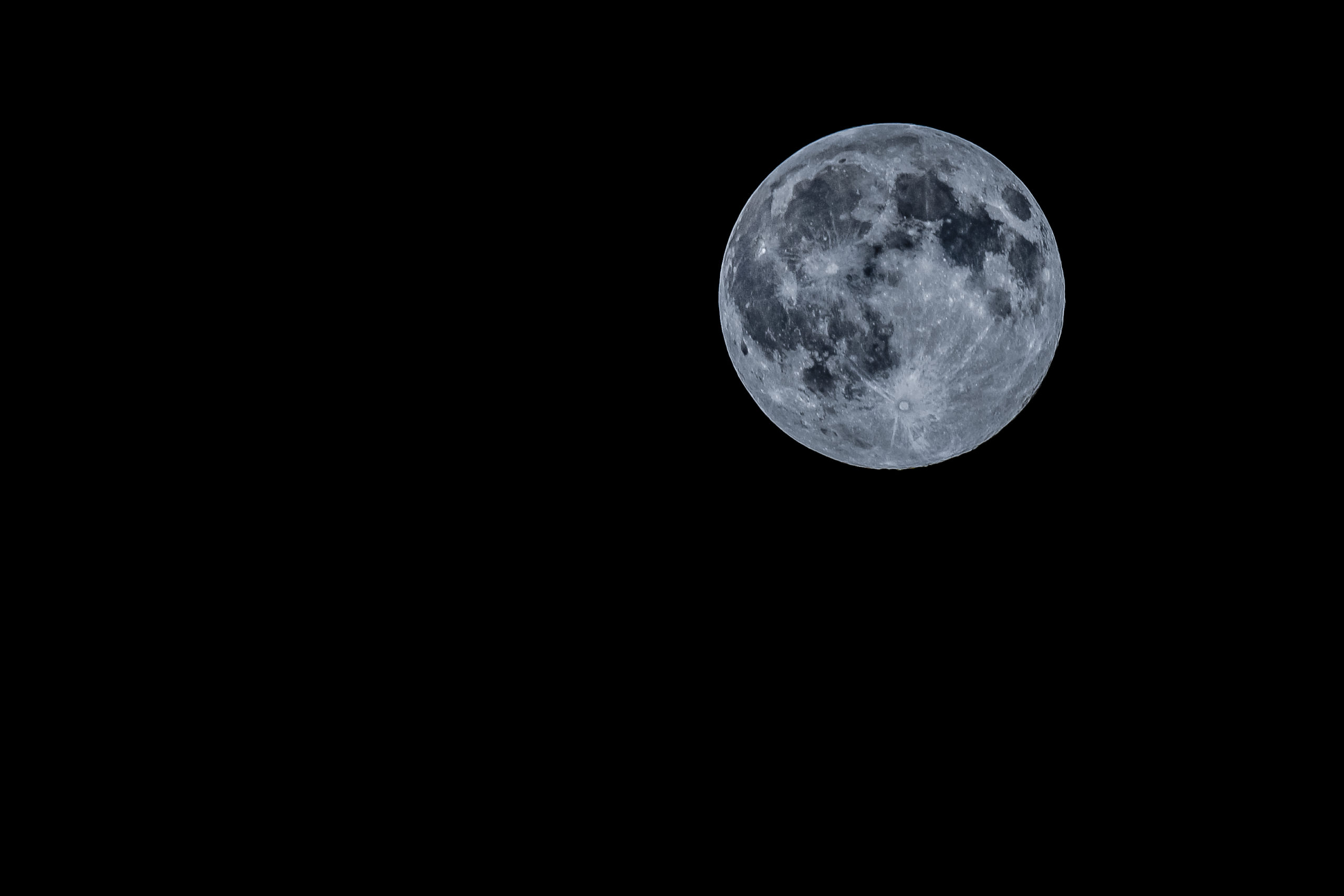
Fatoumata Kebe holds a doctorate in astronomy and a master's degree in fluid mechanics, according to the back cover of her novel. The subject of the book in question? Her passion, the Moon. A word the author writes with a capital letter. She has devoted her life to it. This book is the story of this star that is as well-known as it is little-known. Fatoumata Kebe wants to tell it to us, who appreciate romantic prose more than scientific writings. Yes, the moon can be a novel.
How do you turn the moon into a novel? By recounting the legends that surround it and personifying it. Despite her scientific background, the author has chosen to give the moon a soul and lend it functions. This way of writing, coupled with factually stated historical and physical events, makes the book a very easy read. Even if it would be a pity to devour it in one go: the short chapters give us plenty of time to pause at opportune points. And to appreciate each fact for what it is.
«In the dark, it reflects. The Moon is the mirror of our dreams, the reflection of our hopes and the shadow of our fears. She is our imaginary double, the first star that the first men ever saw, the first that they discovered. She is the only one, and she is the only one: the Moon is the Earth's only natural satellite. And the Earth itself is the only planet in the solar system to have only one satellite. The Moon is doubly unique.»
Fatoumata Kebe takes us on her journey in our own language: she popularizes, explains with the help of popular culture, hypothesizes on the origin of certain preconceived ideas and speaks directly to the reader. From the simple discovery of the moon, to its formation, the legends surrounding it, our relationship with it, and finally its conquest. The author masters her subject in every respect: she moves with ease from physics to history, via sociological references and analytical psychology.
In short, she's part of a new wave of graduates who effortlessly blend hard and soft sciences. And for the purposes of popularization, this open-mindedness is welcome: it's one thing for researchers in the humanities to back up their theories with hard science facts. It's quite another - and far more original - for an engineer to dare to mix her results with an assumed subjectivity, or even with emotions: this popularization for artistic purposes enables scientific information to be fixed in the reader's memory without their noticing.
«In French, to be lunatic is to be in an unpredictable, fickle, capricious mood, to change one's mind. In English, it means to be mad as a hatter. The Greeks called seleniacs [editor's note: the Moon, in ancient Greek, is a "lunatic"]. selene. the mentally ill and epileptics. To say that one is well or poorly related, or that someone is in the moon, betrays, in spite of oneself, one's irrational and highly personal relationship with our satellite. It's as if there's a mood shift towards dreams, and our perception of the Moon swings between serenity and anxiety.»
Is this a feminine approach? I'm not sure; the essence of artistic writing is to express emotions and make people feel them. But in any case, Fatoumata Kebe does write as an astrophysicist. And as such, she makes sure that female astrophysicists are given visibility. In a chapter entitled «Behind every man, there is a woman», she explains the fate of Katherine Coleman, the black astrophysicist who saved John Glenn's life in 1961.
To those who say she's surfing on a fashionable theme, I'd say yes. But with class: she doesn't dwell on her own condition as a woman in an environment considered masculine, but rather puts forward little-known historical facts to re-establish equality. She doesn't openly criticize the history that has only remembered John Glenn's name, but reminds us that, behind the scenes of his space expedition, the man was not alone. It's a kind of tribute.
At the very end of the book, she adds some disturbing figures: only 10% of astronauts are women. But once again, the author doesn't complain about this finding, and ends on a totally positive note. It's not a simple number that will prevent her from achieving her life's goal. An example: against inequality, speak out, but above all keep working.
«I'm sure I'll go into space one day, I'm training for it, I'm on a diet, I'm working and I'm still learning every day, every night. One day I'll go. When I come back, I'll tell you all about it. The Moon is the novel of my life.»
Photo credit: © Pxhere
Write to the author: lauriane.pipoz@leregardlibre.com

Fatoumata Kebe
The Moon is a Novel
Slatkine & Cie
2019
190 pages
 French
  German
  English