











«Flames on #Lesbos, the book you wish you'd loved

Tuesday's books - Diana-Alice Ramsauer
There are books which, on paper, would have everything to please. Such is the case with Flames on #Lesbos. The «novel-reportage» narrative concept is original, the theme of migration in Greece deserves to be highlighted, and the likelihood of further enrichment after reading promises to be high. And yet... it's boring from start to finish. At least, I was. Worth keeping: the brilliant positions taken by the various characters and the pertinent analysis of the situation on the island of Lesbos. As for the rest, I'd classify this book as «excellent reportage», but unfortunately not as a «novel».
The book is spread over five days. Five days to help us understand the violent situation on the island of Lesbos. Five days for the story's journalists to deliver their reports. Five days to follow Illias, Benjamin, Zoë and Eustis, the main characters.
In search of the right story
Illias is a young migrant from the Ivory Coast. He has been on the road for twelve months before arriving in Greece. At the time of writing, he is suspected of having set fire to the Moria refugee camp and is locked up in prison. He doesn't know how to get out. His chilling reflections on the situation are enlightening: «A good applicant is basically no different from a good storyteller. You have to draw inspiration from the griots, become a poet, a musician, a bewitcher. You don't just have to tell the pictures, you have to conjure up the smell of corpses and the sarcasm of killers.» Author Thomas Epitaux-Fallot's cold, sometimes contrarian view of societal issues follows us throughout the book.
On the other side of the prison bars is Benjamin. He's a journalist from a northern country. He's the alter ego of the author of this novel-reportage. He wants to make a good video story for the French-speaking media, but above all for social networks, he wants to «defend the wretched, so of course refugees are a godsend». He meets Illias and thinks he's got a good deal. Whether or not the young Ivorian actually set fire to the tents, burning down part of the camp, will be the main thread of the story.
Journalistic products, sausages?
Zoé is also a journalist. The «right-wing journalist», anti-profane and anti-self-proclaimed «new people», the exact opposite of her colleague Despina:
«Her retweets resemble products from a catalog of the perfect progressive: fight against homophobia; fight against sexism; fight against fascism... it's all there: so depressingly predictable.» Both of them are engaged in a competitive battle to sell their production on the subject of migration to the island of Lesbos. They «reign over almost the entire market».
They are «like two warlords sizing each other up from a distance». Media space is seen as a territory to be conquered. For this book is more than a painting of migration, it is above all a depiction of a rotten media world. A little gem, this sentence sums up the author's thesis: «In the end [...] journalistic products are not so different from sausages. To be recognized, they have to maintain a certain shape. Otherwise, no one wants to swallow them.»
NGOs, the European Union and the bourgeoisie in search of exoticism
We could go on to describe the character of Carole, the suspicious lesbian NGO manager, or Aïcha, the little refugee sister who wants to open a clothing store in Paris, but let's just name one main figure, perhaps the most brilliant: Eustis. Eustis Papadakis. He is the mayor of Lesbos. A slightly overworked elected official who has a stormy relationship with the European Union, but above all a politician whom the author has decided to portray with punchlines at every turn. For Papadakis, these refugee camps are obviously a blight on his island. In fact, the global politics surrounding them are sickeningly hypocritical.
European Union funding is dependent on the judgement of commissioners, who can suspend funds to punish states that fail to follow recommendations, or conversely, largely support those who «make the effort». He observes that migration is becoming a business like any other: first and foremost on the part of the smugglers, of course, but also on the part of companies that are, on the whole, respectful; like the French company that won a fifteen-million contract to install containers in a camp. The mayor's cynical remark: «After nuclear power, France has found a new industry». The NGOs, too, take their hat off when it comes to the catastrophic situation in the camps: «[...] without all this NGO crap, we certainly wouldn't be in this mess», spits Papadakis.
Always looking for a good story
As you can see, the themes are carefully and lucidly addressed. This is not a maudlin text on the catastrophic situation in Greece. Some passages even demonstrate a very thorough analysis of current events. Nevertheless, what's missing is an unmistakable thread. Despite the narrative line of the fire - which obviously remains the crux of the plot - Flames on #Lesbos unfortunately resembles more a series of testimonies collected during an in-depth journalistic report than a novel that keeps us on the edge of our seats.
Attempting to show all points of view, without following the gaze of a charismatic figure, is a disservice to the book. Perhaps the author wanted to stay too close to a supposedly objective reality: a way of presenting facts that is acceptable in a 5,000-signature article - and even then, it's debatable - but not in a 240-page novel. This self-published novel-report will remain an essay for the time being. Be that as it may, if Thomas Epitaux-Fallot were to embark on a second attempt, I'd be quick to dive in.
Write to the author: diana-alice.ramsauer@leregardlibre.com
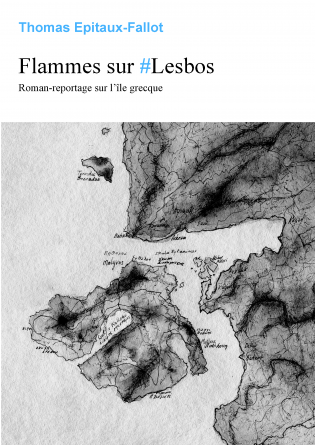
Thomas Epitaux-Fallot
Flames on #Lesbos
Self-publishing
2020
246 pages
Vous aimerez aussi



 French
  German
  English
Laisser un commentaire