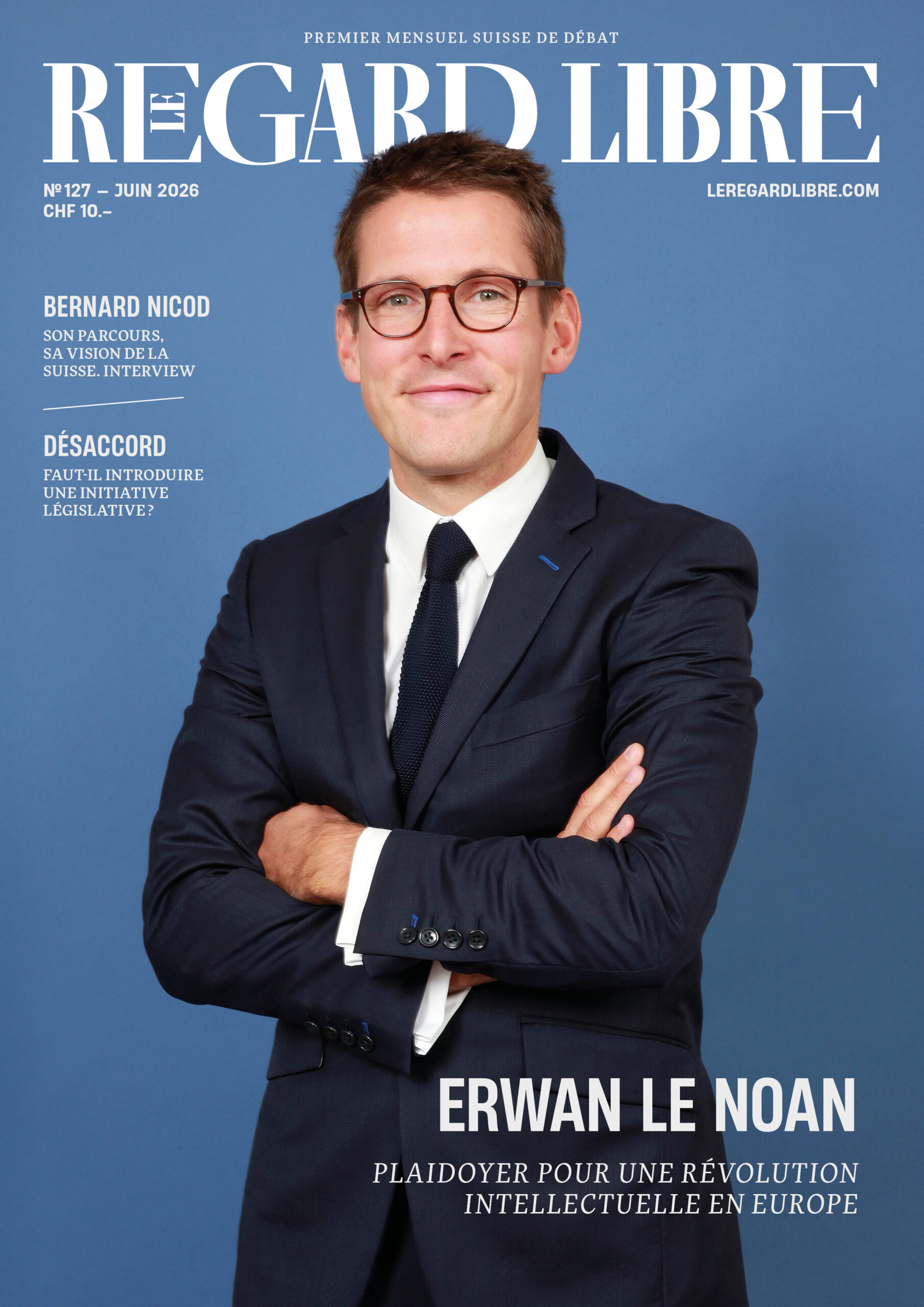




Journey to the end of the dark night by Pierre Soulages

In Pierre,Christian Bobin's outrenoir painting, by Pierre Soulages, is a distracted meditation on the emergence of all presence on earth. A must-read.
Some readers will describe this book as a narrative, others as an essay, others as a collection of reflections, others as a song. an essay, a collection of reflections, a poetic song, a letter of admiration to a friend others a poetic song, others a letter of admiration to a friend, others an inner dialogue others a philosophy of the dark, still others a distracted meditation. But what's the point of trying to pin a genre on Christian Bobin's latest work? Bobin's latest work, whose title, an open comma on the horizon rain of words and images will be torrential.
In fact, this book goes even further, laughing out loud, saying to us readers, who are you to dare stick a genre or a serial number on my frontispiece? Why do you want to enclose my words? Stop it! Stop labeling, stop delimiting things or songs, for God's sake, stop being the author of your own life. Forget yourself for a moment, because only in this way will you catch the passing light and become angels again:
«There's nothing worse in life than ourselves. Ourselves: with the vanity of our words, the hypocrisy of our silences, the trembling of our interests, the little decayed tooth of our faith in life. Ourselves. Strength is constantly given and given back to the angels we are no longer and must become again if we wish to remain human.»
Christian Bobin uses an indefinite, protean genre to take us on a train journey on the night of December 24, 2018, from Le Creusot to Sète, the home of his friend Pierre Soulages, who will be a hundred years old at midnight and to whom he would like to give his latest book: The night of the heart. During his nocturnal journey, punctuated by the jolts of the train and the comings and goings of the few cabin passengers, Christian Bobin closes his eyes and thinks of Pierre Soulages« painting in all its shadowy guises. He thinks of the effect it has on him. He thinks of the light it contains: »You are the one who decided to illuminate with black."
Read also | Journey to the end of the dark night by Pierre Soulages
He thinks that the Louvre is not the best place to exhibit his paintings, that the best place would be «a rotting garage in a country village». He thinks of Pierre Soulages' habit of signing his paintings on the back. He thinks of his snail's pace and the lightning speed of his imagination. He thinks that his paintings have no title. He thinks a lot about his infinite variations of black. He thinks his paintings are an act of resistance against the current reign of the packaging:
«Your painting appears at a time when powerful technologies are preparing to cover the world in colorful, merchandising, void covers. Your black is a call to resistance.»
These thoughts about Pierre Soulages and his painting memories of Christian Bobin's father and other close friends. Bobin's father and others close to him: «My father's eyes were the room of the sun. I inhabited it powerfully. Those eyes are now mine. I live from their eternity.» These thoughts summon a presence that often comes accompanied. Bach summons Rimbaud, who summons Soulages. This gives the book a warmth, like a living home, filled with objects, stories and people people in every room.
The digressions the author stores here and there answer or complete each other from one chapter to the next, offering an organic, renewed reading, close to life. In the end, we don't set off from Le Creusot to reach Sète. We don't go from point A to point B. We reach Sète by way of the stars, by way of Mount Fuji.) is Mount Fuji«, by walking the idiotic red carpet at Cannes, by passing through the Channel Tunnel of the author's memories and by everything that makes us, at such and such a time, in such and such a place, an accidental, mysterious and unheard-of combination of the sum of our impulses, our syntheses, our dreams, the wind tousling our hair and surely a whole host of other things that escape us.
Christian Bobin's writing is rich in images. They follow one another like a procession of Isis, following a Corpus Christi procession, following a procession of Ganesh. The associations are fertile, the repetitions serve as colorful vehicles, and the rhythm is driving.
In the end, if you open this book, you won't put it down again until you've read it, your head full but surprisingly lighter. Is this one of the powers of writing? The reader, between sips of Coca-Cola or after an appointment at the dentist's, wherever he or she may be and wherever he or she may come from, will reserve the right to respond after reading the luminous sentences of Christian Bobin, whose brass roots draw their juice from the black paintings of Pierre Soulages. The writer's singularity responding to the painter's singularity, like a free discussion between two birds:
«In writing, I seek a voice, my own, for if I find my voice, then I will immediately find the unique voice of those I love. The singular calls the singular that answers it, like two birds in the forest, invisible to each other.»
Write to the author: arthur.billerey@leregardlibre.com
Photo credit: © Wikimedia

Christian Bobin
Pierre,
2019
Editions Gallimard
95 pages
You'll also like



 French
  German
  English
Leave a comment