




Silencing the lemurs

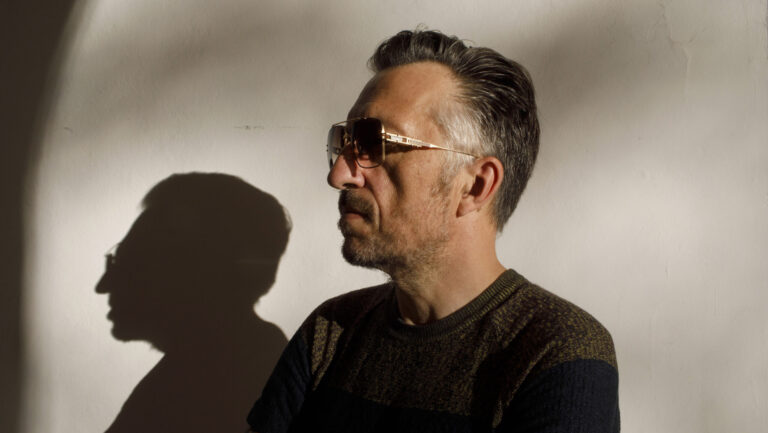
Johanne Rigoulot © Chloé Vollmer-Lo
Rachida Dati became Garde des Sceaux, while Sara became a murderer at the age of 19. Yet they both grew up in the same milieu, in the same small French town. Investigation into a provincial girl who exploded in mid-air.
Barbaric, savage, unclassifiable, unspeakable, monstrous… there are many adjectives to describe a homicide born of an outburst of violence. The media eagerly seize upon them to fuel their crime news sections. Sara’s murder, which occurred in 1991, did not, however, make any waves. But it has remained very much alive in the mind of Johanne Rigoulot, an author and journalist, who cannot (Among the ancient Romans, lemures were malevolent spirits that tormented the living.). And to lock her up in A girl from the countryside, his new book.
«Between his birth and death lies the span of a story reduced to failure. Between the two lies the breath of a tragedy that cannot be averted.»
The youngest of six children in a family with a violent father, Sara grew up in public housing in Chalon-sur-Saône. Her educational journey was a difficult one. She did, however, find a job at a nursing home, where she met Yvonne, her victim. She murdered her with a knife with inexplicable cold-bloodedness. There was no motive. In fact, no one will ever know what drove this 19-year-old woman to commit such an act. Johanne Rigoulot does, however, highlight an important factor that certainly influenced Sara and plays a role in a large proportion of crimes: a psychiatric disorder linked to drug addiction. While this may not be the only factor, it is one of the avenues the author explores.
«In the fabric woven between norm and difference, between sanity and madness, certain threads intertwine with others, making the pattern more complex.»
Two Opposing Paths
Johanne Rigoulot isn’t trying to understand Sara because she’s fascinated by her crime—far from it. She’s a far cry from the romanticization of notorious murderers that’s evident in recent hit movies and TV series. Her approach is far more sociological. In addition to what she calls «the vagaries of psychiatric pharmacology,» she points to systemic breakdowns, a lack of funding in this sector, and a dearth of language in a socially disadvantaged community.
This approach, while relevant in many respects, nevertheless reveals a tendency to absolve the individual of responsibility. While it is true that, statistically, crime rates decline in societies with robust psychiatric and judicial infrastructures, this does not mean that crime is eliminated. Poverty or drug addiction do not necessarily lead to crime either. Is it therefore desirable for a community to bear a share of collective responsibility for an individual’s deliberate choice?
Rachida Dati, for example, is often mentioned in these discussions. The former Minister of Justice—who was recently appointed Minister of Culture—grew up in the same city and in a similar social context, yet has climbed the ranks. How is it that two lives that started from the same point have led to such different outcomes?
The story offers no definitive answer to this question, as we will never have access to Sara’s psyche and will never know what drove her to commit the worst of crimes. Through fluid and personal storytelling, the author succeeds in taking a forgotten «news item» and using it to scrutinize an entire system.
Write to the author: [email protected]
You have just read an open-access literary review, which was also published in our print edition (Le Regard Libre N°103). Debates, analyses, cultural news: subscribe to support us and get access to all our content!
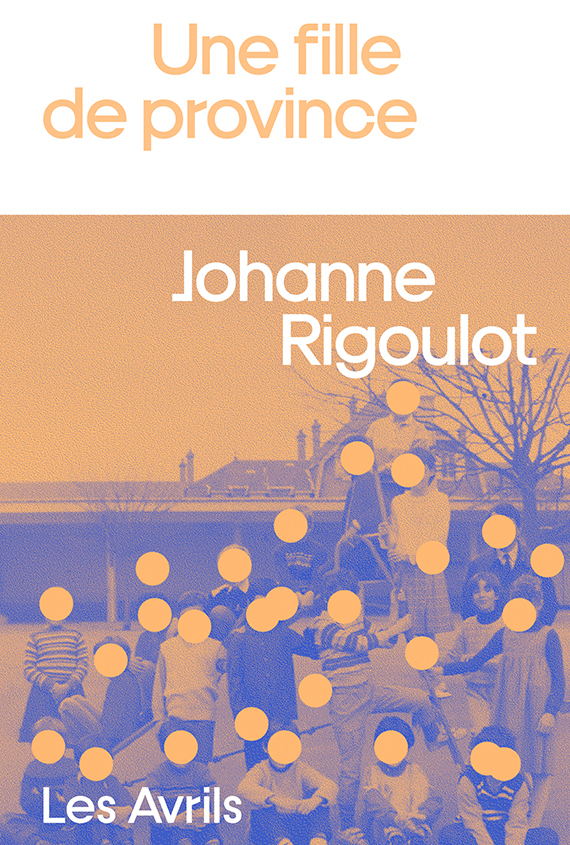
Johanne Rigoulot
A girl from the countryside
The Aprils
September 2023
169 pages
You'll also like



 French
  German
  English
Leave a comment