




Frayed flags
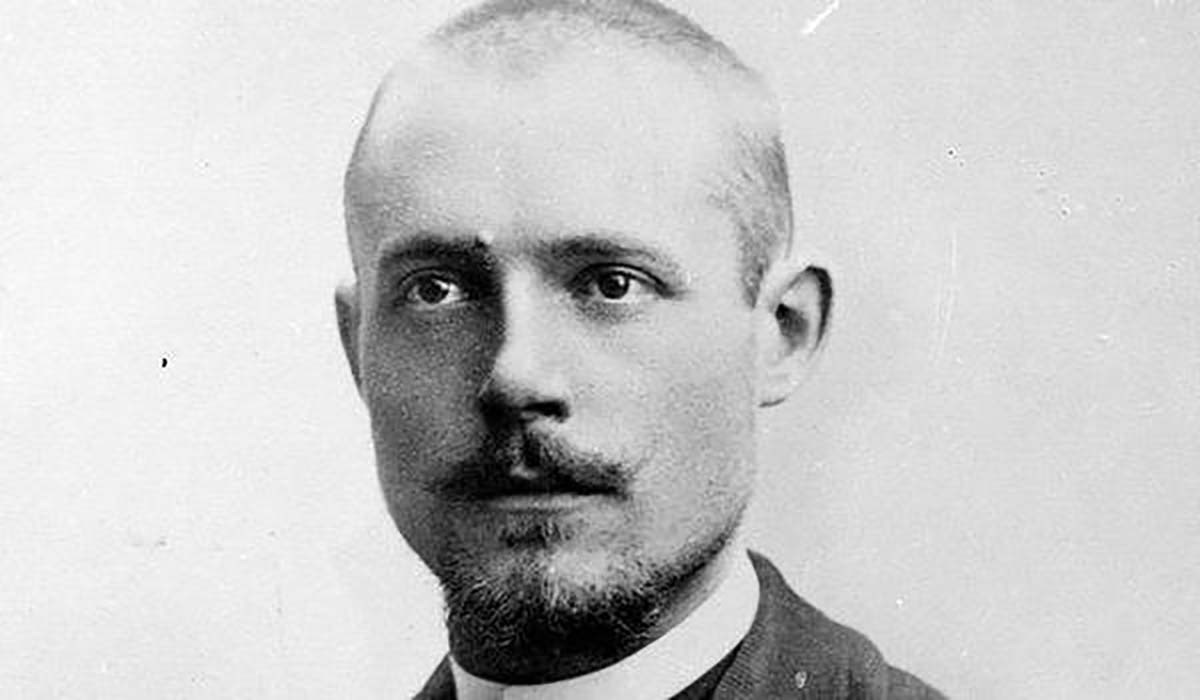
Charles Péguy © Eugène Pirou
In this post, Swiss writer André Durussel delves into some of Péguy's writings, which resonate with our own times. This reading also leads him to other thoughts.
These days, I’ve been rereading some writings by Charles Péguy, who was born on January 7, 1873, in Orléans—it will soon be 150 years ago. Why am I doing this? Not only because the war in Ukraine places us all, whether we like it or not, in the context of an ongoing conflict—with its accompanying horrors, bombings, and refugees—but also because of its similarities to September 1914 in Villeroy, in the Marne region, where Péguy would fall on September 5, at the age of forty-one.
Under the title The Non-Contemporary, Alain Finkielkraut reminded us, some thirty years ago now, of the relevance of this peasant who had studied at the École Normale Supérieure—a Dreyfusard, a Catholic, and a socialist all at once. It seemed to me that reintroducing his poetic, critical—even prophetic—thought into today’s intellectual landscape was a necessity.
«The frayed, worn flags, folded at the staff like a sail on a mast»
Charles Péguy had founded [the organization] on January 5, 1900 The Fortnightly Journal. Despite immense financial difficulties, this publication would nevertheless continue until April 26, 1914. On this subject, allow me to briefly mention here a personal endeavor that, relatively speaking, has often brought me closer to Péguy. It is that of the cultural journal SPACES (1975–2000), which I had founded with the poet Vio Martin—a friend of Gustave Roud—and the journalist and choreographer Jacqueline Thévoz, initially as a supplement to the Moudon Journal, and then became independent in January 1980. But let’s get back to Péguy! It was indeed in June 1909, in an issue of the Fortnightly Journal, when he wrote these prophetic lines—lines about a great war that was brewing:
«Those hundreds of thousands of men leaning down the same slope, their bodies stretched forward. The enormous, moss-covered lines—slender or square, linear or stocky—on the shifting ground, of men with their calves equally taut. And the flags, lying flat like them, fluttering like them, the torn flags, flapping like them, torn like them… The flags tilted at the same angle, battered like them by the same storm, flapping like them, cracking like branches, like real tree branches, drenched by the same downpour, battered by the same tempest. The frayed, worn-out flags, bent at the pole like a sail on a mast, stretched taut like them, pointing, pointing like them, tossed about like them against the face of the sky, knocked down like them, defeated like them—rising again like them.»
I’m also rereading this «Prayer for Us Mortals,» which the composer and organist Jehan Alain (1911–1940) set to music for tenor, bass, and organ, before he, too, fell on June 20, 1940, on another battlefield, in Saumur:
«Mother, here are your sons, who have fought so hard.
Let them not be weighed as one weighs a demon.
May God give them a little of that silt
»That is what they were in principle, and that is what they have become again."
The most important thing for a writer is to convey what within him demanded to be expressed. But immediately afterward, the work ceases to belong to him. Péguy explained this on several occasions, and not without anguish. He defined this strange posthumous life of a work, eternally entrusted to readers for a completion that is always uncertain.
André Durussel He is a writer and essayist, but first and foremost a poet.
You've just read an open-access article. Debates, analysis, cultural news: subscribe to support us and get access to all our content!
You'll also like




 French
  German
  English
Leave a comment