

Well-known to thriller fans, Don Winslow, author of Savages, delivers a new trilogy this year - including The burning city is the first volume - inspired by the’Iliad. Although he has accustomed us to more twists and turns, it has to be said that he remains a master of the genre.
Even if many believe this episode to be historical, especially since the film starring Brad Pitt, it's a fact that everyone knows the story of the Trojan War. Yet few authors have used it as food for thought. This is a mistake, given the possibilities that open up when the context is altered.
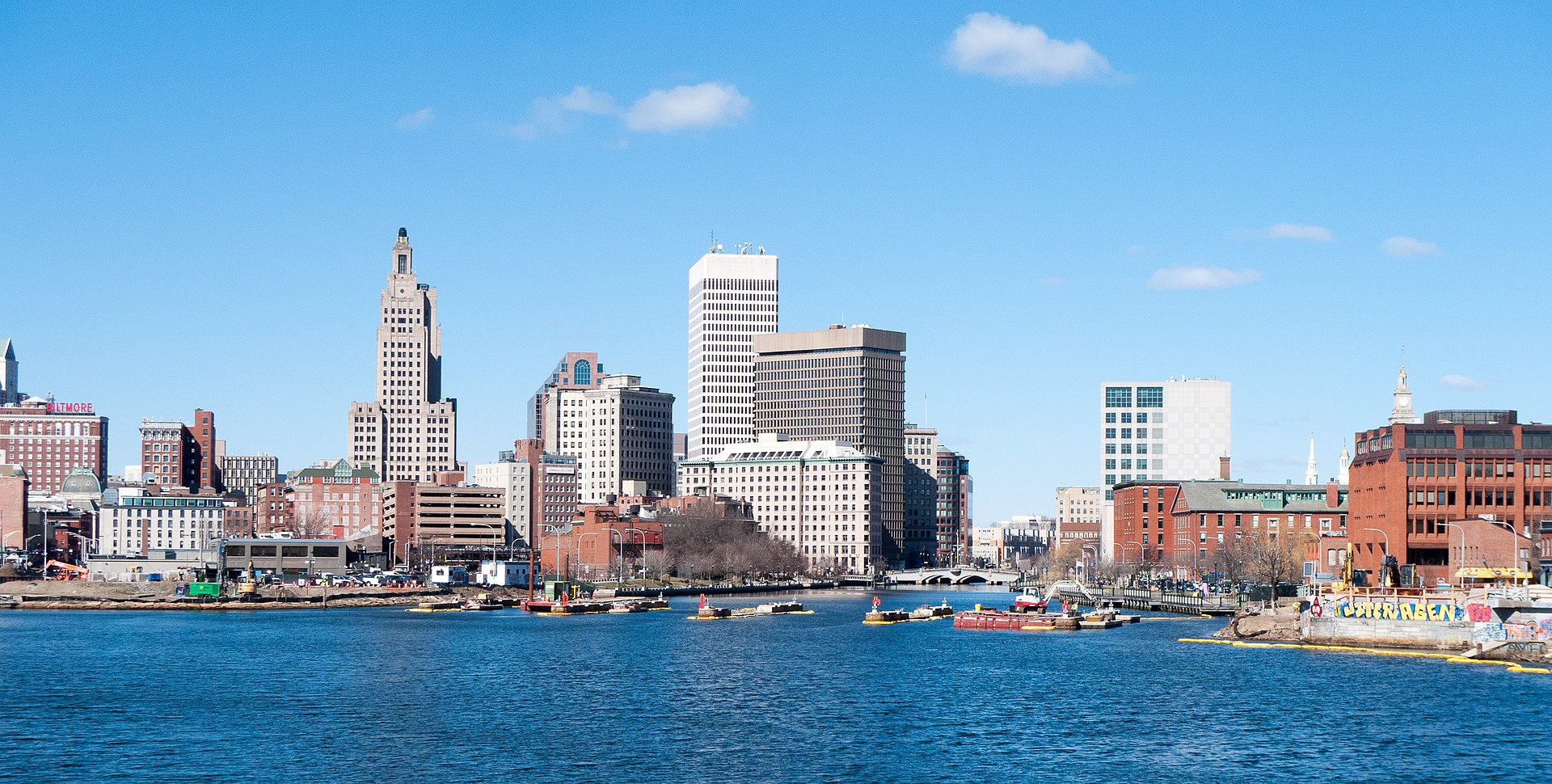
Don Winslow has taken up the challenge of re-adapting this mythical story, transposing it to the Providence of 1986. Two hitherto friendly families, the Murphys and the Morettis, heads of the Irish and Italian clans respectively that rule Rhode Island's capital, have been tearing each other apart ever since Liam, the youngest of the Irish, flirts with Pam, Paulie's ex-girlfriend from the opposing clan. From then on, a succession of attacks, revenge, dirty tricks and violence befalls all members of the two families, and in particular Danny Ryan, the hero of the story.
But then, if the story is common knowledge, what's the point of presenting it again?
Spartan psychology
One of the strengths of this book lies in the fine presentation of its characters. Far from being a simple accumulation of scenes of revenge, this novel relies above all on the psychology of its protagonists and the evolving relationships between them. Danny Ryan, the main character, is not a member of the Irish clan. As such, he operates on the bangs of the Murphy family and is accepted only because of his name. So he doesn't really know why he's mixed up in all this.
The choice of introducing a character from outside the inter-clan conflict is a clever one: it gives the reader an anchor in the story, without giving him or her a biased version of events. We fear for Danny just as he fears for his life, and we question his motives just as he questions the actions of his own.
The treatment of antiques
Another theme addressed in The burning city is the question of transmission and inheritance. The renewal of the world, a mobster tale if ever there was one, is treated here through the prism of the older generation's loss of control to the younger generation and their new methods.
«Times are changing," cuts in Bernie. We have to adapt. Otherwise, we're dinosaurs...
Liam asks him:
What's wrong with dinosaurs?
Do you see any around you?» he replies.»
But this form of storytelling actually hints at a real relationship with writing: how to perpetuate ancient tales without plagiarizing them, how to make them accessible and renew them almost 3,000 years after they were written? In this headlong rush of newcomers seeking to kill the father, could it not be the will of a writer wishing to engrave his mark on the epitaph of black literature? After his cartel trilogy, Don Winslow has nothing left to prove in the field, leaving him no choice but to try and renew the genre by going back to basics. By the same token, his lack of twists is perhaps excusable: we know the classics, and it's up to him to remodel them to prove that it's still possible to extract something from them.
Emancipation through violence
Another form of character development involves escalating fury. We're thinking of Sal, the killer of the Italian clan, who turns out to be homosexual and, to prevent any retrograde analogy by his own kind, hides behind a marriage of convenience and boundless animosity. He is the main killer, the one who can tip the balance in this childish war. A retelling of Achilles, this character will become the opposing pivot who will carry out the dirty work and push tensions to the point of no return. Don Winslow uses him as a nuance for a world without Manichaeism, where the good guys can sometimes turn out to be dreadful, and the opponents can show mercy.
No longer a question of honor and loyalty, we hit where it hurts, and several times if necessary. All that remains is the ridiculous outburst of a war of egos that refuses to live up to its name, a conflict as old as the world that stretches from ancient tales to Reagan's America. The characters respond to the years of recession with ordinary violence, where it's not surprising to go and blow up an opponent's car, even if it means hitting the wrong target, in order to leave no ground for the other side.
A renewal of the genre?
In this first volume of his forthcoming trilogy, Don Winslow revisits the epic genre with a harsh world and the fluid, dry writing of a Coppola film. The cable unfolds before our eyes with a liveliness and simplicity that would make us wish we could reproduce the exercise. If the method is not new to him, it is all the more striking here because The burning city is one of his shortest novels - and yet we're delighted to see such a saga unfold in so few pages.
Write to the author: mathieu.vuillerme@gmail.com
Photo credit: © Kenneth C. Zirkel / Wikimedia Commons
You've just read an open-access article. Debates, analysis, cultural news: subscribe to support us and get access to all our content!
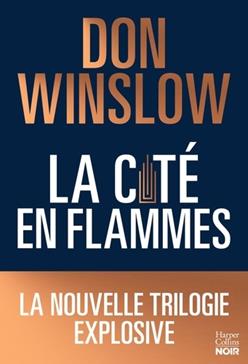
Don Winslow
The burning city
Translation by Jean Esch
Harpercollins
2022
391 pages
 French
  German
  English