




Bertil Galland, the man of letters in French-speaking Switzerland

Le Regard Libre N° 46 - Alexandre Wälti
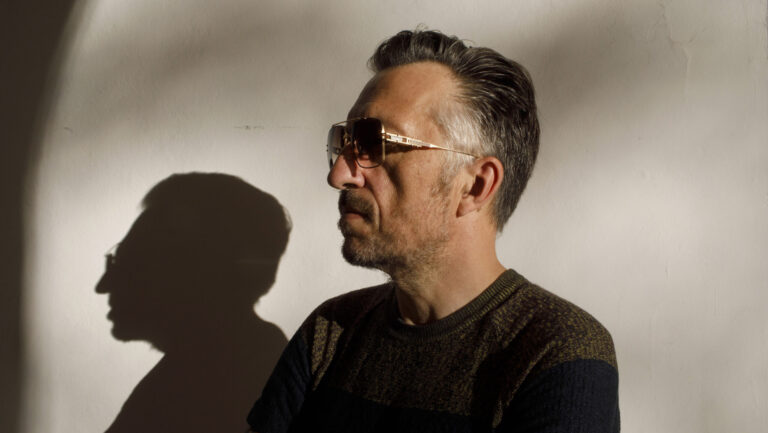
Bertil Galland is a personality who has directly influenced the influence of French-speaking authors such as Jacques Chessex, Maurice Chappaz and Alexandre Voisard. A journalist before he was a publisher, he has also written eight fascinating books for Editions Slatkine (see review on www.leregardlibre.com), in which he evokes both his journalistic and editorial work and his passion for words. A generous man who gave us over an hour of his time in Vevey. A discussion that simply began with the desire to know who we are, where we come from and what we do at Regard Libre. A man who listens, and who has been on the lookout to reveal to the general public many of the talents of French-speaking Switzerland.
Read also: "Local Stories": A Record of an Era to Help Us Reflect on the Future
Alexandre Wälti: Journalist, editor or writer, which hat suits you best?
Bertil Galland: It's hard to pick one hat or the other. Let's start by emphasizing my love of languages. I grew up in a bilingual environment, as my mother was Swedish and my father Swiss. In particular, I've been reading poetry since I was a child, although I don't necessarily like children's books. As a result, I've built up a third, inner country of words and poetry. My love of poets very early on awakened an immense respect for those who wrote. I've never considered myself a writer, as I still admire them far too much today. I've been a journalist and editor, never a writer or poet.
Where does your particular affection for the poets and creators of French-speaking Switzerland come from?
As I grew into adulthood, around the 1950s, I quickly realized that writers in French-speaking Switzerland were in a state of crisis following the death of Ramuz. People were taken by surprise and no longer knew exactly which French-speaking Swiss author to cite as an example. This disturbed me. That's when I met people like Jacques Chessex in his early days and other writers. However, I realized that there was a need for a magazine to publish their work. Publishers were also lacking, despite the large number of printers in French-speaking Switzerland. The reputation of Book Guild undoubtedly accentuated my passion for literature. At that time, Switzerland played a leading role in the world of literature. leader in book clubs, since the works of the Guild were very cheap. In fact, that's how I got into literature in spite of myself: my mother, of modest origins, could afford books thanks to these guilds, and the subscription was only five francs a month.
How did you come to meet the French-speaking writers of the time?
You know, I was struck above all by the newspapers' ignorance of the writers of the time. They often found their way into the local news with a touch of contempt. On the contrary, they went out of their way to celebrate writers from Paris. Believe me, it was amazing! That's when I approached Gustave Roud, the poet from Carrouge. He was about to turn sixty in 1957. It was then that Jacques Chessex and I thought of an event worthy of him. We went to great lengths to organize a party in his honor, inviting what we considered to be the best creative minds of the day. We set up a party with very few resources. In particular, we asked a young poet, Philippe Jaccottet, still an unknown, to pay tribute to Gustave Roud by reading his work. Each artist present selected one of his or her own texts and had to read it in front of the Vaud poet. It was our way of thanking him. Everyone broke away from their common isolation.
Why did you go to America when you did?
I took advantage of a scholarship to train in journalism on the other side of the Atlantic. I worked for two years in newspapers. Later, we created Meeting with literature students thanks to a fellow student who had inherited a printing business.
You take over the reins of the independent publishing house des Cahiers de la Renaissance vaudoise (1960-1971) on your return from the United States. You published some astonishing texts for the time. Tell us about Portrait of Valaisans by Maurice Chappaz and Carabas by Jacques Chessex.
No one wanted to publish Chappaz's manuscript because there were three passages considered unpublishable in French-speaking Switzerland at the time. One was about young men meeting in an orchard and comparing penis sizes by hanging a basket full of apricots. The other concerned the episode of the prisoner who managed to communicate with his girlfriend through the bars of his window. Up to that point, the passage might have been publishable. Except that the prisoner spread bread with his semen and gave it to his girlfriend. You can see how puritanical we were back then in French-speaking Switzerland. I was amazed that we were still censoring such passages which, in other languages, had long since been published. I was also the first editor of Carabas by Jacques Chessex. Another manuscript that no publishing house wanted. I let him write with total freedom. In this work, the writer from Vaud had a page in which he described his narrator's love affair with a whore, in which the latter ended up drinking urine and doing appalling things. It was at this point, in absolute horror, that Chessex chose to write that the narrator sees God. From that moment on, the reader's mind shifts from horror to purity, and this is very evident in the writing of the Vaudois writer, whose knowledge of sacred texts was extensive. It was obviously an absolute scandal at the time.

Because of this publication, I was thrown out of the Cahiers de la Renaissance vaudoise. I then set up Editions Bertil Galland alongside my work as a journalist. I organized numerous evenings at my own expense with writers such as Chappaz, Pestelli, Chessex, Bouvier and Voisard, who went on to become true friends. This was a particularity of my approach to publishing. I wanted to bring creators together and create a kind of family of friends around the books the publishing house published. All you had to do was get them together and the ideas would shine. These people all had a touch of genius. It was then that the French publishing world realized that what was happening here was remarkable. A bridge was also built between the two countries through the impetus of a formidable man: François Nourissier. Thanks to him, I was able to conclude formal agreements and friendships with Grasset and Gallimard in Paris.
Later came the magazine Writing in your own publishing house. Was it also the logical continuation of the encounters between all these creators at the end of the fifties?
Absolutely! In short, what was lacking at the time was the social conscience to enable the creation of structures, risk-taking publishing houses and magazines to bring works together. Unfortunately, local writers were not taken seriously. We then witnessed a tremendous awakening of literature in French-speaking Switzerland. All this happened as soon as I returned from the United States. I'd had time to think about how to showcase the writings of all the creators who'd been present at Gustave Roud's birthday party. I realized that Corinna Bille and Maurice Chappaz didn't have a publisher when the adventure began. Writing. Or rather, that they didn't have a publishing house that would take risks to publish their still little-known writings.
You seem to have always kept the sparks of provocation flying to make readers think. Was the «Jaune Soufre» collection, published by Editions Bertil Galland, just the most obvious result of this desire?
This collection is a reaction to the sometimes very conservative atmosphere of the time in French-speaking Switzerland [seventies and eighties]. My incidents and dramas, such as when people threw Cahiers de la Renaissance vaudoise in 1971, stemmed above all from a disagreement with a completely outdated vision of morality. That's when I decided that there should be a collection in which you could «spill the beans», but with flair. Maurice Chappaz, for example, was completely outraged by the unscrupulous development of tourism in the Valais. That's how the idea for the Jaune Soufre collection came about. We needed a collection where we could «set the house on fire» in an intelligent way. French-speaking Switzerland needed to let off a little steam. The result was Les Maquereaux des cimes blanches by Maurice Chappaz. He was quite excited by the idea of expressing his anger in poetry at mass tourism and denouncing limitless entrepreneurs. Another example of the Jaune Soufre Collection's willingness to question an era is Eros in Helvetia by Mary Anna Barbey, published in 1981. She did it with panache and a unique energy! A book in which she freely tackles themes such as contraception and sexuality. She laid the foundations for sex education for young people at the time. At the time, such a commitment was surprising in French-speaking Switzerland.
What was the most important book in the «Jaune Soufre» collection for you?
It's obviously Chappaz's book! Because its publication triggered a violent journalistic reaction against the poet. A journalist from Nouvelliste wrote some seventeen articles directly attacking Maurice and his book. I was amazed at the effect a book could have on public opinion and on the private lives of Maurice Chappaz and Corinna Bille. There was a huge inscription on a cliff above Saint-Maurice that read, «Vive Chappaz!» It was linked to the book's release. Students from Collège de l'Abbaye wrote these words in defense of the Valais poet. This succession of events is like a dream for any publisher.
Finally, what meaning do you give to your eight volumes of memoirs?
I never wanted to be a writer, because I wanted to promote authors. It was Jean-François Tiercy who approached me and told me to pull out all my notes and organize them into a series of books. The other aspect is linked to Tamedia's arrival at the helm of the newspaper. 24heures. The media group got rid of bins of Nicolas Bouvier and Ella Maillart archives without thinking about what could be done with them.
Write to the author: [email protected]
Photo credit: © Indra Crittin for Le Regard Libre
-
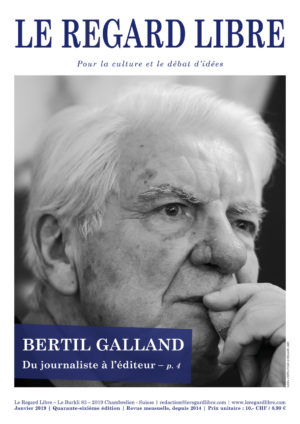 Le Regard Libre - N° 46CHF10.00
 -
 Standard subscription (Switzerland)CHF100.00 / year
 -
Support subscriptionCHF200.00 / year
You'll also like



 French
  German
  English
Leave a comment