



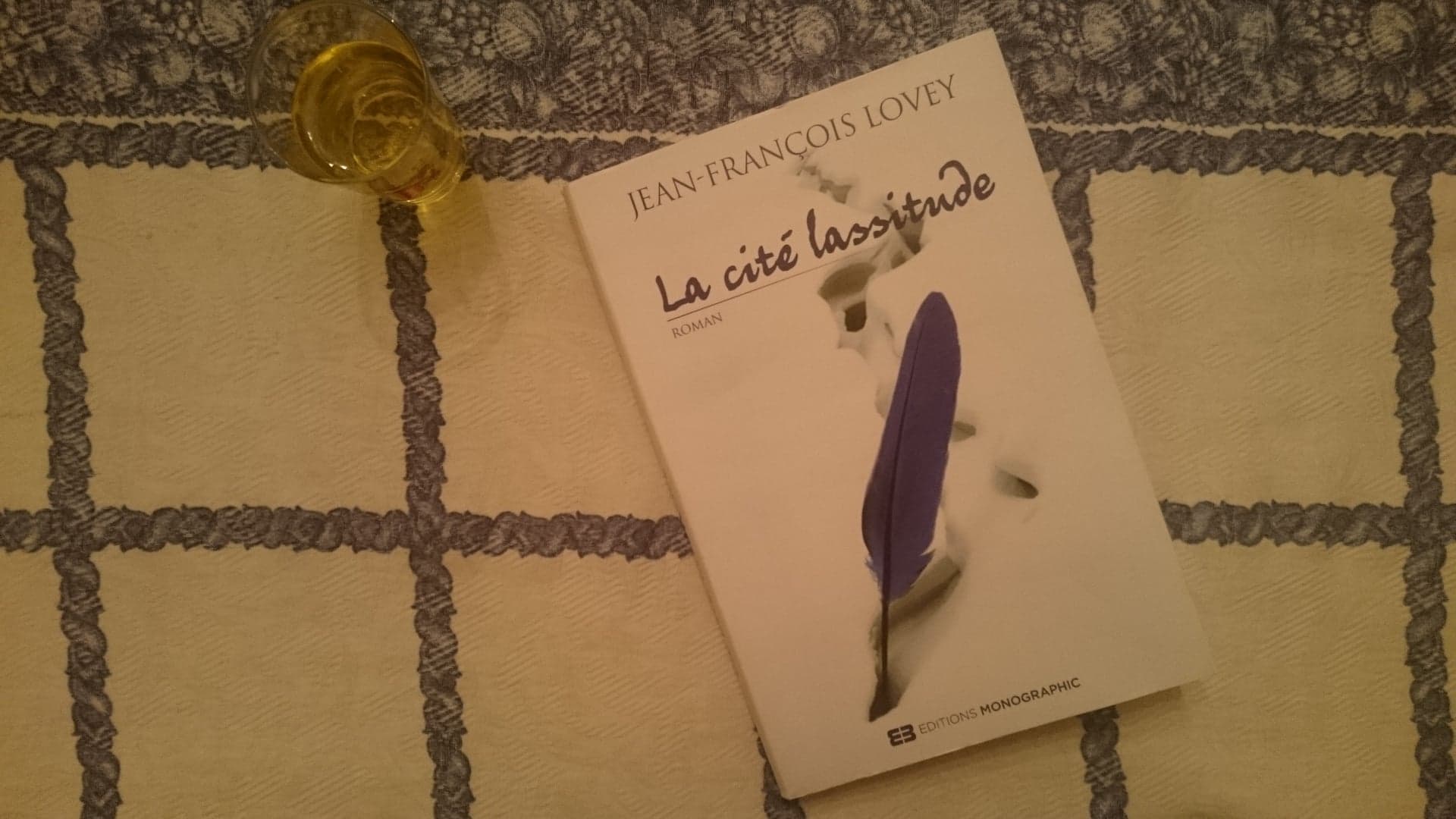
«La cité lassitude»: the teenage dreamer emerges from the state civil servant
Les lettres romandes du mardi - Loris S. Musumeci
«Mathias loved life, but shied away from anything that gave it a sweet or consoling flavour. Girls and jazz attracted him more for their rough mystery than for their easy beauty, and if he flitted only briefly into the camp of fragile conquests, it was because he was still afraid of being consumed by them. A part of him had become distrustful and loathed the abandonment that consumes. He could tell he was a charmer, but he thought he owed his attraction to the originality of his ideas, not the finesse of his features. His ego and successes fooled him. He was just an endearing simpleton when he thought he was a profound reasoner.»
Mathias Alkan. A simple young man. Sure, a bit of a dreamer, sure, rebellious, sure, passionate, sure, talented—but ordinary. As a child, he was his parents’ pride and joy. As a teenager, he was a good student. He fell in love, dated, failed, and despaired—until he sank into depression. He was taken to Sils-Maria in the Grisons to stay with a friend of his mother’s so he could regain his strength and health. There, the young man meets Eva, a girl staying at the house, whose body bears the burden of a far more serious illness—one that is, moreover, degenerative.
«The young girl in the armchair had the face of an angel, blonde bangs sweeping across a graceful forehead, large, bright, laughing eyes, prominent cheekbones beneath pearly skin, regular, fine, delicate features, and narrow lips that gave her a slightly haughty air, softened by the perfect curve of her chin. To look at her face, one might have thought it an Annunciation. She drew the eye, capturing the light that her smile made shimmer with a soothing aura. But in stark contrast, the rest of her body was contorted.»
The two love each other, in their own way, shaped by her overly static body and his overly restless heart. Then their bond gradually fades, though it never truly dies. Then come military service and college. And other loves, and glory. Mathias becomes a successful journalist, but the doubts of the past resurface, and the character’s life takes a new turn in search of the grace that fulfills him—yet which requires a void within him to take root.
An autobiographical novel
Jean-François Lovey is no stranger to this story. Not only because he wrote it, but also because he has experienced parts of it himself. He is not Mathias Alkan, yet he understands him. His failures, his desires, and his reality resonate with him. Certainly, La cité lassitude is an autobiographical novel. Indeed, the book indirectly recounts episodes from the life of Jean-François Lovey, a high-ranking Valais official and former head of the Department of Education, who had been removed from his post during a change in government. The depiction of Mathias’s father’s dismissal cannot be reduced to some sort of misplaced revenge; rather, it paves the way for a nuanced and beautifully written reflection on job loss.
«That fateful day arrives when a sinister commander declares that our words and our arms are no longer needed. We are surplus to requirements. It is not a lack that is held against us, but an excess. We are «superfluous.» A finger points us toward the necessary retreat—the exit. And the gesture has only the appearance of elegance. Just yesterday, we defined ourselves by our actions. This morning, we sip tasteless coffee and watch our nothingness dawn. Loneliness then opens its great book, and it is with nostalgia that we turn its pages. The people we pass are on their way to work and have no time for our distress. In their lapels, they carry tomorrows and dreams; the «retiree,» on the other hand, has nothing left but memories, and he knows full well just how much of a burden he is by bringing them up.»
A mixed bag
The book’s style is exceptionally rich. Behind the rich vocabulary and lyrical, flowery prose, one senses a man in love with literature. Throughout the novel, the reader savors the influence of the classics that have honed the author’s pen. On the other hand, the text falls short significantly in its dialogue. This is, in fact, the main flaw of La cité lassitude. There are numerous errors in terms of naturalness, which fails to come across despite Jean-François Lovey’s apparent efforts. There is too great a disparity between the use of formal language in some dialogues and the colloquial tone of others. And the height of clumsiness: the ellipses, which disrupt the rhythm of the sentences and mar the text with inelegance.
«—Hello… Or rather, hello again… We’ve met before. Yesterday… First on the ice floe… And then, thanks to global warming, we talked… Well, mostly she did… And we sort of understood each other, didn’t we?”
»—I suppose you could put it that way… I didn’t realize, Mr. Alkan, that you knew dear Pastor. He told me that you’d also studied philosophy and that you were a sort of—how should I put it—a poet on a romantic quest for truth.”
Furthermore, the writing—fortunately only in a few passages—loses the qualities of a refined style and becomes pompous and heavy to read. Painful, strictly speaking. Whether by irony of fate or because the author anticipated this criticism, Mathias is twice accused of excessive lyricism in his writing.
«[Your style] seems too polished to me. Too prim and proper… Since when do rivers play the mandolin in your writing? And I find your suffering too conventional… If I were your professor, I’d say you’re dripping with lyricism… That your style is more smooth than sharp… But I’m just your colleague…»
Without growing weary
As for the book’s overall structure, it is highly coherent. A careful balance of meaning and substance has been struck between summaries and elaborations in the various episodes of Mathias’s life. Furthermore, the novel is divided into three parts, each prefaced by an epigraph quoting François Villon, Guillaume Apollinaire, and Simone Weil—giants in their own right. And their words are truly embodied in the events recounted and the unfolding of the story.
Finally, the character of Mathias, a young dandy, is appealing. He is endearing because he is deeply human. He is faintly in love, deeply doubtful; his hopes are frivolous, yet his faith is powerful. And despite the stylistic flaws, we never tire of entering and passionately exploring Mathias’s inner world.
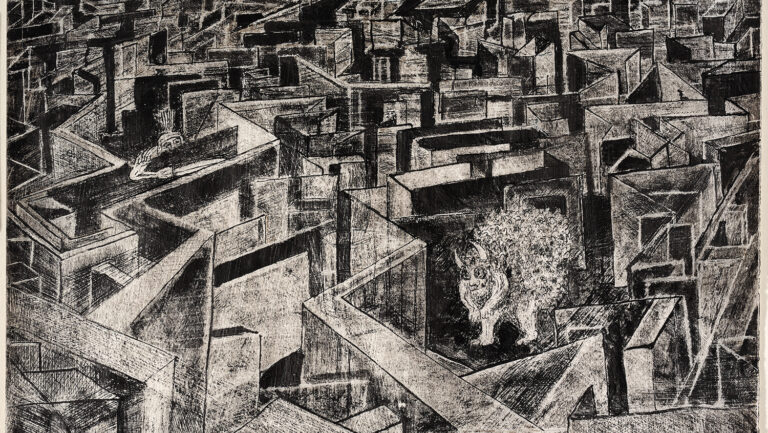
«Yes, a city. The sprawl of a city. It grows, becomes more complex, expands, organizes itself into neighborhoods, creates spaces to breathe, secret territories; it dies from brief bouts of suffocation, then is reborn… seemingly stronger… It welcomes. It repels. It absorbs and rejects. It has light parts and dark ones… Life, in its entirety, like a city…»
Write to the author : loris.musumeci@leregardlibre.com
Photo credit: © Loris S. Musumeci
La cité lassitude
Jean-François Lovey
Monographic Publications
264 pages
You'll also like





 French
  German
  English
Leave a comment