




Harry Crews« karate, a »crazy kiai"!
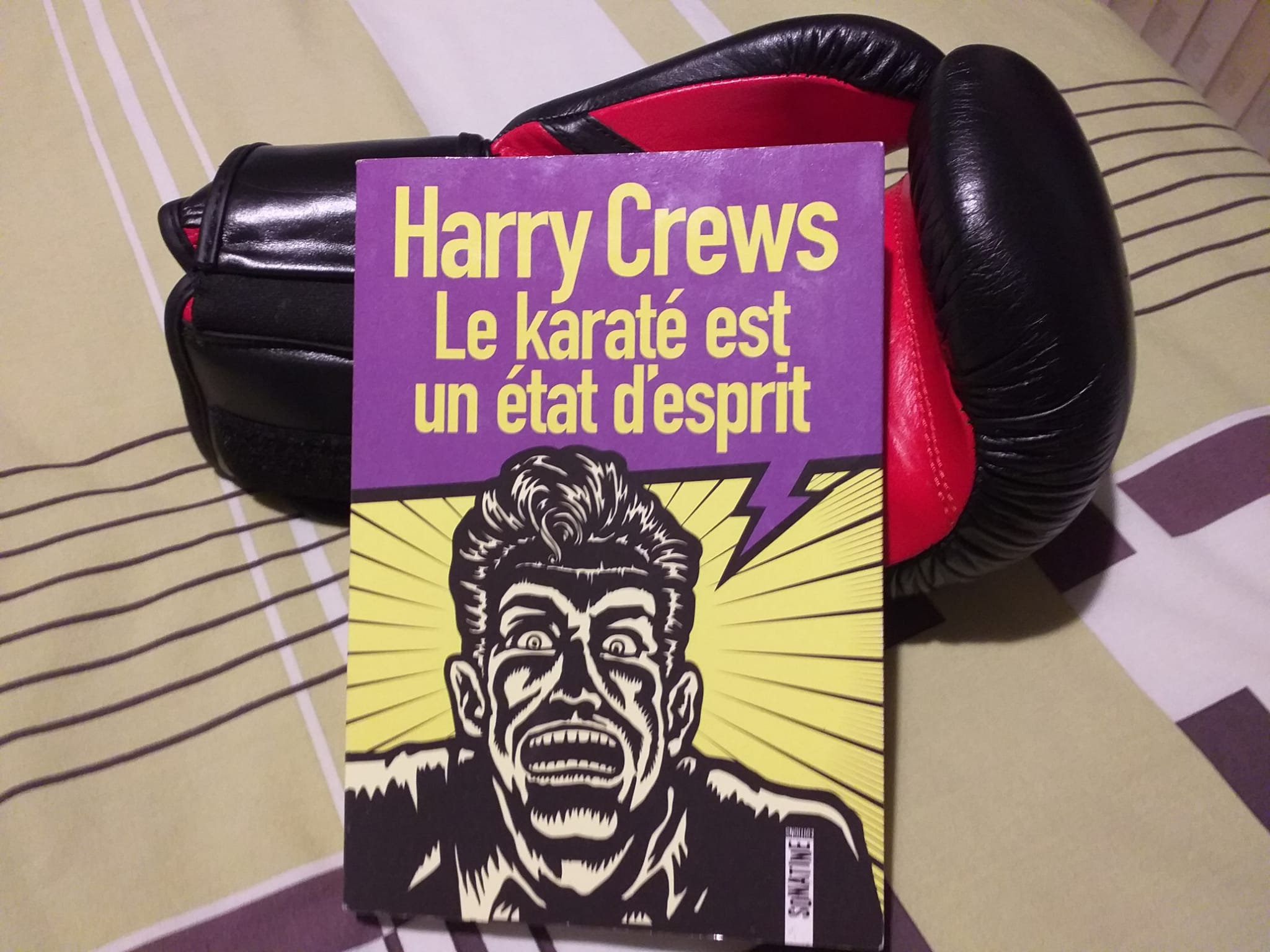
Tuesday's books - Ivan Garcia
A lonely drifter, equipped with his William Faulkner sweater, meets a beautiful karateka on a Florida beach. Attracted by this fatal beauty, the protagonist becomes involved in a strange community of karatekas, living and training in a disused motel, under the guidance of a mysterious Sensei named Belt. Between karate lessons, gourmet pills, bestial sexuality, fatality and beauty contests, Karate is a state of mind is a crazy, violent epic for the misunderstood and the marginalized.
Harry Crews' fourth novel, originally published in 1971, Karate is a state of mind was translated in 2019 by Patrick Raynal, Sonatine Editions. Raynal, an experienced journalist, writer and translator of Harry Crews' work, delivers a fine translation of this work, restoring the novelist's odd narrative and chronological quirks. In this magnificent novel, we discover the tribulations of a young wanderer in search of the calm... that comes from love and karate.
«Kiai!»
On a Florida beach Florida, a young man named John Kaimon wakes up. Quickly approached by by a gay couple, Georges and Marvin, the protagonist explains that he has travelled has traveled a great deal and experienced many strange things. While chatting with the couple couple, he spots a band of karatekas, including a young woman, beautiful and one of the men to the ground. As a lone adventurer with nowhere to go where to go, John Kaimon decides to follow this group of oddballs to find meaning in his life. meaning to his life. This is how he soon makes the acquaintance of the lovely Gaye Nell Odell, beauty queen and lethal weapon; Lazarus, a former insurance karateka and nightclub bouncer, and the enigmatic Belt, a veteran of the Belt, Korean War veteran and karate teacher. From misfortune to adventures, Kaimon finally gets rid of his demons and finds the balance, thanks to Belt's teachings and... especially in Gaye's arms. Gaye's arms.
«Quite a piece, that girl," said the young man.
- But inconvenient," added the man.
- Do you know her?
- She was Miss Torch of South Florida last year.
- But that," intervened the one with the golden eyebrows, "was before she gave up everything for calm.
- She could calm me down," continued the young man.
- Never mind. It's a weapon.»
The home of this community of fighters? A disused motel, the Sun'N Fun Motel, where students are taught receive their lessons and teach the way of the fist in a dilapidated swimming pool. To the rhythm of the many kiai (the fighting cry used in the martial martial arts), John Kaimon is a board-striker with a passion for makiwara and the many kumite organized by Belt. Her goal? To become stronger and, from the height of his white belt, touch the heart of his Gaye, aka brown belt.
A strange narrative
The particularity of this novel (and of its French translation) lies in its strange narrative, which which alternates between present and past episodes, leading us to question the the protagonist's mental health. Indeed, John Kaimon sometimes seems to rewrite facts in the narrative, as if to mislead the reader.
One example the veracity of the character-narrator's words is when the reader believes that that Gaye has sprained his hands - we feel empathy for the poor character - and, a few empathy for the poor character - and, a few pages later, following an analepse analepsis, we learn that Kaimon has injured himself by banging on some boards makiwara.
John Kaimon is an intriguing character. Vagabond and marginal, we learn that he lost his mother mother, killed by a chicken truck, when he was a child, and that his father became father went mad, facts that probably altered his worldview. Originally from Mississippi, like his idol William Faulkner, Kaimon seems to have lived in various hippie and 1968 communities, which ultimately disillusioned. In the end, the reader doesn't really know whether, as the as the protagonist claims, he was raped by neo-Nazi bikers and/or by Georges and Marvin or not... Certainly, we laugh at these discrepancies and take the character the character for a strange bird, even if he remains very endearing.
Under the gaze of icons
A striking striking feature of the work is the presence of icons juxtaposed with certain characters to certain characters, notably the protagonist. This is evidenced by the recurrences and references to the writer William Faulkner, even though we learn that he has not actually read much by this author. Winner of the Nobel for Literature in 1949, Faulkner impresses the protagonist several times, as they both hail from Oxford, Mississippi. Mississippi:
«Have you ever thought of sitting down with a pencil and copying a book?” [...] Belt winked. ”No,” he said. Never." [...] "I have," said John Kaimon. One day, I bought a notepad and a pencil. I copied the first twenty pages of a book called Noise and Fury, and I saw that it was impossible.”»
Harry Crews' fourth novel is a literary highlight in the company of a slightly loopy but very funny protagonist. The theme of karate, at the heart of the work, gives this tale the air of a "comedy". Karate Kid and make us think about martial arts as philosophies of life and community. Karate is a state of mind is an exciting and enthusiastic book about crazy people, like you and me, who have taken the plunge and, for the duration of a novel, are thrust into the spotlight.
Photo credits: © Ivan Garcia
Write to the author: ivan.garcia@leregardlibre.com
Harry Crews
Karate is a state of mind
Editions Sonatine
2019
240 pages

You'll also like





 French
  German
  English
Leave a comment