




The eternal return of novels

Les bouquins du mardi - Special edition «Les coronarétrospectives de la littérature» - (in French) Jonas Follonier
Dive or dive back into The unbearable lightness of being by Kundera is to open up your horizons, get closer to the fundamentals, oxygenate your mind and understand who we are. The theme of eternal return runs through this monumental novel. If our lives are so light, and therefore so unbearable, it's because we know that nothing we do will ever come back. But isn't the novel the exception to the rule? Here's a little reflection on books in the light of one of their best.
In Kundera, everything is unbearable. As much gravity as lightness. This, among other themes, is what the author seeks to express in The unbearable lightness of being. This novel, published in 1984 and translated from the Czech by François Kérel, opens with the question of Nietzsche's «eternal return». Our lives are marked by the transience of everything: this morning's «hello» to the local baker, this morning itself, youth and love - it's well known. This is the very definition of the moment: it will never come back. Never again! So making mistakes may seem trivial: as soon as they're made, they're in the past. And generally speaking, how important can our actions be, if they flow like water down the river?
«You can never know what you should want, because you only have one life, and you can't compare it with previous lives or rectify it in later ones. [...] Everything is experienced immediately, for the first time and without preparation. It's like an actor entering the stage without ever having rehearsed. But what is life worth, if the first rehearsal of life is already life itself?»
The Kundersonian narrator - the real and only character in his novels, the others being philosophical puppets - wonders what it would be like to live in a world defined by eternal recommencement. The opposite, then, of the universe as we know it. If all events were doomed to eternal return, they would take on a crazy significance. In the realm of human action, we'd have to goof off all the time. Act like a movie actor in a film destined to be shown over and over again. This is what Kundera calls gravity. Gravity, in fact, is just as unbearable as lightness. Proof in words:
«If every second of our lives has to be repeated an infinite number of times, we're nailed to eternity like Jesus Christ to the cross. What an atrocious idea! In the world of the eternal return, every gesture carries the weight of an unbearable responsibility.»
And that's where the talented novelist comes in. Kundera's first skill is to make the link between his thoughts and his story. The characters take charge of the rest of the novel, giving substance to the philosophical intuition announced by the narrator at the beginning of the book. The reader follows the lives of Tomas, Tereza, Franz and Sabina, entering their respective points of view as the chapters unfold. The facts recounted are so banal and numerous, and the underlying thought so dense, that it would be impossible to offer a satisfactory summary or commentary. That's why we can turn our attention to the application of Kundera's question to the novel itself: isn't it art, and the novel in particular, that is capable of offering us a seriousness of meaning that we can never forget? sustainable?
If novels offer a relative posterity to their creators, they have in their essence something deeper and, after all, more interesting: transcending the lightness of the world, they offer an eternity to us too. Since, when we read a novel, it also reads us - this is George Steiner's definition of the «classic» in literature - it's because it gives us something to look forward to. direction, which means the importance, to the world, to our actions, to our lives. The mere materialization of words on paper is the very opposite of what we experience every day. It's a potential immortality, an order given to things. As always, artistic creation is akin to the Creation of the world. For this simple teaching alone, The unbearable lightness of being is a work to return to eternally.
Write to the author: jonas.follonier@leregardlibre.com
Photo credit: © Jonas Follonier for Le Regard Libre
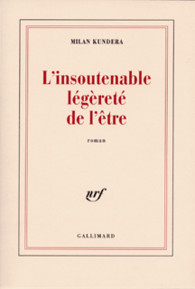
Milan Kundera
The unbearable lightness of being
Editions Gallimard
1984
400 pages

You'll also like



 French
  German
  English
Leave a comment