



«Miss Iceland», an intimate lava ready to erupt
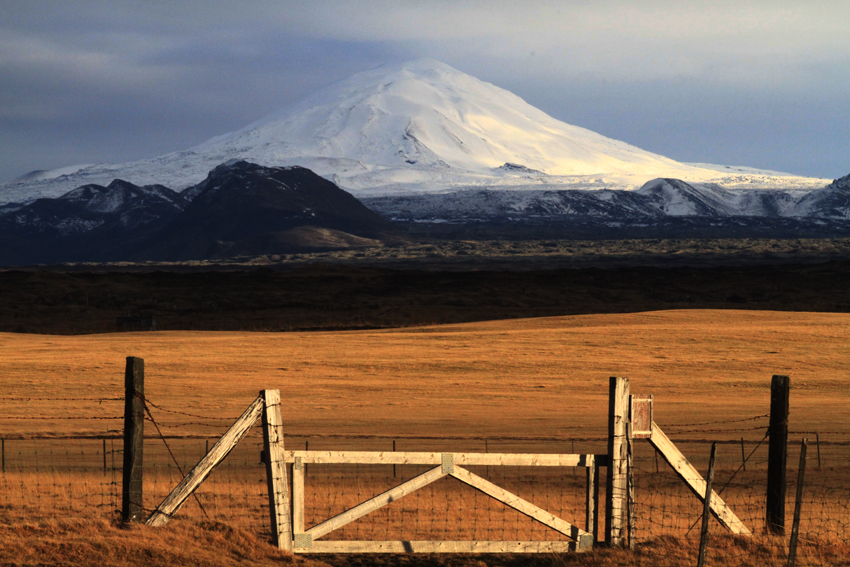
Hekla volcano, surrounded by a field and a fence © Sverrir Thorolfsson
This book should have been called The Poetess and not Miss Iceland. But that's the heart of the matter. In this Iceland of the sixties, the heroine wants to become a writer. And yet, her being is systematically reduced to her body. A gently combative novel.
Named after a volcano, the heroine is Hekla. Lava bubbling up in this Iceland of the 1960s. One of the island's most active mountains. When the young woman sets off for Reykjavik from her small farm, she has a clear idea in mind: earn some money, write and join Mokka, the capital's poets' headquarters.
She's in her early twenties, and to make a little money, she's quickly offered the chance to try her hand at being Miss Iceland. It has to be said that Hekla's beauty shines through. But she refused. She easily found a job as a waitress at the Borg Hotel. Here again, she has to face up to the sexual objectification of her being.
«You should pull your skirt up a bit, it's a sin to hide such lovely knees. You have to know how to show off your assets,» shouts [a customer] behind my back."
A fashion-conscious sailor
After work, she writes on her Remington. At first, she lived with her childhood friend David Jòn John Johnsson. A curious young man, homosexual, eager for freedom, passionate about fashion design and periodically locked on a boat for days at a time during fishing trips. They understand each other, both trapped in roles that restrict their ambitions: he in fashion, she in writing. While DJ Johnsson suffers particularly from his situation and the mockery that goes with it, Hekla seems to have accepted the codes, while managing to break away from them enough to go her own way without disturbing anyone.
That's how she met a man. A librarian. A poet. Starkadur takes part in socialist youth assemblies, tries to write (doesn't really succeed) and considers Hekla the most literate waitress in the region. They decide to live together. However, during the months they spend together, Starkadur is unaware that Hekla writes - and that she is even published (under a pseudonym). Hekla doesn't dare tell him. And he doesn't ask.
Sexist before the term was invented
Without a thought of harm, the young man goes through the motions that would be considered sexist today. A regular visitor to the Mokka district, he can't imagine that Hekla would enjoy a drink there, arguing that girlfriends never come. He prefers to offer her the book Learning to cook of the headmistress of the Icelandic Household School, even though he knows that Hekla loves the literature of poetesses and the philosophy of authors such as Simone de Beauvoir.
We can't forget to mention the heroine's best friend: Ísley. A young mother who became pregnant very quickly. Too quickly? At least, her family life is now at the center of her preoccupations. And in between, she writes. A diary, wacky stories and the words that are never spoken in her relationship. She doesn't tell her husband either. She keeps her fears to herself and her nightmares catch up with her: those representing other pregnancies and other children.
«It's so tiring being alone with a child, Hekla. We're together all week, night and day, while Lýdur works on roadworks in the East. I had no idea how wonderful it is to be a mother. Having a child is the best thing that ever happened to me. I'm so happy. I lack absolutely nothing. Your letters have kept me alive. I feel so alone.»
Lava under the ice
If the examples piled up in this short paper could give a caricatured image of the subject developed by Auður Ava Ólafsdóttir in Miss Iceland, this is not the case. Quite the contrary, in fact. The situations are described with a kind of detachment, as if we were observing the actions with a step back, without being involved. The book's very short chapters - ranging from one to three pages - allow us to change place and perspective quickly, without giving maudlin explanations. The writing is almost a little cold.
Hekla moves forward without raising her fist. She doesn't complain. She doesn't get angry. She makes no demands. She stays where she is. She simply sets her limits and defines her objective: to write. In short, this is the trajectory of an individual feminism. An intimate lava ready to gush forth as countries at the heart of continental Europe begin a great movement of collective liberation.
Write to the author: [email protected]
Cover illustration: Hekla volcano, surrounded by a field and a fence © Sverrir Thorolfsson
You've just read an open-access article. Debates, analysis, cultural news: subscribe to support us and get access to all our content!
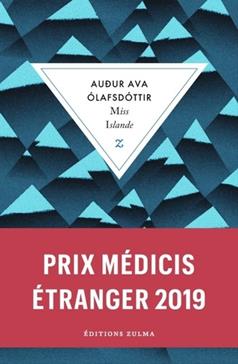
Auður Ava Ólafsdóttir
Miss Iceland
Translation by Eric Boury
Zulma, Za poche series
October 2022 [2018]
224 pages
You'll also like


 French
  German
  English
Leave a comment