



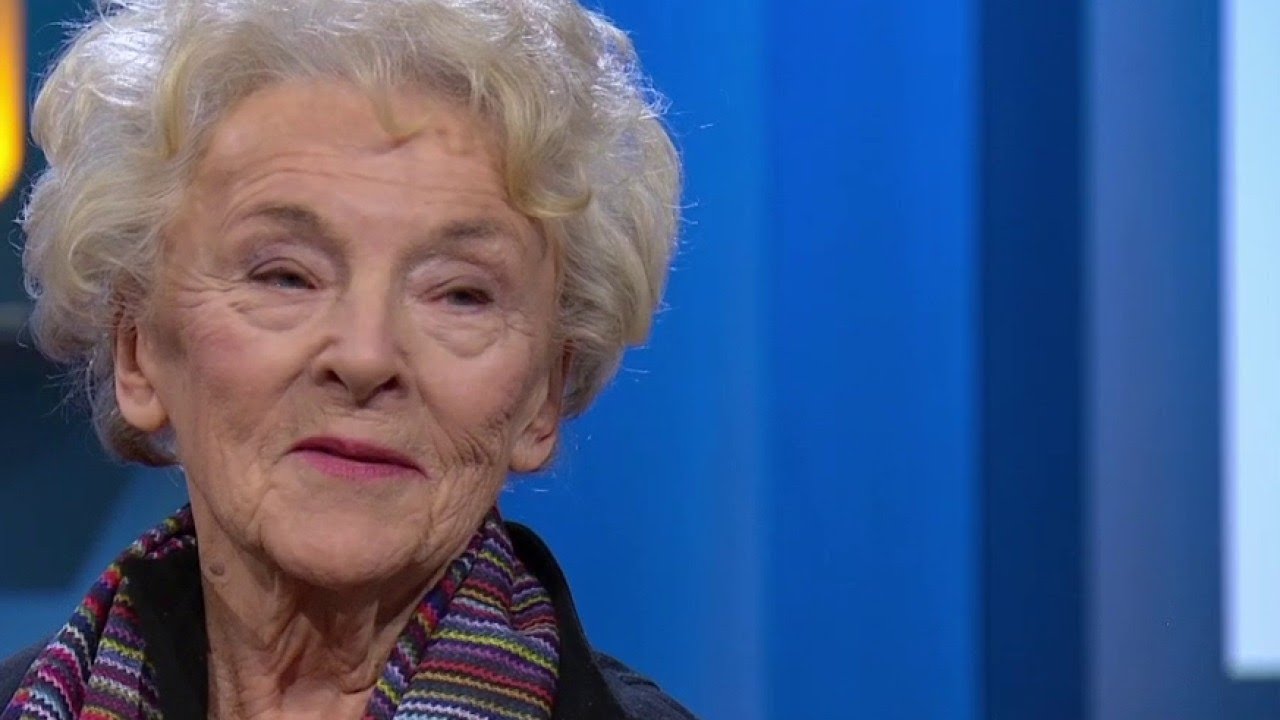
Mona Ozouf delivers a magnificent plea for literature
Tuesday's books - Jonas Follonier
It's an important work published by Editions Stock in the beautiful collection with cover art by Le Petit Atelier. To make life lighter. Books, women, manners features the voices of Mona Ozouf and her interlocutors Pierre Manent, Diane de Margerie, Geneviève Brisac, Philippe Raynaud, Claude Habib, Philippe Bélaval and Patrice Gueniffey, not forgetting the host of the show Replicas who hosted these conversations, essayist and academician Alain Finkielkraut. They discuss the nature of literature, its effects on our lives rather than its role, as well as gallantry, which in an extremely subtle and compelling way is associated with books in this work.
It could be said that what unites books and manners, apart from their effects on existence, namely to bring lightness, it is their petrol even: it's art. Ars, is the Latin equivalent of the Greek techné, It's something created by man. So it's something created by man. But to recognize this dimension of the world, the unnatural, we must first recognize the natural. This is what the merry company of nine intellectuals have in common. It's worth pointing out that this attitude is in the minority in today's academic world, which is no doubt mind-boggling in the eyes of the layman, and yet it's true: the concept of «nature» has a very bad press.
What the co-authors of Making life lighter, Our aim, if we can put it that way, is to rehabilitate nature, not to praise it, but to show the refinements that can be brought to bear on it. And while we're on the subject of literature and manners, there's a lot to be said for human nature and the nature of human relationships. Since men are naturally superior to women in terms of physical strength, gallantry reverses natural roles: the man becomes weak and recognizes the woman's superiority in terms of refinement, and the superiority of this superiority over the other. In the same way, literature is superior to the real world in the kind of experiences it provides:
«In the works we study, we become acquainted with passions, learning about cruelty, abandonment, jealousy and vengeance. But we don't die with the hero, and if we suffer with him, it's not like him; emotion may grip us, but at no time do we lose the certainty that it won't destroy us. [...] This, according to Alain, was the cardinal virtue of the school: on the blackboard, false additions, which paradoxically instruct the pupil, “ruin no one”.
The discovery of books, which Mona Ozouf recounts here in reference to her years of old-fashioned schooling (when there was time to be bored, and therefore time to read, and therefore time to dream), is like the discovery of a big city for a country boy, or of a newfound bachelorhood for a married man in search of adventure: the place of all possibilities. In Mona Ozouf's beautiful phrase, literature «multiplies existence». And existence turned towards the world, not just the self. This is the great tragedy of our time, recognized in whole or in part by all the guests in this book: the confinement of novels to the world, and no longer to the self.’existence turned towards the world, or in existence alone (moreover, most of the time it's that of the authors themselves). Alain Finkielkraut writes:
«James would not have understood the modern defiance of the novel because, for him, before being the story - ‘‘la marquise sortit à cinq heures’’ - the novel is look, A new way of being, a new way of perceiving the world. And Lambert Strether, the unfaithful emissary, can finally give up on Europe and return home: he's no longer the same, he's learned to see, he's been, in a way, converted to the novel.»
And Mona Ozouf adds:
«The subject of this novel is modesty or innocence towards spectacle. The spectacle has been lost by the contemporary novel, but it is the essence of the novel.»
Contemplation, in short, shared by philosophy. But there's more. The link between books and truth: according to the philosopher, who draws on Proust, truth doesn't always rhyme with spontaneity. When you're spontaneous, you can say things you mean so much that you don't mean them - everyone has experienced this kind of situation in anger. On the contrary, the delicacy of mind offered by literature, or manners, enables us to find the right word. Not only do we think by words, but «we think in words», as lawyer Marc Bonnant points out in our country. A reflection that invites us to question the current cult of authenticity and letting go.
Literature is not about letting go. To read is to escape, but this escape, in addition to entertaining, educates, modulates the being, and shows the extraordinary nobility of artifice. But where did this hatred of appearances come from, which is reflected in today's rejection of gallantry on the grounds that it is hypocritical? The fault of Rousseau, according to Finkielkraut. No doubt. But the author of’An intelligent heart recognizes his genius as he goes along, accompanied in his nuances by his other guests. This is the great strength of Making life lighter, already found in Animals and peoplepolyphony, conceptual and literary - but aren't they the same thing?
Write to the author: jonas.follonier@leregardlibre.com
Photo credit: Youtube screenshot (France 5 / La Grande Librairie)

Mona Ouzouf, under the direction of Alain Finkielkraut
To make life lighter. Books, women, manners
2020
Editions Stock
300 pages

You'll also like




 French
  German
  English
Leave a comment