




«Notre-Dame des égarées», to eternal silence
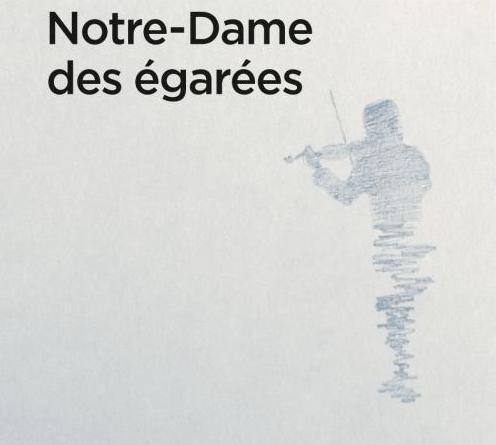
Les lettres romandes du mardi - Loris S. Musumeci
«Hélène especially, a Provençal whose parents had settled here, a town that was French at the time, proclaimed: ‘‘Je suis du Rhône, vaille que vaille!’’ As for Karel, from Prague, he's forever referred to as a ‘man of the Rhine‘ by the prickly lady.’
She's from the Rhone, he's from the Rhine. They meet in occupied Colmar at the end of the 19th century.th century. Both work at the «very select» boarding school for girls. She teaches Latin and French; he teaches music. Their eyes meet. The feeling of love isn't direct, but eventually becomes obvious. Love happens, moves their bodies, and unites them on New Year's Eve. The result: «Stella was born on October 10, 1894».
«The infinitely intersecting destinies of human beings, from their birth to their final demise, resemble this fortuitous and gigantic movement of the waters. The channel that originally took them by the belt will scarcely leave them for the rest of their lives. Men trace the path with the same fatal acquiescence as the waters in their courses. And so they move in unison and from all eternity in the flow of fountains and time.»
Fates cross, like rivers. And yet, the Rhone and Rhine will never really cross, according to Hélène. And the separation. Little Stella died at the age of four. Her mother, unable to accept her daughter's disappearance, left to find her. Karel remains alone. Silent. He has lost everything. One morning, he decides to set off as a wandering Jew in search of his wife, his daughter, his destiny. Along the way, he finds friends, doubts, hopes, despair, meaning and the absurdity of life.
In the guise of a simple, banal novel, the Jura-born author delivers a poignant, profound and striking tale. In the space of a hundred and ninety pages, Alexandre Voisard succeeds in expressing the loneliness of a man:
«I'm not expected, maybe that's just it, a man's solitude, not this walk with no one at his side but this nagging feeling that there's no one on the horizon of his path.»
It also expresses, with delicate language, the joy of finally finding true love, and then losing it forever. And the music that accompanies Karel on his journey. And the chance encounters, including that of Father Vienot and the Goldberg family. And nature, which welcomes Karel in his wanderings. And the Virgin Mary, mysterious comforter of lost men; Our Lady of lost women.
The words used are poetic, not because they seem learned and inaccessible. Quite the contrary. They speak of stripping things down to their bare essentials. An authentic verb, telling an unpretentious story. But the story of a man who lived, following a destiny, following a river.
In the course of Karel's story, the writer brings the reader's most primitive senses to life, managing in his words to convey the nobility of «steaming soup» and «thickly sliced bread». Country life thus takes on a profoundly evocative meaning, becoming a breath of fresh air for protagonist and reader alike:
«The air is crisp on these great pastures. Karel fills his lungs with great aspirations, here life, all the gestures of his peasants are just and necessary, every word in their mouths has a precise meaning, this is true life, Karel thinks, the simplicity to which the parish priest encouraged me I see with my own eyes.»
Our Lady of the Lost is one of those novels where you'll never quite forget the story of the characters, the places they've been, the encounters they've had and the river destiny that has swept them away. The musicality of the book and its poetry follow you, reminding you that life is inevitably tragic, but that it nevertheless has meaning in the past lived, happy if brief. Because it follows its course, like the river. Because the sky guides it, leading it in music to the point where the music ceases, giving way to relieved tears. To eternal silence.
«All waters, from spring to stream, from river to river, the smallest trickle of water, are fulfilled in this ceaseless quest for the other, just as human destinies cross, toe each other, brush against each other, collide and sometimes marry in this irresistible movement of the universe.»
Write to the author : loris.musumeci@leregardlibre.com
Photo credit: © Editions Zoé
You'll also like



 French
  German
  English
Leave a comment