




Pablo the author meets and tells the story of Pablo the anarchist

Tuesday books - Diana-Alice Ramsauer
I have read The anarchist whose name was like mine like some kind of history book. Except that it was much more exciting. Through the real-life character of Pablo Martìn Sànchez - of the same name as the author - we (re-)experience one of the revolutionary expeditions to overthrow Spanish dictator Miguel Primo de Rivera. An event that actually took place. But above all, the book's richness lies in its immersion in the Parisian and international anarchist world of the early 20th century.th century. An adventure of guts, heart and ideals.
«History. History. And history.» Or rather «present, past and story».
This is the narrative that guides the lines of The anarchist whose name was like mine.
We begin the book with the author, Pablo Martìn Sànchez. He is depressed. He can't get published «[blaming] his failure on a too-common surname». So he types his name into Google - who hasn't? - and realizes that he has a multitude of namesakes. One of them is a guy born at the end of the nineteenth century.th century. This Pablo Martìn Sànchez was an anarchist who, in 1924, took part in a revolutionary expedition to overthrow the Spanish dictatorship. Along with other comrades, he was sentenced to death.
By all accounts, it's a good storyline for a book. Author Pablo Martìn Sànchez seizes the opportunity to delve into historical documents, newspapers and other registers to tell his tale.
«Long live free Spain, long live democratic Spain!
This is where history begins. For Pablo the anarchist, presented to us by Editions Zulma & La Contre Allée, did exist. He was born in industrialized Spain, embroiled in colonial conflicts. A Spain ruled by an Alfonso XIII who is still a child at the start of the story. A Spain that suffered Miguel Primo de Rivera's coup d'état in 1923, putting an end to the parliamentary system. It's a few years before the Civil War and Franco's regime.
It was at this time that many libertarians, communists, republicans, Catalanists, trade unionists, intellectuals and deserters fled the regime, which threatened them with imprisonment and torture. Terrorist attacks against the King of Spain multiplied. Repression was violent. A small community of opponents springs up all over France, but especially in Paris, the epicenter of anarchism. Pablo Martìn Sànchez was one of them.
Paris, from Belleville to La Rotonde: crossroads of revolutions
It's against this tragic, but ebullient backdrop that we follow the young revolutionary. It's a delightful tale that we take seriously, doubting the veracity of the details at every turn.
It all begins at La Fraternelle printing works in the Belleville district. Pablo worked there, printing a revolutionary newspaper for the Spanish community in France.
A notorious opponent since his father was murdered by two poor devils who simply had empty bellies, he reads Proudhon, Bakunin and a whole host of left-wing thinkers, and makes hunger his worst enemy. Working in the best communication tool of the time, the printing press, he is embroiled by his childhood friend Robinson - vegetarian and advocate of free love - accompanied by his faithful dachshund Kropotkin (we're talking about a mutt here).
Coup de coeur and coup d'état
Interwoven with this clandestine preparation, every other chapter tells the story of Pablo the anarchist's previous life. The two anachronistic stories of the same character progress in parallel until they meet at the end of the book. This is where author Pablo Martìn Sànchez excels: by mixing these two levels of narrative, he manages to keep us turning the pages. And yet, the task was not so simple, for there are 600 of them. All the reviews of the book mention it: it's true that it can be daunting. But friendship, love and betrayal: a recipe that always works.
We meet Emma Goldman in the USA, travel to Argentina, visit the trenches of Verdun and finally experience the last days of a condemned man. It's both magnificent and terrifying. And it's easy to understand why author Pablo Martìn Sànchez wanted to detail every event. Under mountains of archives, he sometimes seems to have had a little trouble choosing.
And so as not to make the same mistake as the Spanish writer, I'll end this review before I've had a chance to say it all. But to continue the journey, I leave you with one of the book's most beautiful quotes:
«A conservative is someone who prefers injustice to disorder.»
Write to the author: diana-alice.ramsauer@leregardlibre.com
Illustration caption: In the story, Pablo Martìn Sànchez works for the anarchist Sébastien Faure, owner of the «La Fraternelle» printing works. Here, his libertarian school «La Rûche» near Rambouillet.
Photo credit: © Le Provost. Argenteuil
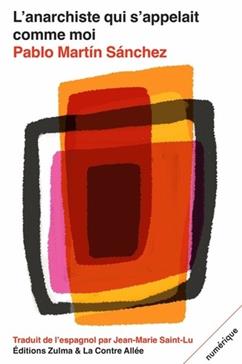
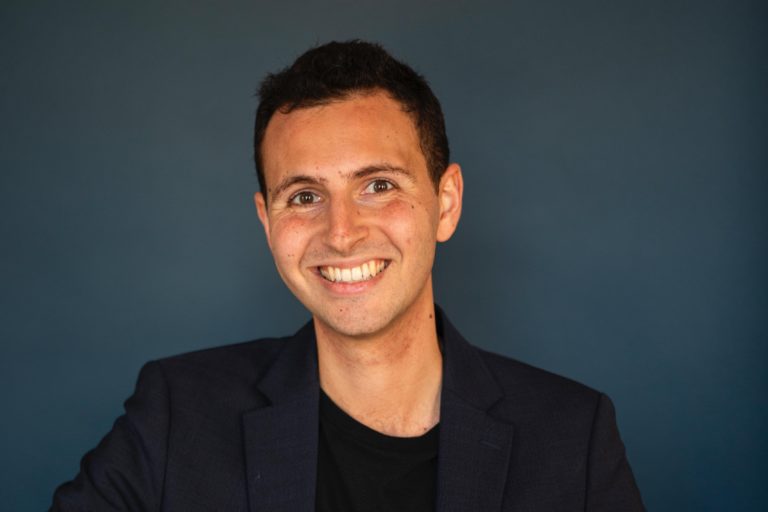
Pablo Martìn Sànchez
The anarchist qhis name was like me
Translation by Jean-Marie Saint-Lu
Editions Zulma & La Contre Allée
2021
You'll also like
 French
  German
  English
Leave a comment