

In a letter addressed to the Romanian dictator, the author recounts his relationship with the shadow that hung over his life and his journey as a migrant. A striking testimony, somewhere between a theatrical text and an open letter.
«Relatively early on, I realized that my memories, my childhood, my whole life before that, belonged to the communist Jurassic Park, gone and buried with the idea of Yugoslavia,» wrote Velibor Ćolić in his account Jesus and Tito. A native of Bosnia-Herzegovina, when it was part of Yugoslavia, Velibor Ćolić spent his childhood - as the title of the story suggests - surrounded by images of Tito, the Communist dictator, and Jesus, before deserting the ranks of the Bosnian army in 1992 to emigrate to France.
One of the hallmarks of totalitarian regimes is the establishment of a cult of personality around a charismatic leader. Indoctrination of the population, reading of texts written by dictators, propaganda posters depicting them as supermen... Manipulative tools are numerous and effective in conditioning the inhabitants of a country ruled with an iron fist. The author of Jesus and Tito, like other writers who have lived in much the same circumstances, looks back on his past to tell how, in one way or another, the Yugoslav dictator was an integral part of his family and his life. Even as a child.
Looking back
In the same vein of a return to the past, more specifically an exchange with a figure who marked his life, the Vaud writer of Romanian origin Eugène - Eugène Meiltz by his full name - publishes Letter to my dictator published by Editions Slaktine. After The Valley of Youth (La Joie de Lire, 2007) and The mammoth and the virus (Slatkine, 2020), the author continues to open the doors of his life by addressing an open letter to «Nicolae». A man who is none other than Romanian dictator Nicolae Ceaușescu, also nicknamed «The Danube of Thought» or the «Conducător».
At the time of writing, Eugène is 52 years old. Having arrived in Switzerland at the age of six, to join his parents who had managed to escape the Romanian Communist regime - an episode recounted in the letter - the author had built up his life, his experiences, his loves and his friendships here. But despite the temporal and geographical distance, Eugène has never ceased to converse with the dictator he fled, or to be assimilated into Romania. A country with which he maintains an ambiguous relationship, between attachment and strangeness, and which he visits several times at different moments in his life.
The work, which takes the form of a letter, is a long address to this «Nicolae», whom the author does not hesitate to use the familiar, to question, to challenge, to mock and even to thank. Under the guise of a theatrical monologue, this Letter to my dictator incorporates other literary forms: narration of historical episodes, a telegram, dialogues, open letters, and even a short play, entitled The trial of the Ceaușescu couple. Tragicomedy in one act.
But why write this book, and even more so, why now? The author begins his text with a kind of assessment (of his life, his work...). It's a cyclical review that we find, set out in greater detail, at the end of the book, and which completes and closes the narrative. At the beginning of the story, Eugene returns to the ties that bind him to Nicolae and evokes a certain «debt» he owes the dictator. For the author, this letter is a way of settling scores with the Romanian tyrant, but also a way of writing down his life's journey and linking it to history. And, ultimately, an opportunity for Eugène to reveal himself, like a stage actor, to readers.
«I've become someone you probably wouldn't have liked. My stories evoke the absurdity of the world. I love irony and consider self-mockery salutary. In short, I make it a point of honor to have nothing in common with you. And yet, I owe you something. I owe you a debt. Disturbing and irritating.»
Open letter and history
Letter to my dictator turns out to be a hybrid work: at once an intimate correspondence between the author and a disappeared person, the dictator Ceaușescu, and the unveiling (and addressing) of this correspondence to a wider audience (readers). Within it, the author retraces some of Romania's major historical events, such as Charles de Gaulle's visit to Romania during the events of May 68, the Romanian revolution of 1989, the Timișoara mass grave affair...
We learn, among other things, that during 1989, Nicolae Ceaușescu received several open letters from politicians, poet Dan Deșliu and others criticizing the regime. The peculiarity of these missives, apart from being banned and censored in a Communist country, was that they were read out on Radio Free Europe (based in Munich, West Germany, at the time). This underlines the specificity of these writings (and of the author's book): letters written to be read... aloud. As if to proclaim loud and clear what was kept quiet under the dictatorship.
«Political veterans, a poet, anonymous people: my letter to my dictator is definitely not the first. My approach is part of a kind of tradition. I bow to the courage of my predecessors. They wrote to you in your lifetime and therefore risked their skins.»
The relationship with language
One of the book's most striking themes is the relationship with language. The author, whose first language is Romanian, learned French as his «second mother tongue» and Frenchified his first name. This French language, «the language of Charles de Gaulle», is also used by the father in his interview with the police officer seeking asylum. A language in which the author expresses himself and takes up his pen.
«France adores foreigners who speak French,» Eugène writes in his letter about the media coverage the events of the Romanian revolution received from French channels. Romanians, if it must be said, are a Francophile people, and their relationship with France is a close one. Tristan Tzara, Eugène Ionesco, Emil Cioran and Dumitru Tsepeneag - to name but a few.
In his relationship with his languages, the author navigates between two rivers of identity: in Romania, his mastery of Eminescu's language makes him suspect in the eyes of the locals; in Switzerland, he is constantly referred back to his Romanian «identity» - notably his childhood classmates who equate Eugène with Ceaușescu's dictatorship. These two languages, both family and social ties, prove fundamental in the author's journey and the story of his parents.
With Letter to my dictator, Eugène lays bare his history with Nicolae Ceaușescu. A rich and poignant testimony that perhaps, like The Valley of Youth, could be adapted for the stage, to follow in the footsteps of the precursors who inspired this exercise. Freeing speech to settle the score with censorship.
«On July 6 of the same year [1978], the Department of the Interior of the Canton of Vaud certified my acquisition of Swiss nationality. I was now a native of Lausanne. At the same time, I changed my first name. Before, I was “Eugen”. That was my Romanian first name. But that was also how my first name was spelled in German. Which bothered me. I had nothing against the German language, but I didn't want people to think I was born in Zurich, Stuttgart or Bümplitz. French was my second mother tongue. That's why I officially became “Eugène” with a deep accent and a final “e”.»
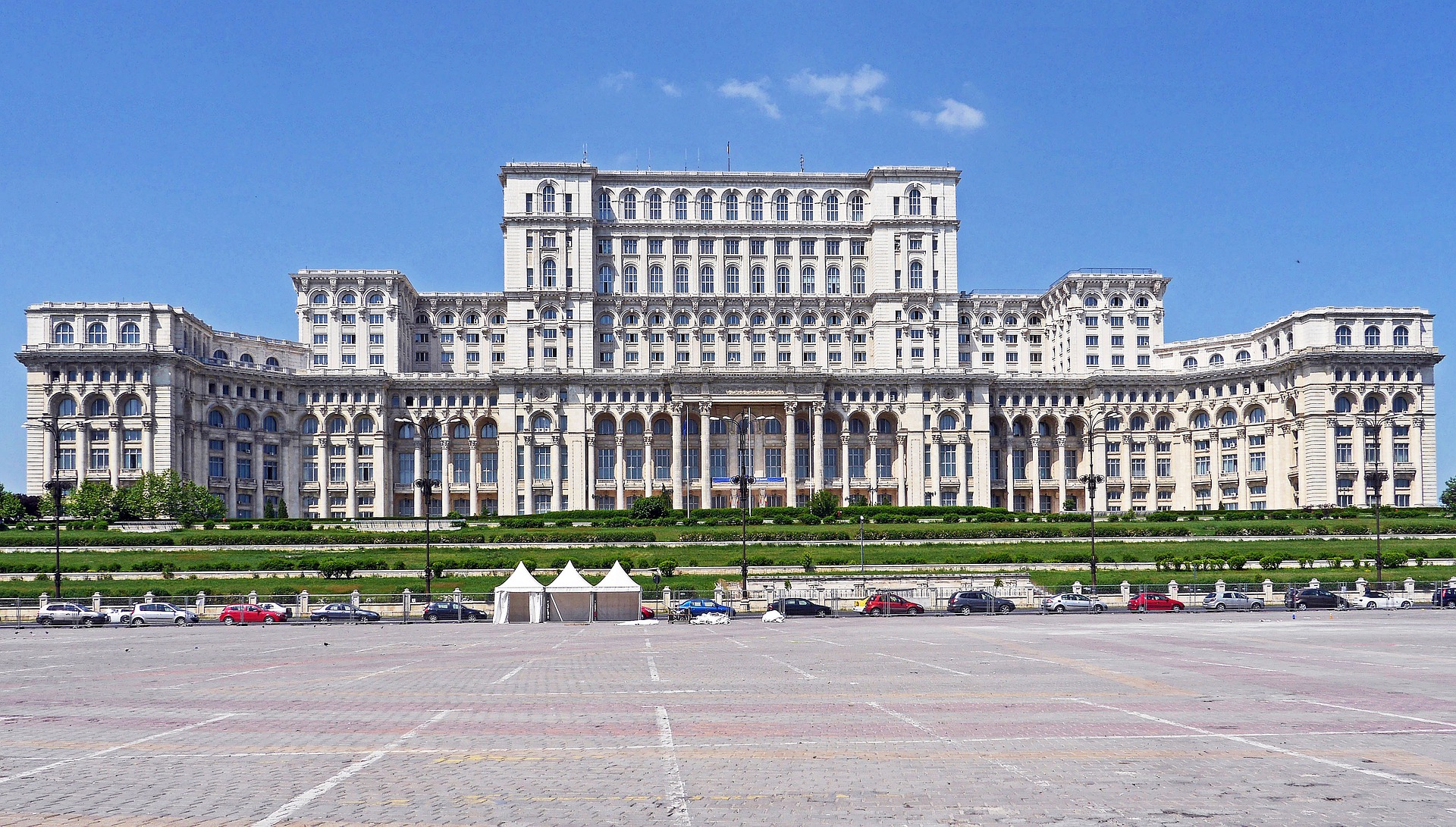
Photo credit: © Erich Westendarp from Pixabay
Write to the author: ivan.garcia@leregardlibre.com
You've just read an open-access article. Debates, analysis, cultural news: subscribe to support us and get access to all our content!

Eugène
Letter to my dictator
Editions Slaktine
2022
190 pages
 French
  German
  English