





With Quentin Mouron, death can't be influenced

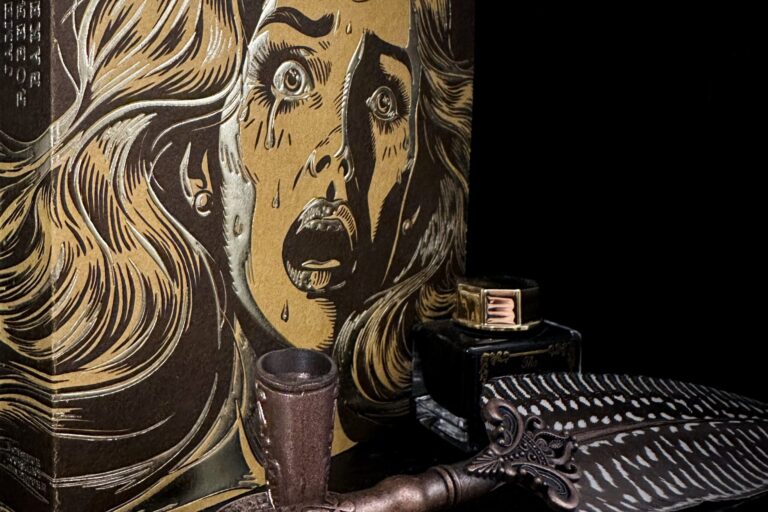
Quentin Mouron has published *The Last Room at the Grand Hôtel Abîme*. Photo: Quentin Perissinotto for *Le Regard Libre*
After venturing into poetry and publishing an essay (dedicated to Jean Lorrain), Quentin Mouron returned to his love of fiction thanks to La dernière chambre du Grand Hôtel Abîme. A reunion with its ups and downs.
For another review of his book, see the reprint of Jean-Louis Kuffer’s article in our previous edition.
The book begins like a mystery novel: Sixtine, a young woman on vacation in Venice, is found dead, lying by the pool at her luxury hotel. But as soon as the first chapter is over, Quentin Mouron shifts focus from the investigation to psychology and its inner workings, tracing the lives of four characters who revolve around Sixtine. Thus, emerging from the pages are Sam, the cocaine-addicted influencer from Geneva; Hugo, the lifestyle and food journalist; Rocco, the male-chauvinist fitness influencer; and Lola, the art historian—all united by their narcissistic wounds and romantic traumas. The author from Vaud weaves their destinies together and intertwines their pasts, bringing their wanderings to a convergence and thus sketching out the story’s culprit: the total ruin of lonely souls.
A lukewarm, quick-to-prepare mixed drink
With La dernière chambre du Grand Hôtel Abîme, Quentin Mouron tackles the dizzying nature of social media, its harmful influence, and its deceptively smooth facade, in an effort to crack this toxic veneer. But here we are, left with yet another novel that seeks to expose the dark side of these new media (for example, Children are kings by Delphine de Vigan, Instagram-worthy by Eliette Abécassis, The Influencer by Patrick Bauwen, Emirage by Emma Férey or I like (by Camille Yolaine), giving the impression that literature has found a prime target in the form of influencers. Despite a genuine desire to offer a fresh take on this subject and to take the opposite stance from other novelists, Quentin Mouron unfortunately fails to avoid the pitfalls of caricature.
Since his early days, the Canadian-Swiss author has stood out for his caustic and ironic style. But while in Human Combustion (a satirical novel about the French-speaking Swiss literary world published in 2013) in which he used sarcasm to mock the pretentiousness of high society; here, the author takes the easy way out by choosing a target that has already been ridiculed from all sides—namely, influencers. The initial intention is clever: to write from a subject rather than about it. To achieve this, he interweaves different forms, shifting from prose to verse and from verse to theatrical dialogue, so as not to confine his theme and characters. Each chapter thus takes on a distinct tone and gives voice to different perspectives. However, once the initial curiosity wears off, the shifting styles muddle the narrative and give it a disjointed feel. The reader is jolted from one scene to the next, watching flashes of imagery follow one another, and the reading experience feels like a sudden awakening from a dream. It’s hard to get a grip on the story, and we let it slip away, distractedly, unable to shake off that sense of haste and transience.
Another defining feature of this writing style is how it plays with clichés. He collects them and enjoys piecing them together like a puzzle to subvert them. And he draws the reader into his world, making them laugh on the sly, as in the passage where a fitness influencer quotes Andrew Tate before fantasizing about reading Sylvain Tesson with a lover in a yurt. But by scattering them every other page, the narrative veers into kitsch, and the novel into literary overkill.
The same drawback applies to the tongue-in-cheek aphorisms: meant to liven up the text and give it a more biting edge, they fall flat because they’re overused. Quips like «Back in the day, there were women. Now there are only whores» could be funny if they created a sense of dissonance. Instead, the entire narrative gets bogged down in this artificial rhythm that rejects intellectual pretension and keeps the discourse superficial.
Creating Culture and Being a Millennial
The whole issue of The Last Room lies right there: in its constant excess. Quentin Mouron wants to capture the spirit of an era, to anchor his story in its time, and so he weaves elements representative of today’s society throughout the pages: Claude Luisier’s TikTok videos, a Twitch livestream dedicated to Greta Thunberg, the #MeToo movement, David Marchais’s ribeye steaks, *Romeo and Juliet* portrayed by transgender actors, the quenching of thirsts for justice, and a matcha. Even if it means stretching things a bit to make everything fit within the frame, leaving the unpleasant impression of reading a parody of literature. Because in trying too hard to capture the essence of an era, the paint spills over and stains your fingers.
La dernière chambre du Grand Hôtel Abîme closes its door, leaving behind a strange sense of disjointed tragicomedy.
Write to the author: [email protected]
You have just read an open-access review published in our print edition (Le Regard Libre N°109). Debates, analyses, cultural news: subscribe to support us and get access to all our content!

You'll also like



 French
  German
  English
Leave a comment