



«Rhinoceros or totalitarianism
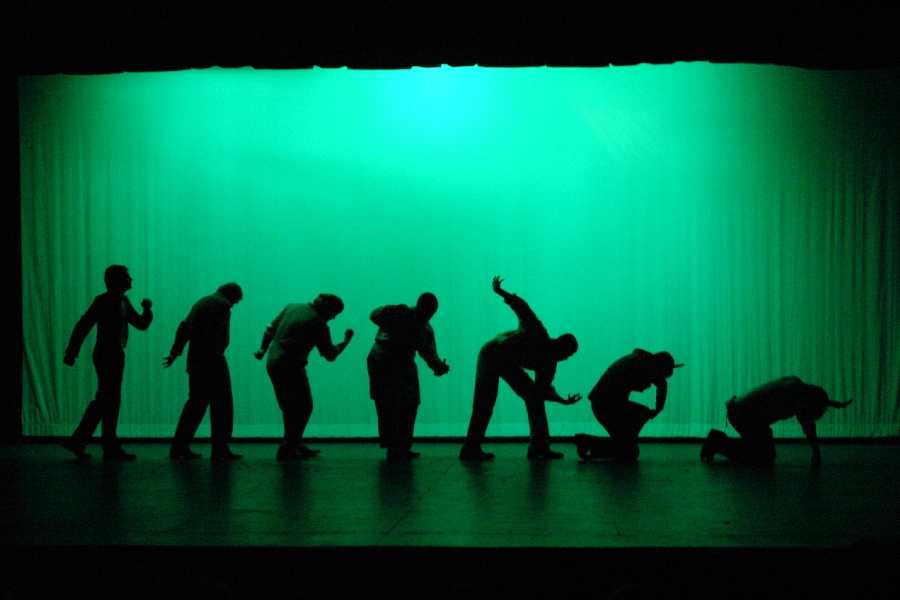
Some plays express something so strong, violent or harsh, that they leave the spectator stunned, glued to the seat, not knowing what to say or do, hesitating between laughter and tears. The Rhinoceros by Eugène Ionesco is the very embodiment of this type of theater, so reading the play alone is enough to leave you speechless with astonishment and howling in revolt.
The story is set in a typical small provincial town. The beginning is calm, peaceful, smelling of pastis on a sunny terrace. As noon approaches, the companions Jean and Bérenger appear on stage, each taking a drink at the café near the grocery store. Over the chatter of the two and the other locals, we hear the summery silence of the heat crackling the still, dry ground. Suddenly, the devastating sound of an animal that seems to be getting closer and closer is heard louder and louder, accompanied by a long, low growl. A rhinoceros!
The last man
Discussions break out, but nothing seems too disturbing, except for the absurdity of the situation and the comments being made, particularly by the old man and the logician in the square. Then it's the turn of a second rhinoceros. Without really asking the question of the presence of these beasts in town, we debate the number of horns on the first and second, or their geographical origin: Africa or Asia? The play continues in much the same vein, although it gradually loses its comic edge in favor of the dramatic, even the tragic.
Little by little, all the characters become bestialized rhinoceroses, except Bérenger, who is simple, offbeat, a bit of an idiot, a bit of a "rhinoceros". missed in short. From the most refined to the most pedantic, the most sanctimonious, the most authoritarian, the most tolerant, they all go through it. Only Bérenger, «the last man», is faced with the absurd question: is he still worth living? Even alone?
«BERENGER. [Against everyone, I will defend myself! I'm the last man standing, and I'll stay that way to the end! I will not give in!
Curtain»
Totalitarianism as object and context
Rhinoceros is also explained by its historical context. Eugène Ionesco wrote his play in 1959, in a post-war period still marked by dictatorships. German Nazism, Italian Fascism, Soviet Communism and the Romanian Iron Guard, which the playwright knew because of his Romanian origins, are all «rhinocerizing». Here, the playwright denounces totalitarianism and warns against its establishment. Totalitarianism is contagious. It makes us insensitive and inhumanly hard, like the skin of a rhinoceros.
Read also | What Eugène Ionesco has to say today
Everything is militarized in a regime of this type: the rhinoceros wears the costume of the warrior par excellence, armed with horns, protected by breastplates and a gray-green complexion. Apparent innocence is also part of the equation: evil is trivialized, we tell ourselves that all is well, we let ourselves be gently robbed of our freedom, but we go along with the flow, together, because no one would want to resist alone, like Berenger. Bérenger evokes the innocence of foolishness when the worthy teacher Botard also gives in to metamorphosis:
«Well, on reflection, I'm not surprised by Botard's headbutt. His firmness was only apparent. Which doesn't prevent him, of course, from being or having been a good man. Brave men make brave rhinos. Alas, it's only because they're in good faith that they can be fooled.»
Totalitarianism was and remains aggressive, insensitive, inhuman, alienating, guilt-inducing, but above all it destroys the individual by violating his or her intimacy, i.e. conscience.
Write to the author: loris.musumeci@leregardlibre.com
You have just read episode 5/6 of our «Promenades théâtrales» series, an article published in Le Regard Libre N°18.
-
 Youth passFrom: CHF2.50 / month
 -
Digital subscriptionFrom: CHF5.00 / month with a 30-day free trial and a CHF2.50 sign-up fee
-
 Standard subscriptionFrom: CHF10.00 / month with a 30-day free trial and a CHF2.50 sign-up fee
Vous aimerez aussi


 French
  German
  English
Laisser un commentaire