



What A VRAI DIRE could have been (and what it will be)
Unpublished article - Ivan Garcia, Jonas Follonier and Lauriane Pipoz
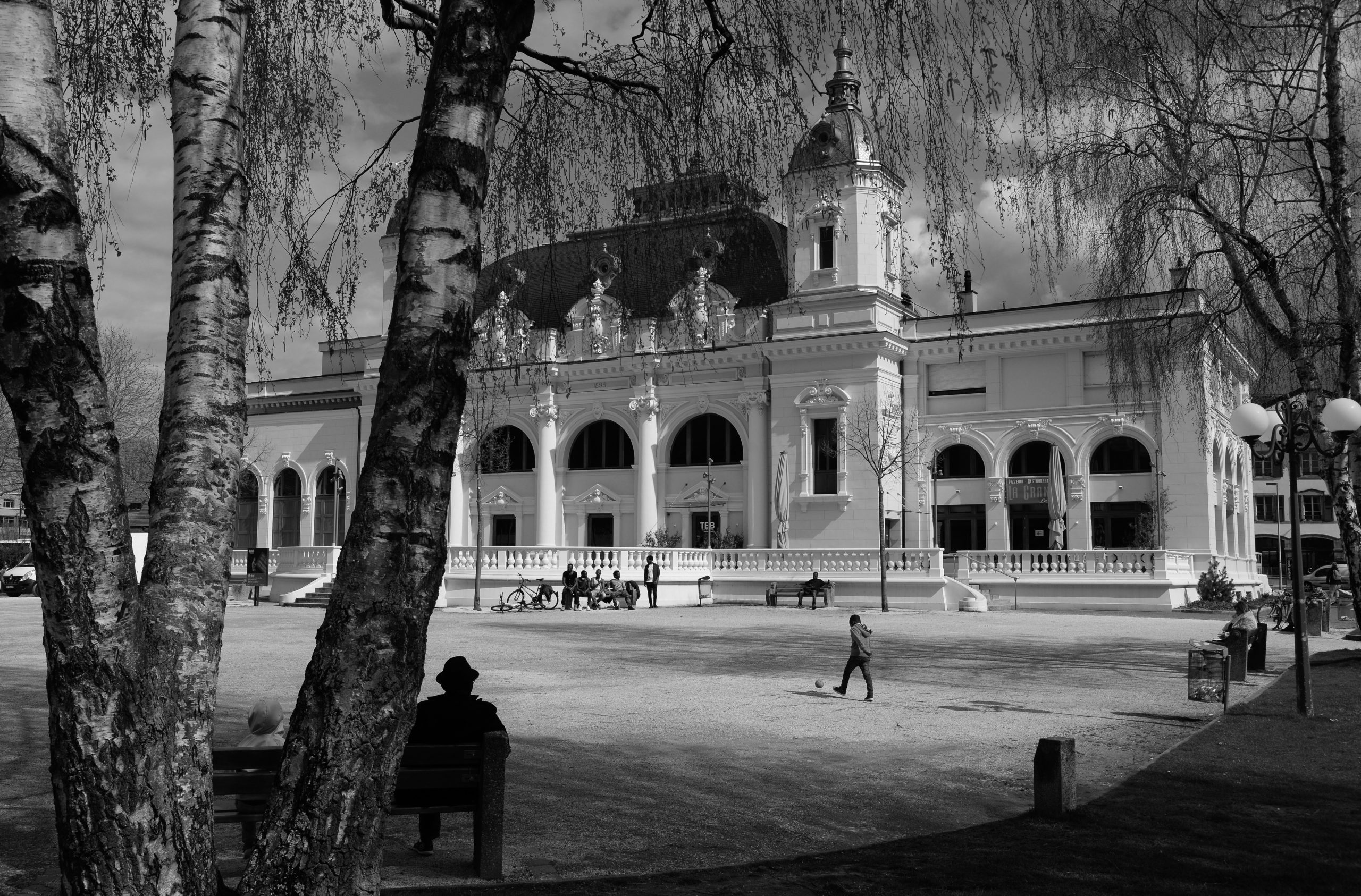
A Vrai Dire, the festival of autofiction organized by the Théâtre Benno Besson in Yverdon-Les-Bains, was due to take place from March 13 to 22. Well-prepared, the editors of Regard Libre, The Festival's media partners, were getting ready to live to the rhythm of the theater, for ten days or so, between plays, hot reviews, artist interviews, dramatic palavers to exchange, videos to make, petits fours to enjoy and glasses to share. But this was without counting on an unexpected guest: the Coronavirus, which, on March 13, on the orders of the Federal Council, forced everyone to confine themselves to their homes. To remedy this tragedy, we offer you a brief overview of what we could have experienced at A VRAI DIRE - and what, perhaps, we will experience at the next event.
These are certainly tough times for global culture. On Monday, April 13, during Emmanuel Macron’s presidential address, the world learned that the monumental Avignon Festival—the world’s largest theater event—had been canceled. A month of intense festivities in the heart of the City of the Popes—all gone up in smoke in the blink of an eye. Faced with such terrible news, the Swiss cultural community feared the worst. That same week, on Thursday, April 16, during the Federal Council’s highly anticipated press conference on the phased reopening, Swiss citizens were informed that cultural venues (movie theaters, theaters, museums, concert halls, …) would remain closed until June 8.
From March 13 to 22, Le Regard Libre We were supposed to attend the first edition of A VRAI DIRE, the autofiction festival organized by the Théâtre Benno Besson in Yverdon-Les-Bains, of which our media outlet was a partner. So, in light of the cancellation, we’d like to give you a little glimpse into what we had planned for this festival and, during these times of lockdown, share the joys of the stage with you—until we can return there. Ironically, it was on Friday the 13th—the festival’s opening day—that it had to shut its doors. And that’s when our editors heard the news.
Friday, March 13 (by Ivan Garcia)
My schedule is packed for this spectacular first day. I have no fewer than three topics to cover! First up is an interview with Valentine Savary, a theater costume designer who, in the TBB lobby, is recreating the dress worn by Madame d’Epinay, a friend of Jean-Jacques Rousseau. I had planned to talk with Valentine Savary about the theme of costumes, because today’s performances are becoming increasingly minimalist, and costumes like frilly dresses and tailcoats are quite rare. So, what does the future hold for costume designers when most performers are dressed in just a T-shirt and jeans? Since Valentine Savary would have been working while I interviewed her, I would have taken the opportunity to film her a bit to see how she sews, what she does, and to ask her questions about her craftsmanship—a skill that’s fading somewhat today but remains invaluable. I think that would have been a great introduction to the topic (and it will be!).
After the sewing session, we should have taken our seats on the theater stairs to watch the Faces by Cie Kokodyniack, a company led by Jean-Baptiste Roybon and Véronique Doleyres. A duo of artists with big hearts whom I've had the chance to meet, a few days before their performance, to discuss their approach to their work and their career paths. That evening, they were supposed to present to us—with charm and humor—the sixth scene of the play Faces, of which there are seven in total. These paintings—or «faces,» as the artists call them—are a transcription of the words of a person Jean-Baptiste and Véronique met. Usually, it’s someone living in northern Vaud, whose face is drawn by Alban Kakulya—right during the performance! I actually would have remembered the first scene. The audience was so well-behaved and attentive that we were treated to honey lollipops… A real treat!
This appetizer from the Kokodyniack Company definitely whetted my appetite, and I was ready to dig into the main course of the evening: Wednesday the 13th by Diane Müller. In that case, I might not have laughed quite as much, because the director would have addressed the topic of being fired—something she herself has actually experienced. It’s not always easy to be fired… especially from a theater company. For this first show, Diane Müller had surely planned to blow me away by bringing to the stage a legal case that’s difficult to portray and to go through. That show would have made me think. And then I would have gone to the roundtable discussion at the theater bar to talk about the artist’s craft. I would have chatted with Diane to tell her that it’s not easy being an artist. That she’s very brave and… that I’d love to profile her for Le Regard Libre. Because it’s not every day that you put on your first show—especially one about being laid off, which is something I’ve experienced myself. After that, I’m sure we would have had a few drinks and bonded over Romeo Castellucci’s aesthetic and Racine’s poetics. But that, to tell the truth, is another story…
Saturday, March 14 (by Lauriane Pipoz)
Kiyan Khoshoie has been a professional dancer for fifteen years. I would have had the chance to see him perform on March 14. Unfortunately, a pandemic got in the way between this accomplished dancer and me. So now, sitting at my computer, I’m trying to piece together what the show was like A Wide Gap. A performance that was meant to reveal to me—and to the entire audience that had turned out enthusiastically—«the limits of artistic practice» teaches me the Benno Besson Theater website. With a touch of humor, we would have all dived together into the life story of a dancer—a very unique artist’s life.
While living one’s passion is all too often seen as synonymous with freedom, this particular passion is all about discipline: you only have to look at the bodies of classical dancers to understand the hard work and rigors that such a profession demands. While cultural events are on hold for the next few months, the absence of the usual venues certainly won’t stop a determined individual like Kiyan Khosoie. After a quick look at Instagram, I can assure you of that. Since he’s now reinvented himself as a champion of parkour, I hope to see him perform on stage, drawing on the skills he’s acquired during this lockdown. In the meantime, be sure to follow him! Clearly, he hasn’t lost his sense of humor out there.
Thursday, March 19 (by Jonas Follonier)
So, a famous roundtable discussion was supposed to take place on Thursday, March 19, 2020. By that I don’t mean one of those dining tables that draw people in with their aroma or smoke; no, rather a table of intellectual allure, since it was to have been a thematic roundtable discussion on «writings of the real.» The crux of the matter, precisely, would have been the question of whether the evening would be intellectual… or pseudo-intellectual. We must admit it bluntly: in the theater world and, more generally, in the contemporary arts scene, the risk is considerable. There are so many «cultural» events where people ramble on about supposedly philosophical topics, even though the only «philosopher» in those attendees is the “p” in “pedant.”.
Except that, given the guests at this event—which I would have attended if it weren’t for this wretched virus—I had every reason to be optimistic: they certainly wouldn’t have taken the audience for a ride. First of all, because the discussion would have been moderated by Patrick Vallélian, editor-in-chief of Sept.info, who knows a thing or two about non-fiction. This expression is barbaric because it is too used by too people. But at its core, it conveys a simple and true idea: there is fictional literature, and there are stories. It is this second type of writing that was to take center stage, featuring equally promising speakers such as director Bernard Bloch, creator of The Situation, and Jean-Baptiste Roybon & Véronique Doleyres of the Kokodyniack Company.
And it’s a safe bet that there would have been no shortage of debate or intellectual rigor. For what a challenge it is to defend the concept of reality in a world that is, by its very nature, created in literature. Certainly, reality and fiction enrich one another, but isn’t saying that precisely the same as establishing, from the outset, a distinction between reality (that thing right before our eyes) and fiction (for example, just to name one, literature)? We would undoubtedly have witnessed some masterful attempts at reconciliation based on thought and, above all, on lived experience. For indeed, the Kokodyniacks’ art draws on the real material of personal testimonies; Bernard Bloch, for his part, takes a similar approach, described as documentary theater. So, on closer reflection, doesn’t all fiction ultimately have reality as its foundation? Contrary to the common misconception that all literature is fictional, shouldn’t we assert that all literature is real?
Write to the authors: redaction@leregardlibre.com
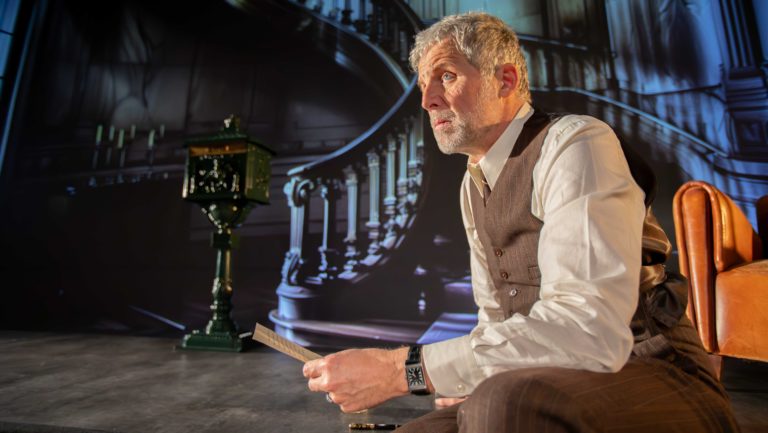
Photo credit: © Philippe Pache / TBB

You'll also like
 French
  German
  English
Leave a comment