




The cultural struggle for interpretive sovereignty

Photo: Valentino Mazzariello (via Unsplash)
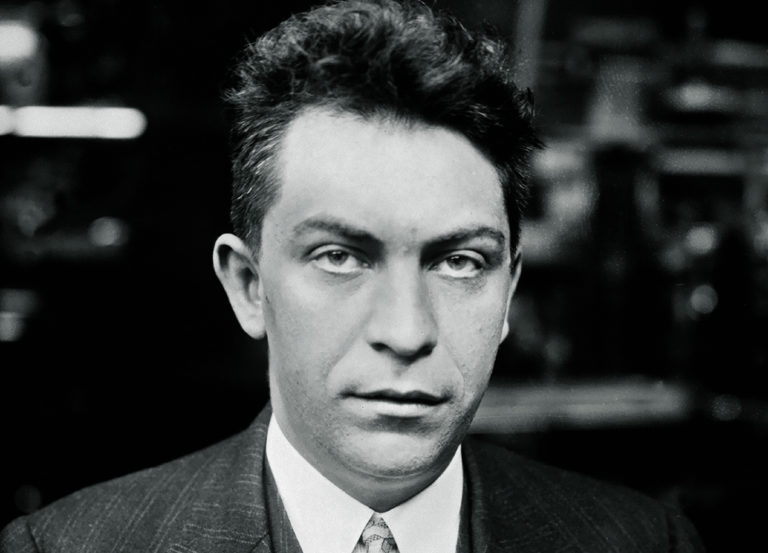
Karl Popper understood that science and responsibility are inseparable. This is particularly true today.
L’original article is published in German in Schweizer Monat.
Karl Popper's insistent 1968 postulate for a moral commitment on the part of the individual scientist in his search for truth has lost none of its relevance. This includes an appreciation of the transmitted principles of one's own discipline, as well as «the necessity of always critically re-examining these principles». Awareness of «the limits and fallibility of our knowledge» and «the limitlessness of our ignorance» must be constantly stressed as the guiding work ethic of every scientist.
Popper's warning against intellectual fads and the pressure to conform to the zeitgeist should also ring loud and clear in our ears. The humanities, cultural and social sciences are particularly sensitive to this. Too little thought is given to the interactions between social dynamics or debates and their scientific analysis and processing. Especially when scientists want to transform the world in their own image and according to their own convictions. For some years now, we have been witnessing a growing ideologization and moral charge that reduces the questions, themes and arguments in academic research. This politicization prevents a rational and open search for knowledge, which is at the heart of the freedom of science in the Enlightenment tradition. The cancel culture and political correctness now threaten the freedom of science on a massive scale. For years, a cultural war has been raging for interpretive sovereignty. At stake are shares in resources and positions of power in the scientific enterprise, with consequences that have far-reaching repercussions on society and politics.
Popper emphasized a key point, namely «the problem of the unintended consequences of our actions - consequences that are not only unintended, but often difficult to foresee». He saw this as the «fundamental problem of the social scientist», one of whose particular obligations is to «foresee as far as possible the unintended consequences of his activity». This is precisely what many social scientists in the USA have gravely failed to do, where a left-wing identity politics has already taken on almost totalitarian features.
It all began with the new social movements of the 1970s. Women and social minorities have rightly banded together to defend their rights, draw attention to historical and current discrimination, and rail against sexism and racism. But these once emancipatory aspirations have given rise to identity communities that have ideologized their concerns and run a noisy moralizing campaign against so-called majority society. Left-wing identity politics is the belated consequence of a philosophically and sociologically propagated multiculturalism, communitarianism and elements of French post-structuralism, and a consequent politics of difference. The practical implementation of this approach in North American and then European universities was the’affirmative action, which aimed to proactively promote disadvantaged people. Initially, their self-organization was supported, then research into collective identities derived from gender, ethnicity or religion gradually became established. In the meantime, this policy has become widely accepted. The collective, its painful history of oppression and its alleged cultural essence are the focus of attention. It successively takes precedence over the valorization of the individual, beyond gender, ethnicity or religion - a paradigm shift that has everything going for it and goes far beyond the discourse on diversity and victims in universities. It has long since entered society and politics, producing a social dynamic that divides and polarizes. Let's be optimistic and place our bets with Popper on the self-explanatory potential of scientists who are aware of their responsibilities: it's never too late to recognize mistakes and correct them.
Ulrike Ackermann is a political scientist and director of the John Stuart Mill Institute for Research on Liberty.
You have just read an open-access article from our LIBERALISM dossier, published in our print edition (Le Regard Libre N°111). Debates, analyses, cultural news: subscribe to support us and get access to all our content!

You'll also like




 French
  German
  English
Leave a comment