




Roger Scruton's paradox of beauty

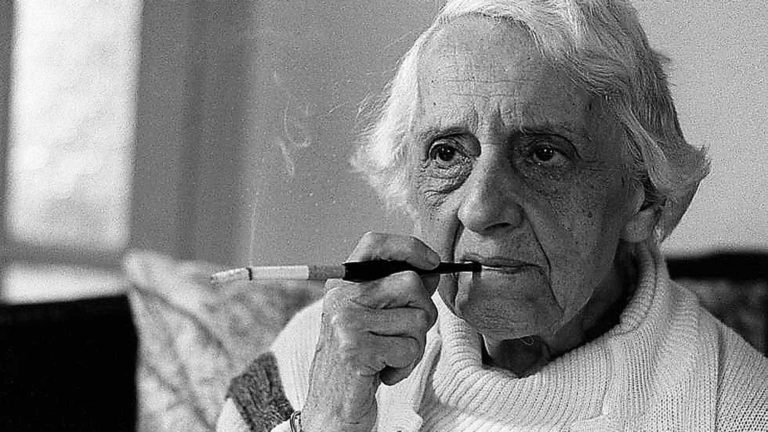
British philosopher Roger Scruton in 2016. Photo: Levan Ramishvili (via Flickr)
Is beauty in things or in our minds? According to British philosopher Roger Scruton, neither option is satisfactory. By pointing out the paradoxical nature of aesthetic judgments, he attempts to overcome the opposition between objectivism and subjectivism.
The objectivity of judgments of taste is the subject of a classic problem in philosophy. When I say that such and such a painting by Van Gogh is beautiful, is my judgment merely a matter of personal preference, or is it likely to be objectively true, in the same way as it is objectively true that mercury is a denser liquid than water?
For subjectivists, our aesthetic judgments are nothing more than the expression of individual preferences, explained, as the case may be, by sociological, psychological or evolutionary causes. From such a perspective, the arguments and reasons we can provide to support our aesthetic judgments are futile rationalizations designed to coat our opinions in a veneer of universality.
For objectivists, on the other hand, beauty is a quality of the objects themselves. According to this view, some works of art can be judged superior to others, not because of personal taste, but by virtue of objective properties. Objectivists thus defend the idea that aesthetic appreciation can be based on observable principles, paving the way for a broader discussion on objective criteria for assessing the beauty of a work.
For the philosopher Roger Scruton (1944-2020), who devoted a significant part of his work to the field of aesthetics, each of these positions describes a part of reality, but is unsatisfactory. As the Briton makes clear at the start of his essay Beauty by highlighting the paradoxical aspect of our judgments of taste. In aesthetic matters,« he explains, »we readily acknowledge the authority of experts - art critics - capable of analyzing works of art, comparing them with each other, explaining why one work is more beautiful than another. However, unlike our judgments in scientific matters, where second-hand opinions - i.e. from a qualified expert - are satisfactory, in aesthetic matters, any «personal judgment still requires experience», writes Scruton. And the philosopher continues: "It is only when I have heard the work in question [in the case of a musical work], at the moment of judging it, that the opinion I have borrowed can really become a judgment of my own."
If there were second-hand opinions on beauty, the author writes, there «might be beauty experts who have never experienced the things they talk about, and rules for producing beauty that could be applied by someone who has no aesthetic tastes», which is not the case.
Any aesthetic judgment, according to Scruton, therefore has a paradoxical nature: «[It] asserts something about its object, and it may be supported by reasons. But these reasons do not constrain the judgment, and can be rejected without contradiction.» In other words, objective reasons can be given in favor of an aesthetic judgment, but these reasons are neither sufficient nor necessary to form a true personal judgment, which ultimately depends on experience, since beauty cannot be separated from the experience of beauty.
To break the objectivity-subjectivity deadlock, Scruton proposes to put the debate in different terms. Inspired by Kant, he seeks to overcome this alternative by defending the idea that while beauty says something about the objects themselves, it cannot be understood without its relationship to human nature, hence his main thesis: «Beauty is a real and universal value, rooted in our rational nature, and the sense of beauty plays an indispensable role in shaping the human world.»
Write to the author: antoine.bernhard@leregardlibre.com
You have just read a report contained in our dossier «Bringing beauty back to life», published in our paper edition (Le Regard Libre N°114).
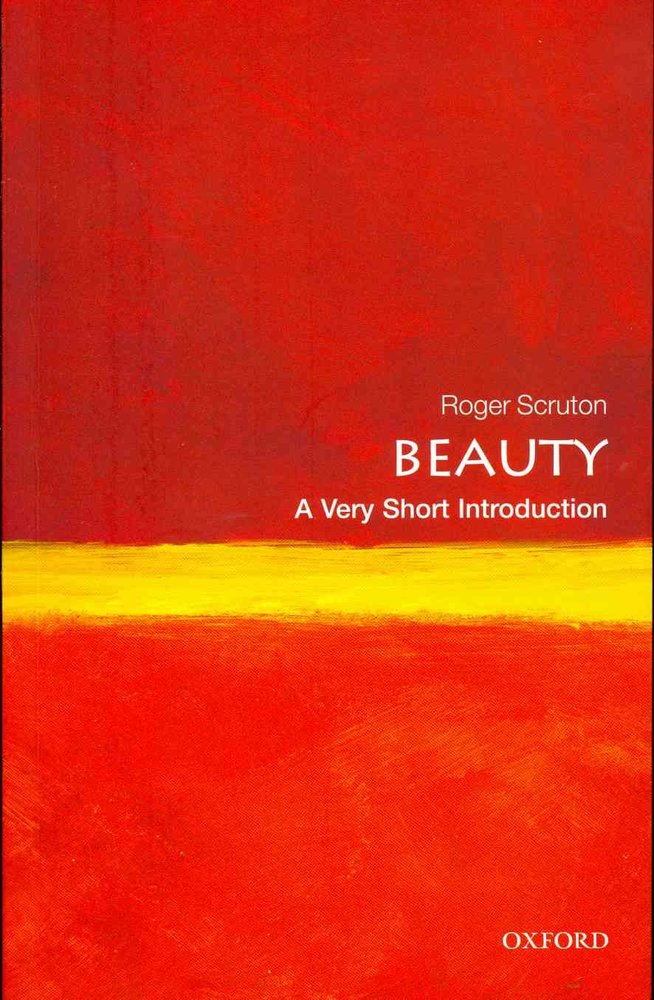
Roger Scruton
Beauty
Oxford Press Libri
March 2011
208 pages

You'll also like





 French
  German
  English
Leave a comment