



When science and activism go hand in hand
Under the guise of inclusion and social justice, universities too often sacrifice scientific rigor to ideology. According to historian Olivier Moos, this drift compromises its primary mission: to shed light on reality rather than to serve causes.
There is an implicit contract between the university and society. In exchange for generous subsidies from the cantons and the Confederation, as well as broad institutional autonomy, the university commits itself to the intellectual and critical edification of our future elites, to the transmission of knowledge and the production of expertise.
To fulfill this role, the institution must remain a space free from ideological or political constraints. Its members must be recruited on the basis of merit, free to explore and debate the most sensitive subjects, with research knowing no servitude other than that imposed by the scientific method. Admittedly, the reality is much murkier than the grand principles, but this is the horizon to be pursued if the institution is to retain its legitimacy and the public's trust.
Unfortunately, there is good reason to believe that a number of university faculties and institutes of higher education have denounced this contract without relinquishing their privileges. The demand for neutrality and objectivity all too often gives way to progressive militancy, where virtue-signalling tends to take precedence over the quest for knowledge.
Read also | The politicization of the University of Geneva
«Being a committed historian in no way prevents us from seeking to write an objective and interpretatively grounded historical narrative, - let's not forget that any assertion of a neutral and “rational” history is also ideology, and that conservatism is also militancy.»[1], These are the words of four female researchers from the University of Geneva in an interview about their collaboration on the project to feminize street names in the city of Calvin. This is the sophism of the activist researcher: given that we all have political and moral preferences, impartiality is less a discipline to be cultivated than an illusion to be abandoned, and so research can legitimately espouse this or that social or ideological cause (provided, it goes without saying, that it remains firmly anchored on the left). Activism and science go hand in hand, historians tell us, because «the awareness of belonging to a progressive or minority current often obliges one to be more methodologically rigorous». That's a relief. Incidentally, this feminist Genferei with which these academics are associated is an initiative of the’association L'Escouade, whose ambition is to destroy «the capitalist, patriarchal and racist system in which we live».
This is by no means a Geneva anomaly. As the minutes of the 2019 congress of the Swiss Society for Gender Studies, a member of the Swiss Academy of Humanities and Social Sciences (ASSH), testify, contempt for liberalism, detestation of capitalism and the fight against the unfalsifiable patriarchy do indeed seem to form a consensus among our rigorous experts.[2]
Read also | «Under certain conditions, intelligence predisposes to error».»
As the university remains the main factory of elites, activism disguised as science inevitably spreads into the political arena, infiltrates legislation and colonizes bureaucratic niches. The magazine Tangram, published by the Federal Commission against Racism (FCR), is an eloquent example. In 2020, for example, the number 44 focused on «the death of African-American George Floyd, suffocated under the knee of a white police officer in Minneapolis». This whiteness - a concept inherited from the «critical theories of race» developed by their no less rigorous North American counterparts - is at the heart of the preoccupations of an anthropologist from the University of Applied Sciences Western Switzerland (HES-SO), whose article devoted to «white privilege» tells us that the latter is the mask for «systemic racism» in our country. In the same issue, a professor of Gender Studies at the University of Berne also reminds us that «the problematic representation of white masculinity is not only linked to colonial domination, but also to patriarchal domination over white women, other genders and children». Another contribution, by a pedagogue and a sociologist, encourages us to further democratize our oppressive society by extending quota policies to benefit people of color, immigrants and people of colour. queers. All this, of course, in the name of fairness, inclusion, progress and so on.
To our dossier «L'irresponsabilité des élites» (The irresponsibility of elites)»
None of the contributors to this issue saw fit to challenge the stubborn myth that there is an epidemic of police killings of African-Americans, to explain to their readers that racism (or sexism) can coexist with inequalities between groups without necessarily being the cause, or to discuss the social and political costs that often emerge in the wake of preferential programs. This lack of critical distance is not accidental; it is an emerging property of the system. Our experts are produced by institutions where such nuances are politely disregarded, if not simply deemed immoral. It's true that empirically testing one's hypotheses can prove imprudent when one's salary and status depend on the persistence and gravity of the vice one has set out to combat.
Read also | Non-violent occupation or the militant oxymoron
The problem is probably not so much quantitative as qualitative. If surveys on the deconstruction of gender among Swiss farmers[3] or the efforts of «decolonization» of the Musée valaisan des Bisses are not representative of academic production as a whole, the treatment of so-called «societal» subjects is all too often marked out by imposed premises and obligatory conclusions. Our institutions of learning still produce high-quality research, but what Boudicca in Etudes genre would venture to dispute the assertions of the academic manifesto of the «Women's Strike» (2019)? To denounce the selection bias of the survey on «The cost of virility in Switzerland».» (2024)? What conquistador in the faculty of Social and Political Sciences would scuttle his career by deflating the hyperbole of the UN experts' report on racism in Switzerland (2022), which attributes the country's economic success to colonialism and slavery? What maquis in the philosophy department would risk publishing a peer-reviewed article deconstructing the inconsistencies of gender theories?
Read also | From «us» to «me»: the suicide of the American left
While these objects of study are perfectly legitimate in themselves, the ideological formatting of research generates partial diagnoses and biased conclusions that impoverish public debate, corrupt expertise and undermine the credibility of the «scientific consensus». The taxpayer, the first to fall for the joke, finds himself unwillingly funding various forms of militancy; many students leave university armed with certainties to recite rather than the tools to think; as for researchers, they see their room for manoeuvre shrinking under the combined effect of ideological fashions and the capture of funding by certain lobbies. When a student, at the end of a very rare debate devoted to alternative scientific approaches to the dominant paradigm of Gender Studies, expresses surprise at never having been exposed to such perspectives during her entire course, it testifies to a profound dysfunction in the system. Preferring ideological convictions to the discomfort of the scientific process betrays the mission of the university.
Read also | Separating the researcher from the activist or drowning the researcher in the activist
Privately, a number of researchers share this regrettable observation, although they know that the objection can prove socially and professionally costly. Sometimes all it takes is a mobilized and intransigent minority to make its preferences prevail over a silent majority. There is, of course, no institutional censorship, and freedom of expression is celebrated with great fanfare. Taboos and intellectual norms are imposed through socialization in an environment where critical-minded students quickly realize that the seraglio is entrusted to eunuchs.
No malice or conspiracy at work. Inertia is enough. The rhetorical hegemony of the progressive left is the natural result of growing endogamy in the social sciences and humanities - a long-term process, common to many Western countries, that has been unfolding for half a century. We prefer to recruit from our own tribe, and these marriages between cousins inevitably contribute to ideological consanguinity, encouraging liberals and the rare conservatives to censor themselves, or to opt for a different career. All diversity is good, except that of ideas.
Structurally, this phenomenon mirrors the positive discrimination in favor of women in research and higher education. For a quarter of a century, the state has been funding various support and training programs aimed primarily or exclusively at women, including the creation of «equality offices» in all universities, «Gendermonitoring», networks «mentoring», the program H.I.T., subsidies Springboard, subsidies PRIMA from the Swiss National Science Foundation (diluted from 2022, for the sake of opacity, in the two funding instruments Ambizione and SNSF Starting Grants). Although inspired by the best of intentions, the acquired speed of these preferential programs ensures their perpetuation regardless of societal transformations or the increasing feminization of the tertiary sector. Quotas crystallize into moral norms, objectives are indefinitely postponed, concepts are constantly expanded, and the provisional becomes the permanent. The first law of institutionalized activism is to never achieve its objectives. It's true that discrimination, whether positive or negative, always creates classes of beneficiaries who are reluctant to give up their privileges.
Read also | Militancy at uni: no one can turn a blind eye any more
When asked about the relevance of maintaining a preference for female candidates in a unit that already boasts a comfortable female majority within a faculty that is also predominantly female, a professor at the University of Geneva pointed out that lack of equal gender distribution across functions and departments. Regardless of average differences in priorities and temperament between the sexes[4], The model advocated by our experts is that of a planned economy applied to all positions of power and prestige. In a word, the abandonment of the merit principle in favor of that of representation. Curiously, these statistical concerns don't seem to apply to the building trades or road maintenance.
Can the university reform itself from within and refocus its rudder, or does the impetus have to come from outside?
In May 2023, the UK Parliament passed the Higher Education Freedom of Speech Act, a bill inspired by two reports by the think tank Policy Exchange which requires universities to protect and promote academic freedom, with the creation of a body to monitor university policies. Although the ideological capture of institutions and the costs of objection are less severe in Switzerland than in Anglo-Saxon countries, it is indeed likely that only intervention by the political authorities can induce universities to recalibrate their compass.
Read also | «Israel=Terrorists»: immersion among pro-Palestinian students
However, it is highly doubtful that a firm reminder of the institution's duties, even if accompanied by the creation of a supervisory body, will succeed in cleaning up the Augias' stables. After all, not even a century of failures by socialist regimes, in all latitudes, has succeeded in undermining the legitimacy or tarnishing the prestige of their fellow travelers among knowledge producers. As one of the authors of the Policy Exchange, If not a satisfactory solution, sounding the alarm will at least help to encourage and protect conscientious objectors. Even a marginal mobilization of courageous, heterodox researchers would be enough to crack the echo chambers and rehabilitate genuine intellectual diversity.
The recent revolutionary fever of radical progressivism is often perceived as an unpredictable incongruity escaping from academic laboratories. After more than a decade of illiberal extravagance and sanctimonious tartuffery, this radicalism will, it is prophesied, resolve itself in the wake of the rightward shift of Western political fields. Alas, politicians« horizons are often limited to the next election, while the capture of institutions is a multi-generational phenomenon. As the temporary flare-up of »political correctness" in the 1990s demonstrated, anaesthetizing the most severe symptoms does not cure the disease.
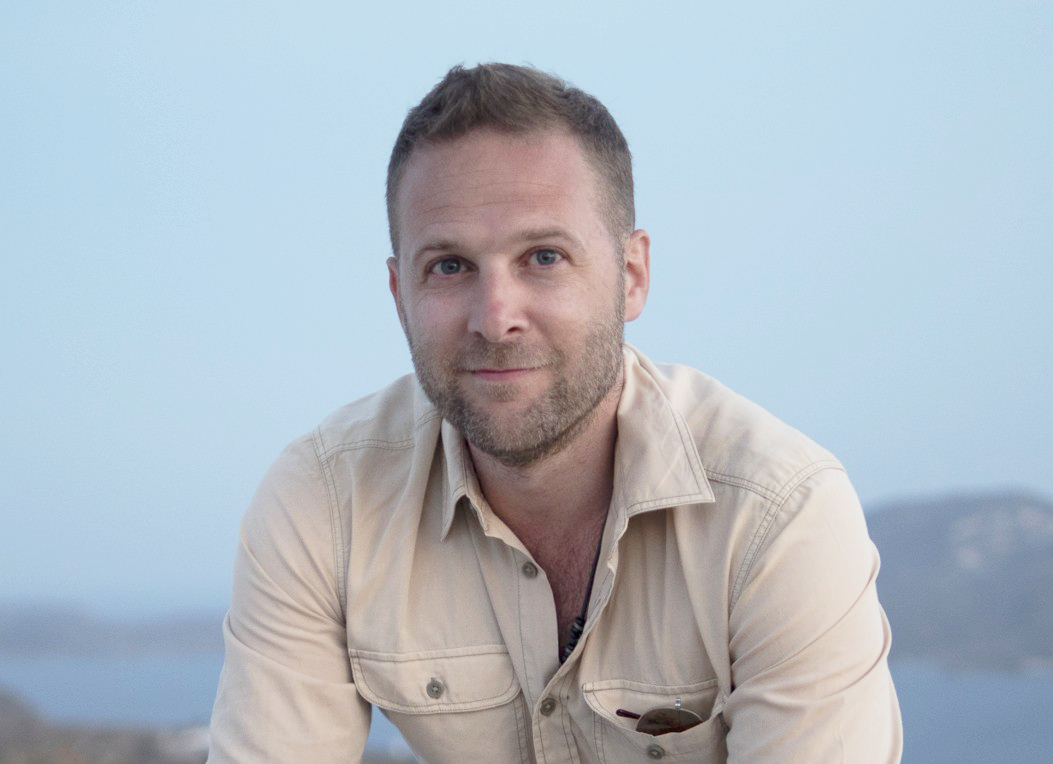
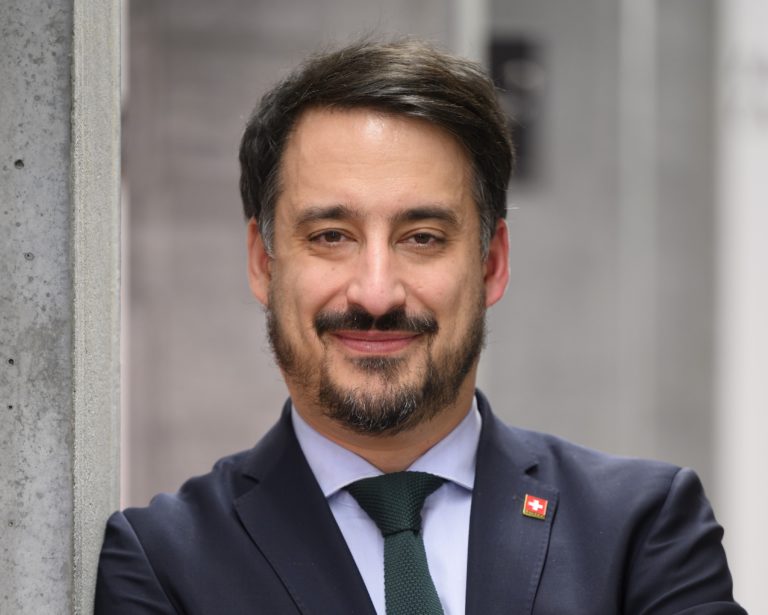
Olivier Moos is a Doctor of Contemporary History (University of Fribourg and EHESS). He is the author of an essay entitled «Le Guide du Réac: Comment perdre ses amis et mourir seul» (Publishroom Factory, 2024).
You have just read an analysis from our print edition (Le Regard Libre N°117). Debates, analyses, cultural news: subscribe to support us and get access to all our content!

Olivier Moos
Le guide du Réac: How to lose friends and die alone
Ed. Publishroom Factory
June 2024
170 pages
[1]Interview with Daniela Solfaroli Camillocci, Laure Piguet, Pamela Ohene-Nyako and Sarah Scholl, «Militancy and historical work are not mutually exclusive», Swiss Academy of Humanities and Social Sciences, sagw.ch, March 15, 2023.
[2]Pascal Kohler and Lea Dora Illmer, «Renewing thinking about violence and ways of resisting it», 2019 Congress of the Swiss Society for Gender Studies (SSEG), Gendercampus.ch, October 2019.
[3]Prisca Pfammatter and Joost Jongerden, «Beyond farming women: queering gender, work and family farms», in Agriculture and Human Values, vol. 40, April 2023, pp. 1639-1651.
[4]See in particular S. Stewart-Williams and L.G. Halsey, «Men, women and STEM: Why the differences and what should be done?», in European Journal of Personality,vol. 35, no. 1, 2021; Steve Stewart-Williams and Andrew G Thomas, «The Ape That Thought It Was a Peacock: Does Evolutionary Psychology Exaggerate Human Sex Differences?» and «The Ape That Kicked the Hornet's Nest: Response to Commentaries on “The Ape That Thought It Was a Peacock”», in. Psychological Inquiry,No. 24, July 2013; Marco Del Giudice, «Measuring Sex Differences and Similarities», in Gender and sexuality development: Contemporary theory and research, Springer, 2022; Richard A. Lippa, «Gender Differences in Personality and Interests: When, Where, and Why?», in Social and Personality Psychology Compass, vol. 4, N°11, November 2010; David Buss, Evolutionary Psychology: The New Science of the Mind, Routledge, 2019.

Vous aimerez aussi


 French
  German
  English
Laisser un commentaire