




War economy, towards the mammoth state?
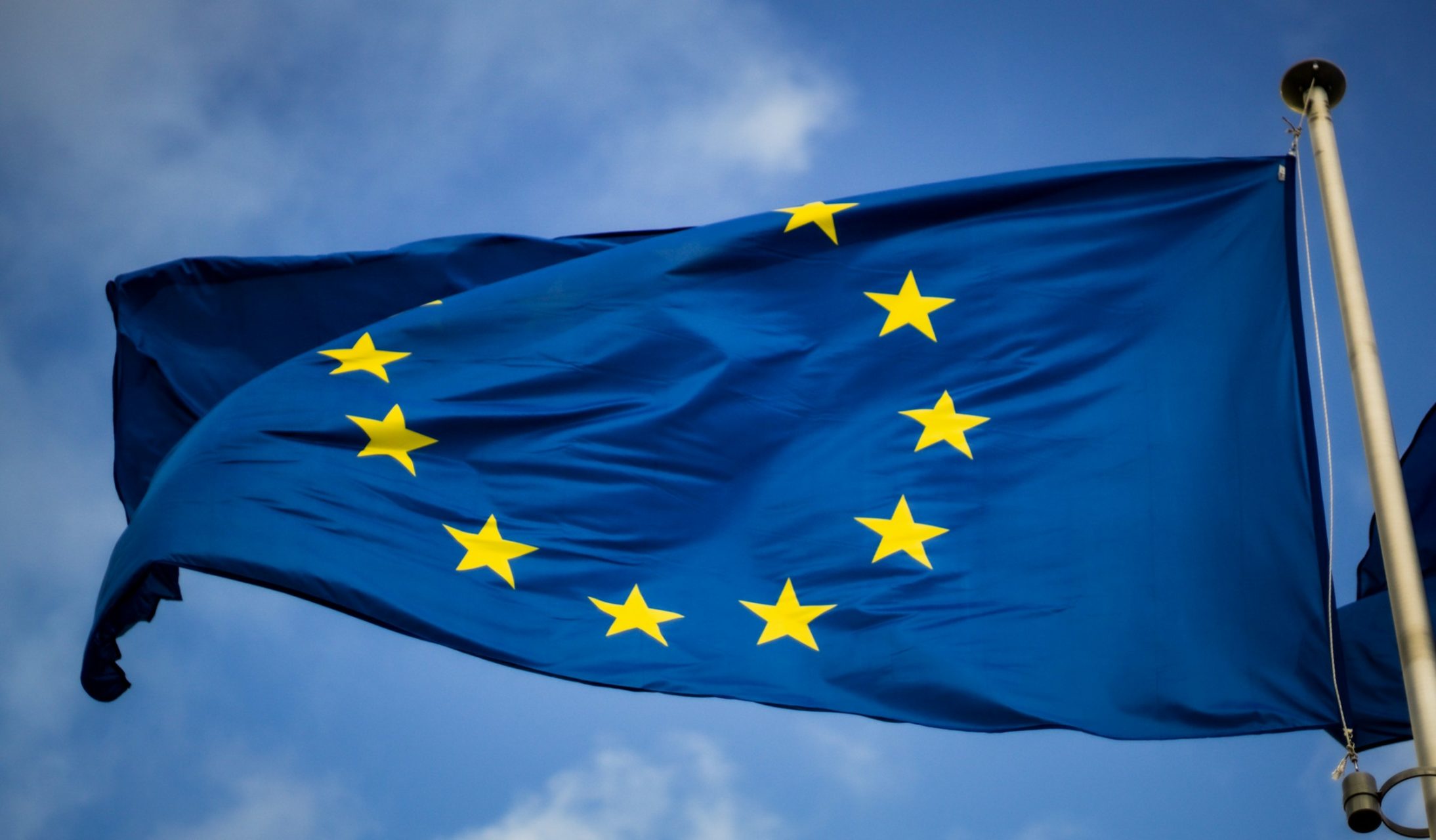
Earlier this month, the European Union approved an 800 billion euro plan to strengthen its defense. Photo: Christian Lue (via Unsplash)
At a time of geopolitical turbulence, interventionism may be desirable, provided that political power is capable of reversing course afterwards. However, nothing is less certain for a country like France, which is already over-indebted.
The improbable lynching of Ukrainian President Volodymyr Zelensky in the Oval Office at the end of February sounded the alarm: Europeans are now alone in defending liberal democracy in Europe. Emmanuel Macron has announced France's entry into a war economy. The program includes an increase in the defense budget, accelerated rearmament and massive investment in the military industry.
Armaments production lines are already running at full speed: while France was producing 500 shells a year in 2017, this figure has risen to 3,000 shells a month by 2024. The Rafale production rate has tripled since the start of the conflict in Ukraine.
The invocation of the war economy seems to foreshadow the advent of a mammoth state. At a time when Europe is trying to put an end to Russian authoritarianism, liberalism - the continent's economic and political foundation - seems to be on hold, for better or for worse. For dirigisme need not become an unsurpassable horizon.
War, the gravedigger of liberalism
The war in Ukraine embodies a pioneering, shifting front between two irreconcilable worldviews. The Westphalian state is once again at the center of the international game, despite Francis Fukuyama's «end of history» theses. Gone are the days of gentle commerce. Vladimir Putin and Donald Trump are forcing Europe to assume its responsibilities.
The Russian Federation has built stone by stone its deafness to liberal ideas, falling into the monotonous rut of democracies. Since Putin came to power in 2000, the air of freedom has been thinning in Moscow, yet no one seems to be suffocating. A command economy, a starving country, unlimited power. The Kremlin tames and subdues every sector: energy, defense industry and infrastructure. It wields the iron fist when necessary. Competition, in the political market as in economic life, is a blind spot.
A war economy completely reconfigures economic structures. It's not just a question of reallocating budgetary resources. In France, a country with a strong statist tradition, the war economy now decreed implies greater control of the workforce. Interventionism leads to market distortion, savings diversion, a culture of wait-and-see and corporate dependence on public authorities, followed by path dependence, weak incentives for innovation, administrative complexity, a lasting rise in taxation and unsustainable debt... Not to mention the fact that the burden of debt is already on its way to becoming the French government's biggest item of expenditure.
The war economy is reshaping the relationship between state and citizen. Security can sometimes compete with individual freedoms. To limit the influence of Russian disinformation campaigns, the European Union (EU) and several member states have tightened their policy on fact-checking online. Russian media such as RT and Sputnik have been banned. The so-called «exceptions» to freedom of expression tend to become more and more entrenched, pricking the flesh of our democracies with a Kafkaesque thorn, caught in the cogs of an unshakeable bureaucracy. Our public liberties must not be tyrannized by the omnipotence of decrees, that chattering literature.
Deglobalization in wartime
The war in Ukraine catalyzes the phenomenon of deglobalization. Faced with the new geopolitical realities, Europe and the United States adopted a protectionist stance. Their objective is clear: to secure their strategic industries and avoid dependence on countries deemed hostile. The EU has adopted a screening mechanism for FDI (Foreign Direct Investment), limiting takeovers of sensitive companies by Chinese or Russian players. While Russia is already largely cut off from the Western market, China remains a major question mark. However, this policy has its downside. Trade barriers increase costs. By limiting imports and favoring local production, governments run the risk of driving up prices for consumers and businesses alike.
Massive investment in the defense industry, while essential in the current context, could harm other strategic sectors in the long term. An excessive concentration of resources in the military-industrial complex would be to the detriment of other crucial investments, notably in education, health and the energy transition. In wartime, the economy tends to specialize, running the risk of becoming mono-industrial. It is important to maintain a diversified economy, based on private initiative and a plurality of sectors.
Read also | Fostering entrepreneurial spirit
Historically, countries that have structured their economies around the military-industrial complex have faced path dependency, i.e. an inability to easily exit from initial economic choices, even when they are no longer optimal. After the Cold War, the United States retained a partly militarized economy. The war economy can sometimes mutate into crony capitalism. This distorts competition and growth through artificial advantages. The result is the development of unassailable rents. This limits creative destruction, which is essential in wartime as in peacetime.
If the war drags on, Europe runs the risk of sinking into a militarized, controlled and sluggish economy. In this perspective, the state would become omnipotent and inexorable, stifling the possibilities of real innovation. The mammoth state could go from being a passing necessity to a definitive fate. The future of the liberal model is at stake today, between security imperatives and the preservation of freedoms.
Arthur Billot is a student of political science. He is currently working on Swiss liberalism.
You've just read an open-access forum. Debates, analyses, cultural news: subscribe to support us and get access to all our content!

You'll also like


 French
  German
  English
Leave a comment