





Individualism versus freedom: rereading Tocqueville

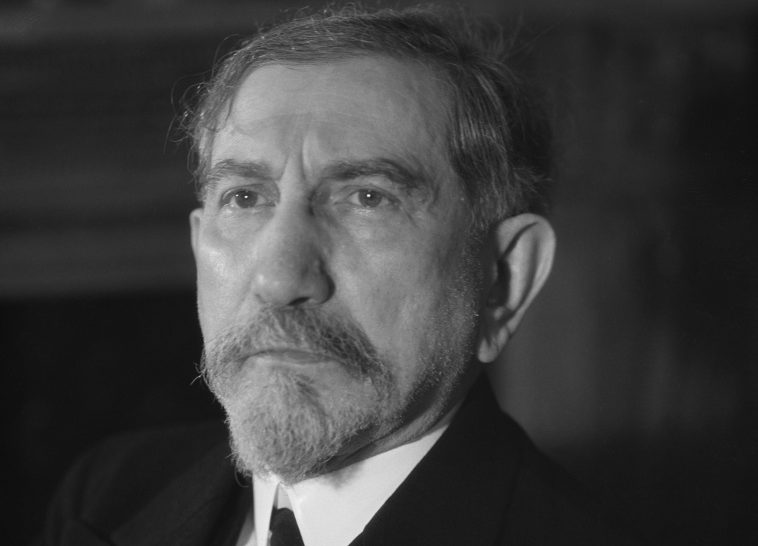
Alexis de Tocqueville © Oil by Théodore Chassériau / Wikimedia
To the contemporary reader, the anti-individualist stance of a liberal may seem strange. Not at all: Tocqueville defines individualism as the withdrawal of the individual into himself, letting the rest of society decide politically for him.
«Shared thought is shared thought», sings Léo Ferré in his beautiful Foreword to his album There's nothing left, released in 1973. A few lines later, he adds: «What's cumbersome about morality is that it's always someone else's morality. Applied to politics, this intellectual and literary observation echoes the thinking of Tocqueville. A great figure of classical liberalism and a remarkable theorist of the evolution of Western democracies, this French Catholic philosopher of the 19thth century is at the heart of his book's themes Democracy in America the difficult question of the relationship between freedom and equality. One of the most salient points of his analysis is that egalitarian passion puts freedom at risk, placing it at the mercy of the tyranny of the majority.
But for Tocqueville, freedom is not incompatible with equality, and can even be enhanced by it. All it takes is for freedom to be guaranteed by certain conditions. First and foremost, it is important that citizens do not lapse into individualism. To a contemporary reader, a liberal's anti-individualist stance may seem strange. Tocqueville defines individualism as the withdrawal of the individual into himself, as his indifference to the affairs of the City. The citizen is no longer a citizen, but an individual who lets the rest of society, the majority, decide for him or her.
On this subject, see the debate «Le PoinG» in which Jonas Follonier took part on Léman Bleu on January 16:
But it's not in itself a problem for a democrat if the majority decides for the minority, or even if a small number of people impose their views on a crowd of lazy people and other abstainers. The democrat accepts this kind of situation. The absentees, after all, are always wrong. But Tocqueville isn't a democrat; he's first and foremost a liberal who sees the democratization of Western societies as inescapable, and tries to make the best of it on the model of the best that aristocratic regimes had to offer. Like any self-respecting classical liberal, Tocqueville is above all a defender of the natural rights of man, before being an advocate of any particular regime.
This is why this thinker, who knows only too well that democracy is not a guarantee of freedom, since equality can be scrupulously respected in a tyranny, comes to propose safeguards against too much majority power. What counts in a liberal democracy is the use of one's civic freedom. In short, it's about each individual's involvement, at his or her own level and according to his or her skills and interests, in civic discussion. Civilized controversy is the only guarantee of respect for freedoms, because if every human being is to be equal to others, it is first and foremost in terms of the choice of destiny he or she will undergo. This concept of liberal, i.e. healthy, democracy obviously requires the most widespread education possible, and absolute respect for freedom of expression and conscience. Without them, there can be no personal thought.
No intellectual contribution has proved more useful for understanding our democracies. And no other than Tocqueville was a better prophet of what would one day be cruelly lacking in our societies: involvement in the life of the city and the conditions for open public debate. Tocqueville even shows us the way to restore, or better still, build, the guarantees of our freedoms in the face of the danger posed to them by individualism. The author insists, for example, on the fundamental role of associations. Well, let's multiply our affiliations. Let's invest in friendship and dialogue. And let's re-read Tocqueville.
Write to the author: jonas.follonier@leregardlibre.com
You have just read an editorial published in our paper edition (Le Regard Libre N°81).

You'll also like




 French
  German
  English
Leave a comment