




The center has no monopoly on the search for balance
Le Regard Libre N° 70 - Jonas Follonier
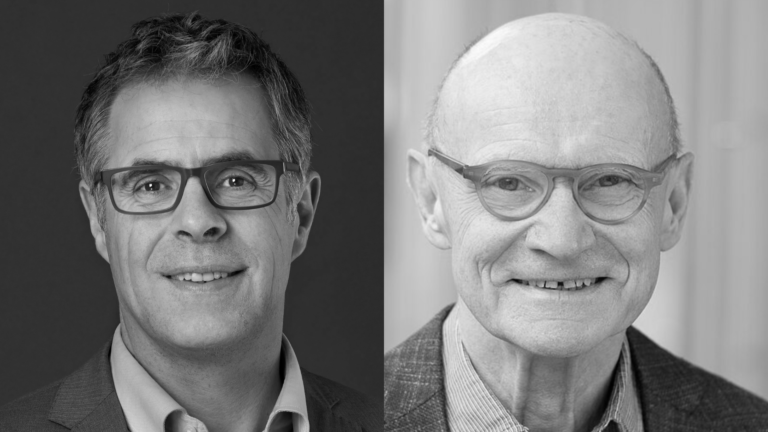
In the’interview-debate on pp. 8-11. this issue, Sascha Zbinden (PBD) and Nathan Bender (PDC) were asked about their vision for the merger of their two parties and the new name «Le Centre». For souls unfamiliar with centrist ideas, two problems stand out in the words of both.
The first problem is the vagueness of their political philosophy. Yet Christian democracy has a long tradition. You'd expect a young PDC, who is also attached to the notion of «Christian», or at any rate «Christian Democrat», to defend a philosophical-political heritage, drawing on history. European construction, federalism... Mr. Bender's political background is undoubtedly not limited to his family politics, as he himself says. Except that he doesn't give us much insight into this hypothetical added value.
This is precisely the second problem: this idea that the core of the actions to be taken (because Messrs Zbinden and Bender are defending the same line here) lies in the search for balance and the common good, can - must - be brandished by all parties! It's very strange to find a member of parliament who claims to avoid or be indifferent to balances, preferring to defend one sector, or one trend, or one canton, to the detriment of others. It's hard to imagine an MP who would say he or she wants to serve his or her own interests rather than those of society as a whole. Such people couldn't even be elected. The center, whether capitalized or not, has never had and will never have a monopoly on the search for compromise. This is quite simply the definition of Swiss political culture, whether legislative or executive.
When a young centrist is asked about his ideology, he responds with this parry: «the absence of ideology». One of two things. Either an ideology is defined by Hannah Arendt as a system of indoctrination typical of totalitarianisms, and then it's obvious that the Centre doesn't claim to be one, but that's of course the case for all parties. Or ideology can be defined as a worldview that enables us to analyze reality using concepts, and then an ideology policy is a vision of the world that allows us to analyze reality using concepts policies, which is quite practical - and even essential - when it comes to taking action... policy.
The centrists' anti-ideological course is therefore at best a dead end, at worst a gigantic sham. With, in any case, a danger for democracy. For, on reflection, what is merely a posture, Whether conscious or unconscious, naïve or malignant, it's a perfect reflection of the zeitgeist. Not only is the «end of ideologies» an idea that appeals to the contemporary intellectual world, but the «leave me out of it, I don't want to take sides» attitude is very much in evidence among the population. This position is perfectly permissible, even acceptable. But it cannot define the identity of a political party. If it does, it risks opening the door to inaction or inconstancy, or worse, corruption.
Many people wonder what it's like to be a young centrist. What makes him tick? What are his convictions? Perhaps none at all. Beware of posturing: it could well contribute to the phenomenon of losing one's bearings.
Write to the author: jonas.follonier@leregardlibre.com
Drawing: © Nathanaël Schmid for Le Regard Libre

You'll also like




 French
  German
  English
Leave a comment