




Down with «patriarchy»!
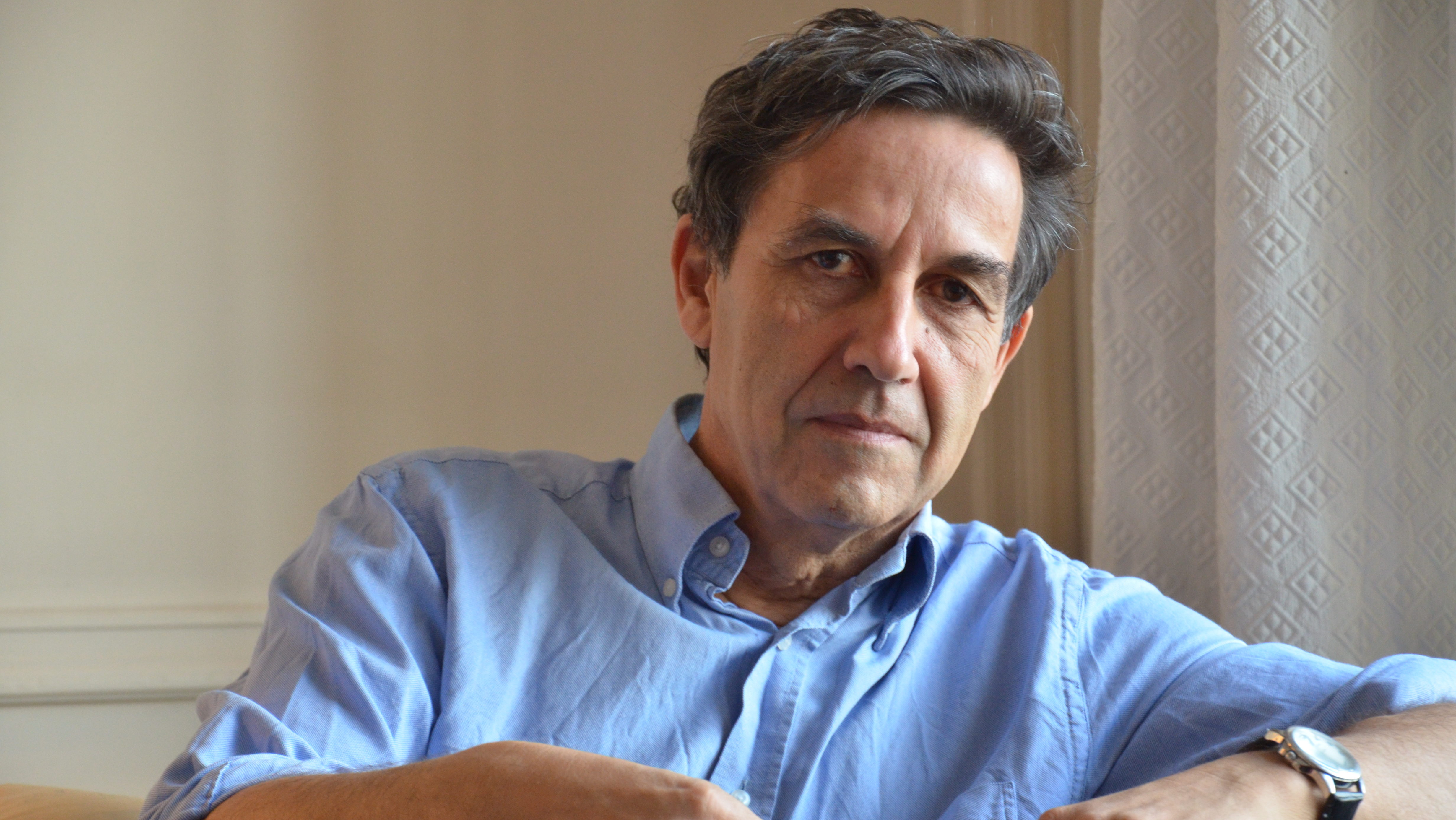
Emmanuel Todd in 2014. Wikimedia photo, under CC 4.0
The word patriarchy is on everyone's lips, brandished as an inescapable and detestable truism. Yet anthropologist Emmanuel Todd puts us to the test: do we really know what this notion means? Nothing is less certain...
The consensus seems to be in favour of against patriarchy. Alongside climate and geopolitical crises, it is one of the major issues of our time. Yet, as soon as we attempt to define it, difficulties arise. The word takes on multiple, often imprecise and sometimes contradictory meanings.
Some people will be outraged that we dare to ask this question, and will immediately see it as a devious maneuver to justify male oppression. For them, everything is clear: patriarchy is a system of male domination, which structures all aspects of life: private, institutional, economic, political, sporting, religious... An eternal, structural and systemic domination, which spares no society, least of all ours. But if patriarchy is in everything, what does the word still mean?
For someone who has devoted his life as a researcher to forging rigorous concepts and precise tools (data, statistics, maps), there's plenty to be puzzled about. How can we accept that such a vague word should sweep away decades of painstaking research? This is the tragedy of kinship anthropologists like Emmanuel Todd. Famous for having predicted the collapse of the USSR as early as 1976, he is first and foremost an anthropologist of family systems. For half a century, he has been striving to understand the kinship systems that shape representations, ideologies and... the status of women.
Patriarchy« put to the test in family models
If we move away from slogans and adopt a comparative and historical approach, reality turns out to be more nuanced than a binary opposition between oppressor men and oppressed women. In her many works, particularly Where are they now? (2022), Todd demonstrates that family systems have not completely disappeared beneath the veneer of globalization. He distinguishes at least six ancestral family models, which continue to structure, in depth, cultures, politics and ideologies:
- The egalitarian nuclear family (France, French-speaking Switzerland, central Spain, southern Italy...). Children leave home early, fostering their autonomy. Inheritance is divided equally between boys and girls. This model values freedom and equality, and guarantees women a relatively high status, notably in terms of inheritance rights and social mobility. It forms the cultural foundation of France and its motto «liberté, égalité, fraternité» (liberty, equality, fraternity).
- The absolute nuclear family (United Kingdom, United States, Australia...). It differs from the previous model in the absence of egalitarian rules: parents divide their assets freely. This model is associated with strong liberal traditions and a certain indifference to the principle of equality. Women have won important rights, but radical individualism, nourished by Protestant culture, has favored the recent emergence of a third-wave feminism, marked by resentment and social anomie: «antagonistic feminism».
- The stem family (Germany, Japan...). A single child, usually the eldest son, inherits the family fortune and stays with the parents. This model values authority and hierarchy. Inequality is structural, and women occupy a clearly subordinate position. Historically, this type of family is often correlated with authoritarian or undemocratic political regimes.
- The exogamous community family (Russia, China, Vietnam...). All sons live in the family home and welcome their wives from other families. Daughters leave theirs to join their husband's family. Women are exchanged between families according to a strict patrilineal logic. The degree to which women are degraded varies from region to region: lower in Russia, higher in China and Vietnam. Thanks to its strong internal cohesion, this model has encouraged adherence to communist regimes.
- The endogamous community family (Arab world, Turkey, Iran, Afghanistan, Pakistan...). It favors marriages between parallel cousins (children of two brothers) to preserve blood ties and the unity of heritage. Paternal authority is diluted in favor of that of the siblings. This system results in a high degree of inferiorization of women. Consanguineous marriage rates still exceed 30% in many regions.
- The community family with mass polygyny (West Africa). Here, male polygamy dominates. A man can have several wives, creating a conjugal hierarchy and competition between women. Women's status is greatly lowered, depending on their rank in the order of wives and their ability to bear boys. Subordination to husbands and clans is extremely strong.
Examining these family types, Todd notes that ’to each family type corresponds a status for women«. Even today, women's status remains to some extent conditioned by these kinship systems. The peripheral regions of the old civilizational hotbeds - France, Northern Europe, the Anglo-Saxon world - offered women a relatively egalitarian status, far removed from a so-called universal patriarchy.
The four pitfalls of patriarchy
Todd is an outspoken critic of the term patriarchy. He sees it as a catch-all term, overused by many activists who have never bothered to carefully describe the complexity of societies. The term, he says, «breaks his anthropologist's tools» because of four major errors:
1. The myth of patriarchy in the West. According to Todd, applying the term patriarchy to the Western world is a «ridiculous blindness», which he describes as «sociological creationism». Todd affirms: «Patriarchy appeared in the heart of Eurasia, around Mesopotamia and ancient China. (...) It never really existed in Western Europe. The individualistic nuclear structure has always prevailed here, close to the ancestral family model of hunter-gatherers, where women have retained a particularly high status.
Read also | The weaker sex, in demography, is the man
2. A crude levelling of all cultures. To speak indiscriminately of patriarchy erases the colossal differences between today's 193 nation-states. Being born into a Swedish or Chinese family means very different things to women. «If you use the word patriarchy to talk about the situation of French women in the 20th and 21st centuries, what word will you use to describe the status of women in Afghanistan and Saudi Arabia?» he asks.
3. The emancipation of women in the West is invisible. For Todd, this emancipation constitutes the greatest societal revolution of the last two centuries. Today, this transformation has engendered a structural polarization of our societies: on the one hand, «ideological matri-dominance» (women dominate teaching, the media and soon the university); on the other, «economic patri-dominance» (men remain at the head of the grandes écoles, multinationals and political institutions). Todd statistically measures «a residual film of male domination that does not exceed 4% of the social structure». Yet antagonistic feminism remains completely blind to these fundamental changes, locking itself into a fixist, victimized vision of an eternal, omnipresent patriarchy that it waves like a red rag.
Read also | Camille Paglia or anti-victim Amazon feminism
4. An ideological instrumentalization to the detriment of the working classes. For Todd, the slogan «Down with patriarchy» is brandished by an upper-class elite totally disconnected from the experience of the working classes. The author writes: «As much as I recognize the feminism of the first and second waves, driven by bourgeois women and militant for the right to vote and sexual emancipation, as having been beneficial to all women, what we are experiencing today, antagonistic feminism (...) is a catastrophe for the working classes. It may please petty-bourgeois women in the university, but it poisons relations between men and women in the circles where the solidarity of the couple is most needed.» These activists act as veritable «pyromaniac firefighters»: by lighting fires of indignation all over the place, they end up damaging the causes they claim to defend.
That's why, following Todd, we can proclaim: «Down with (the concept of) patriarchy!» Rather than succumbing to an Anglo-Saxon feminism of resentment, it's time to revive «a feminism of reconciliation», based on collaboration and mutual respect between men and women, and thus remain faithful to the heritage of the egalitarian nuclear family of hunter-gatherer societies.
Comment
For Emmanuel Todd, abandoning the term patriarchy in no way means denying the existence of male violence or specific forms of male domination in certain areas. However, the anthropologist insists on the need to measure them statistically over time and on a global scale. For example, female homicide rates have been falling steadily in Europe since 1985, which contradicts the alarmist thesis of «the obsessive rise of the feminicide theme». So it's not out of denial, but in the name of a clear-sighted viewpoint and rigorous conceptualization, that Todd calls for a renunciation of the use of this imprecise notion.
Yan Greppin teaches geography and philosophy at the Lycée Denis-de-Rougemont, Neuchâtel.
You have just read an article from our print edition (Le Regard Libre N°120). Debates, analyses, cultural news: subscribe to support us and get access to all our content!

You'll also like


 French
  German
  English
Leave a comment