











«Idiotie»: a Médicis long awaited since 1970
An overview of some of the major literary prizes - episode #1
Le Regard Libre N° 47 - Loris S. Musumeci
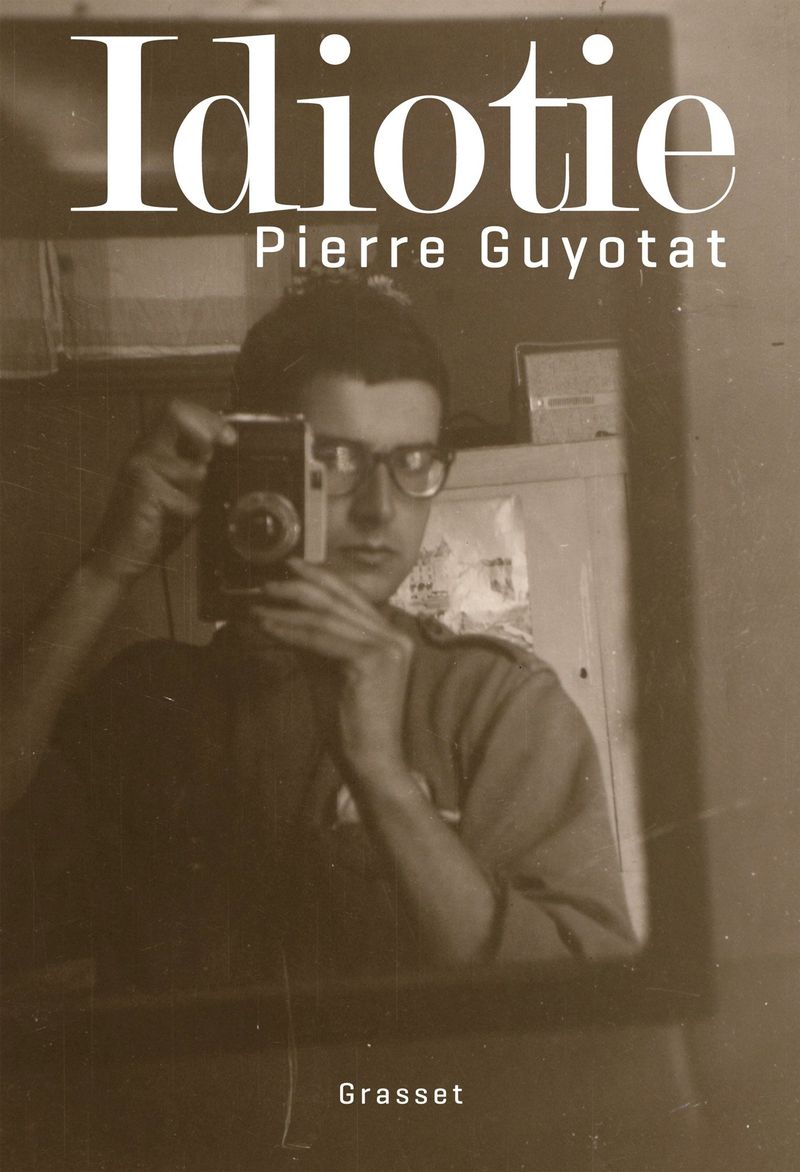
Pierre Guyotat is a monster. A sacred monster of French literature. And yet, he has not always been considered as such. Censored, accused, decried, he has received international support for his talent to be recognized at its true value. Right from his release in 1970, Eden, Eden, Eden was partially censored by the French Ministry of the Interior. The novel was nonetheless in the running for the Médicis, which eluded it by just one vote. Claude Simon, one of the jurors, had angrily left the jury. It took forty-eight years for the Médicis to finally return to him.
After so many years, it's not just the autobiographical account Silly which was awarded - even if, officially, the Prix Médicis is awarded for a single work - but for his entire body of work. It was in this sense that the Prix Femina jury awarded her a special prize to crown her career as a writer.
With Silly, Pierre Guyotat returns to his youth. «This Silly deals with my entry, once upon a time, into adulthood, between my eighteenth and twenty-second years, from 1958 to 1962.» After running away from his father to experience the glitter of Parisian life, he was drafted for Algeria. Quick to revolt, he earned the scorn of his superiors and ended up in solitary confinement before being released to join a disciplinary unit.
Although it is a prose narrative, Silly reads more like poetry. Guyotat's language is sublime. His vocabulary, rich. Its metaphysical scope, dizzying. His style, unique and revolutionary. Anyone discovering this author is immediately struck by his mastery of evocation. Words ring and crunch to accompany the sensation of the scenes described.
«The girl has seen the blazer under my jacket, she approaches, a few words of Arabic that I learned from a seamstress in Stains last summer, I answer hers that I don't understand; I see below her very raised upper lip the shadow of that very light down that touches me to young girls and women; the bursts of her fine voice, lightly hoarse, make the arteries in her neck beat under the tender, perfumed skin; everyone here smells, sweet, good, human, instruments, the children, cheeks at the table, stammer nightmares: over there, in Algeria, they hunt, they kill; others are going to start. Night comes to the café's glass door, battered by snow.»
The writer is also known as a sex poet - for which he was censured. This dimension is present in the present work, delivered in an obviously crude manner. Perhaps even too much. You be the judge. Sensitive souls abstain.
«The group pushes us against a painted wall of the rotunda, which echoes with greasy shouts, elevator mechanics; I hold onto the shoulders of one who's holding back, ahead: but a hand, ringed, oiled, fiddles with me, unbuttons the fly of my exit pants, sneaks in, grabs my member in my American shorts, pulls it out, I step back, but a mouth joins the hand, blush, hot, fat, cracked, a tongue strikes my erect member, envelops my circumcised glans, a tooth touches my frenulum, drags over the circumcision scar [...I don't move, fearing that any movement will cause my taut member to ejaculate [...].»
I bow to Pierre Guyotat, even if his work is too difficult to access. It is with frustration and sadness that I have to admit that I was unable to fully enter his world or his style. Admittedly, the story has real force. Certainly, the words sing for themselves. The young soldier Guyotat's questions are noble. But it all ends up suffocating, so much so that time and time again you lose yourself in the text, go back, start again, and nothing helps.
To the point of irritation: I found myself wanting to throw this book away, so inaccessible did it seem to me; so much so that its author sometimes seemed to hover above a cloud of delirium that only he understands. Despite the failure, some passages are unforgettable. Idiotie says so much. Silly gives so many feelings. Silly manages to convey the horror of war. And for that alone, may reverence be truly paid to its author, without hypocrisy or rancor.
«Do I have my license plate chain around my neck, or have I given it back, with the number engraved on it? Thousands of us wore it around the neck of our remains - sometimes mutilated of the organs through which they could have transmitted life, a little of their heart, their spirit, their breath to the world and the breath of the world in them - lying in the gorges, on the plateaus, on the cobblestones, on the sidewalks of Algeria. But with them, beside them now, and at this very hour, all those whose throats have been slit, all those whose noses, lips and ears have been mutilated, all those who have been enucleated, all those who have been dismembered, all those who have been dismantled, all those who have been hunted down, all those who have been beaten to death, all those who have been torn to pieces, all set on fire, babies thrown against walls, pregnant mothers disemboweled, all raped, all tortured, all scalded alive, all chopped up, all sawed alive, all flayed, all driven mad, all humiliated for life, all missing never found: delayed victims of the original crime of conquest.»
Write to the author: loris.musumeci@leregardlibre.com
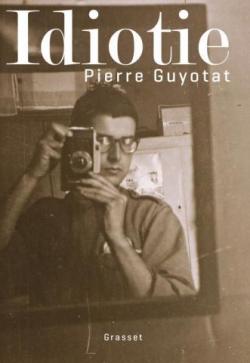
Pierre Guyotat
Silly
Editions Grasset
2018
250 pages
Vous aimerez aussi



 French
  German
  English
Laisser un commentaire