



Western and melancholy: «Lucky»
Cinema Wednesdays - Jonas Follonier
No film had ever managed to capture that particular atmosphere. In an admirable feat, John Carroll Lynch has created a feature film that will be remembered not only as the first example of a new genre, but also as the last. Lucky is a complete work of art, combining all the ingredients for a melancholy Western. Our large-format article.
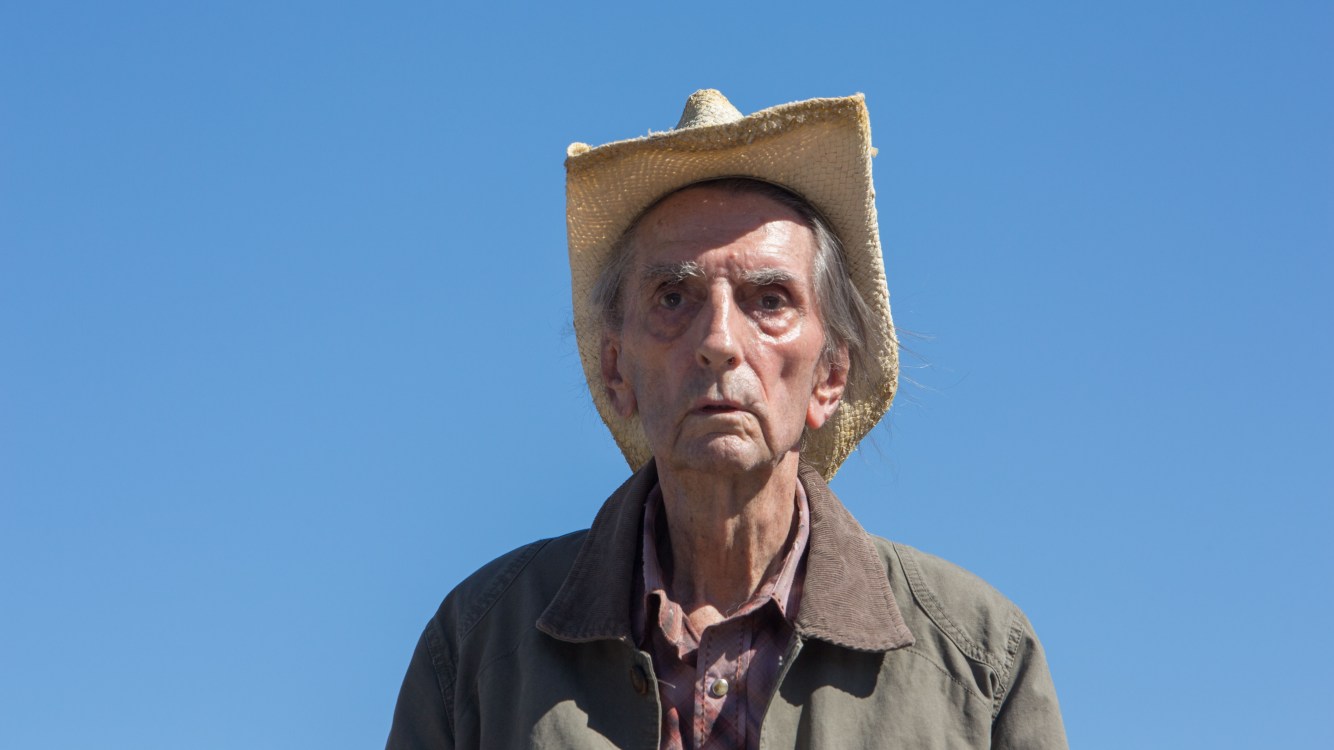
Lucky is the directorial debut of John Carroll Lynch, an actor already well-established in American cinema who has worked alongside some of the greatest, such as Clint Eastwood. With this debut feature film in the independent film scene, Lynch tackles a genre that is notoriously difficult to breathe new life into—a challenge he nevertheless rises to with success: the Western.
There is one fact that cannot be overlooked. The 90-year-old actor at the center of Lucky, which, incidentally, bears the same name—and is both its subject and its focus—passed away on September 15, between the end of filming and the film’s release. I myself was unaware of this at the time of the screening. But as I write this review, this mournful dimension takes on its full meaning and significance, for this is indeed a film-tribute.
A culmination of classic westerns
In fact, actor Harry Dean Stanton had a long career behind him, during which he had played a leading role only once, in 1984, in Paris, Texas. Lynch’s film is designed specifically for this unique artist, who may not have been fully appreciated. Justice has now been served with Lucky, featuring an old man living in 2017 like a lone cowboy in the Arizona desert. There’s no need to look for a story or a plot: the film is this character.
The film is also cinema in its purest form: the Western. With great subtlety, it weaves in a series of allusions to the great classics of the American West, Lucky makes nostalgic viewers cry out in joy: «Cinema isn’t dead!» Of course not. What a joy it is to savor the opening scene, where we witness the 90-year-old’s daily rituals—a first cigarette, a short yoga session, and breakfast in a dinner in the area.
The old man spends his days solving crossword puzzles, wandering the streets, buying his bottle of milk and watching game shows. In the evening, it's time for real life: the bistro, where, sipping a bloody maria, Lucky listens to his friend complain about the escape of his land tortoise. An unlikely synopsis for a remarkable piece of cinema: renewing and reviving all the hallmarks of the classic Western, Lucky seems to represent a kind of culmination. This is particularly true of a major scene in the film, where the talent of actors Harry Dean Stanton and James Darren blends with the magnificent score.
Melancholy and misanthropy
The film also draws its brilliance from Lucky’s lines. Playing on his feigned misanthropy when in public, this American «reactionary’—as subtle as he is authentic—is rather taciturn. But his remarks are worth their weight in gold. When he walks into the diner, here’s what he says to the owner: »You’re nothing« (– »Neither are you«). When he refuses to speak to a lawyer he doesn’t think much of, he says: »I’d rather have awkward silences than the usual platitudes.«
Behind the persona he enjoys portraying to the other villagers lies, in reality, an admirable philosophical depth hidden within his deeply endearing soul. His reflections on loneliness, in particular—which we won’t recount here so you can discover them for yourselves at the movies—serve to highlight the existential dimension of Lucky. The objects, too, reflect this Western melancholy, which is characteristic of any interesting being: the harmonica and the cigarette give off vibrations that lead to the film’s ultimate theme—the awareness of death.
«Nothing is permanent.» It was as if we were hearing Heraclitus speak. In reality, we were witnessing the prophetic words of an actor who would soon leave us. This film allowed him to bid farewell in a sublime way. How beautiful!
Write to the author: [email protected]
Photo credit: © Provincetown Film

You'll also like

 French
  German
  English
Leave a comment