




A music of freedom
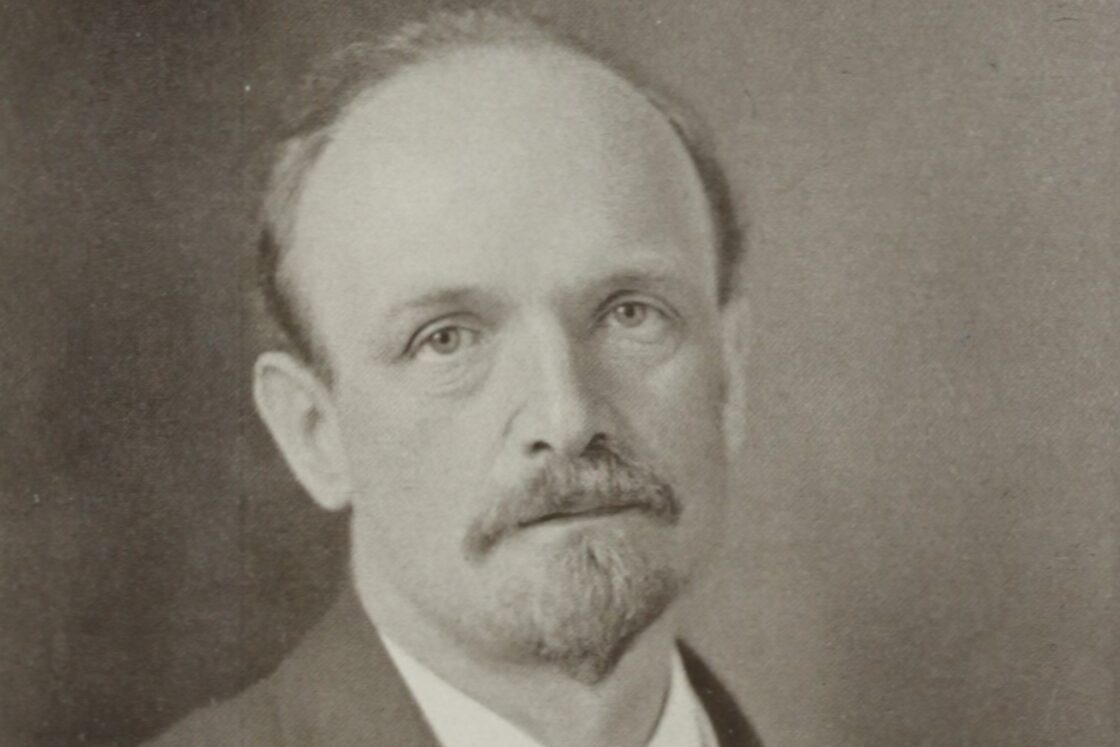
Swiss composer Hermann Suter (1870-1926).
James Lyon's concise biography brings Hermann Suter (1870-1926), a major figure in Swiss music, back to life. He reveals a singular composer, whose work and life bear witness to the same spirit of freedom and accomplishment.
With his new book Hermann Suter, un paysagiste symphonique («Hermann Suter, a symphonic landscaper»), music historian James Lyon, contributor to the Regard Libre,offers much more than a simple rediscovery of a Swiss-German composer who is now, at least in the French-speaking world, an obscure figure. It sketches the portrait of a musician who can be read as profoundly liberal. At least, that's what the dedication kindly addressed to me by the author suggests – and I had the opportunity to verify it on several levels.
Hermann Suter (1870-1926) was liberal first and foremost in his universal outlook. A conductor and teacher active in Zurich and Basel, Suter left a body of work with a broad horizon and a common language. «Romanticism does not necessarily correspond to an era, but rather to a state of mind that transcends time,» notes Lyon, true to his theses. «It would therefore be reductive to consider Suter's music as belonging to a ‘late Romantic‘ language. On the contrary, throughout his life, he sought complementarity between the heritages of Bach and Beethoven. In other words, between thoughts and imaginations marked by classicism insofar as it is not deliberately opposed to romanticism. His art is a powerful testimony to this.’
Plurality of inspiration
Suter's synthesis of classicism and romanticism also signals the plurality of his inspirations - another liberal sign. Rejecting aesthetic dogmas, the composer has gone beyond the schools to forge a style that assumes tradition while recomposing it.
From this also stems an «authentic personality», as already described by the Basler Nachrichten, quoted by Lyon. Without belonging to the boisterous avant-garde, Suter asserted his voice, notably in his oratorio Le Laudi di San Francesco d'Assisi (1924), which brought him international recognition. This originality is not spectacular: it's due to an inner coherence, to a singular way of articulating choral forms and the symphonic dimension.
Surpassing yourself
This individuality refers to a fourth aspect, that of self-transcendence. «The extraordinary character of Hermann Suter's music is truly the expression of a profound inner necessity,» writes James Lyon, quoting from an obituary published by Basler Nachrichten«[Suter] endured unheard-of physical suffering and didn't bat an eyelid.»
Moreover, already suffering from ill health, Suter was keen to attend the Glarus landsgemeinde, «a patriotic act that impressed him deeply». Lyon continues: During a Whitsun holiday with colleagues in the Emmental, he caught another cold, but this did not prevent him from attending the «Swiss Music Festival‘, held on June 12 and 13 in the beautiful Neuchâtel town of Colombier. At the time, no one imagines that this will be the last time they see him, as his indestructible good humor and lively sociability mask his true condition.‘ Friendly in all circumstances, Suter has cultivated a freedom that doesn't clash with his roots, but feeds on them.
In some sixty pages, James Lyon succeeds in restoring the figure of a discreet but fascinating composer, whose modernity lies in his refusal of confinement and his search for balance in the service of self-fulfillment. Hermann Suter epitomizes a music and a life of freedom - and for that reason alone, this little book is well worth the detour.
Graduate in philosophy and journalist by profession, Jonas Follonier is the founder and editor-in-chief of the Regard Libre. Write to the author: [email protected].
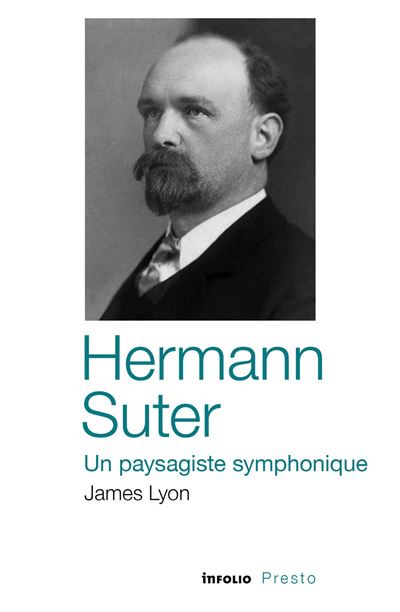
James Lyon
Hermann Suter. A symphonic landscaper
Infolio, «Presto» series»
March 2026
64 pages
You have just read a review published in our print edition (Le Regard Libre N°126). Debates, analyses, cultural news: subscribe to support us and access all our content.

You'll also like



 French
  German
  English
Leave a comment