




Joël Dicker - The deep plot, too ambitious?
Les lettres romandes du mardi - Nicolas Jutzet
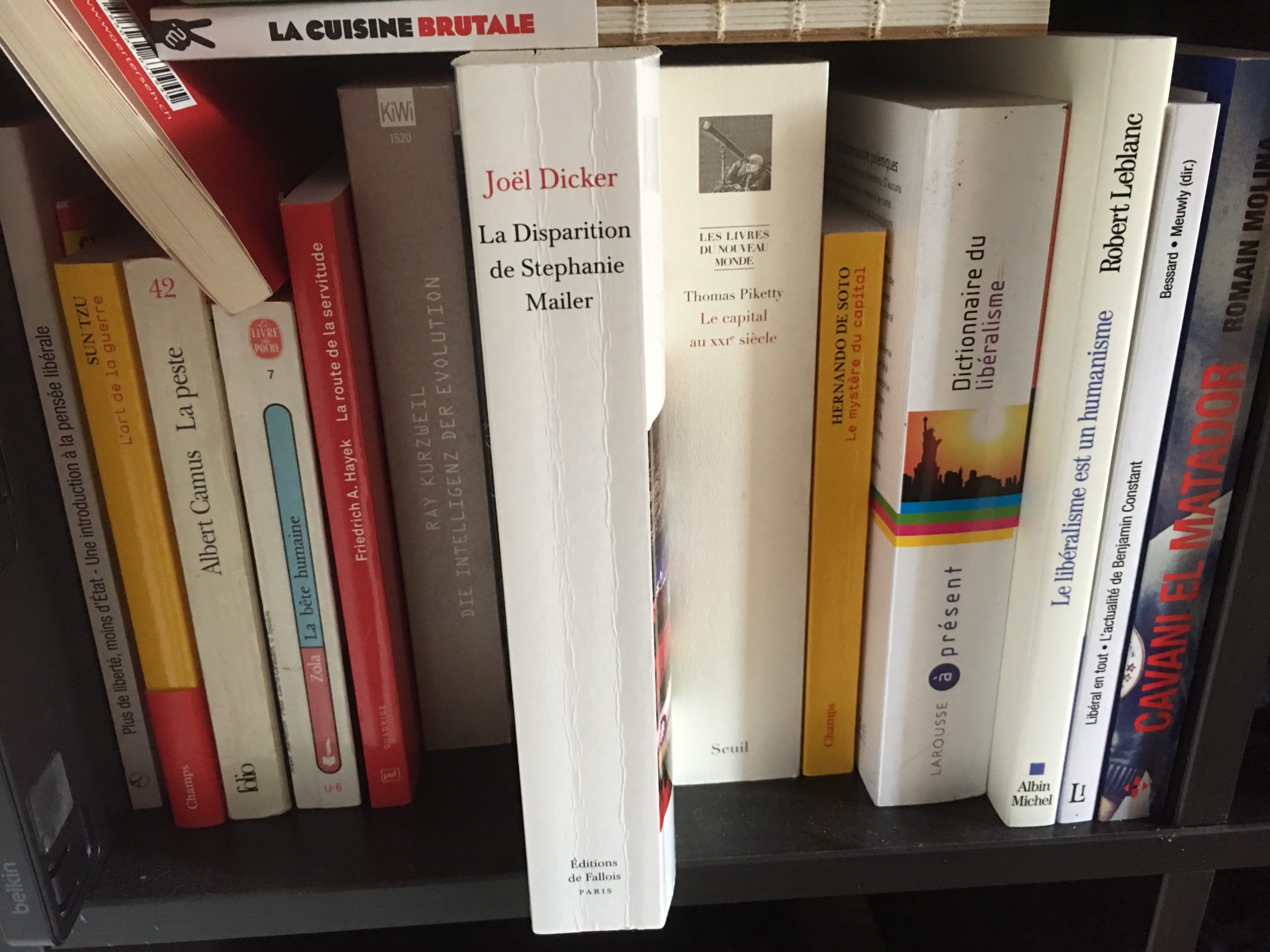
Joël Dicker's new novel, reminiscent in its depth of the one that made him widely known - The Truth About the Harry Quebert Case – has barely hit bookstore shelves before it's already topping the sales charts. Business as usual, in short. And yet, of course, The Disappearance of Stephanie Mailer is a new kind of risk-taking. Another winner?
By mixing and interweaving the characters—so numerous that readers will sometimes lose track of them—the narrative quickly reveals its weakness. By unnecessarily complicating a story that otherwise flows smoothly, the author seems to have erred here by trying to do too much. Roles seem to be duplicated—or worse—between the quadruple murder, the teammates, the mayors and their deputies, husbands and ex-husbands, the editor-in-chief, and the deputy editor; it all becomes overwhelming.
As the story unfolds, we end up feeling sorry for so much chicanery. Is literary bureaucracy a Joël Dicker invention? For the rest, as in previous books, we remain glued from first to last page to the desire to know «the truth». The truth that finally gushes out, like a geyser, in the final apotheosis.
Length a hindrance?
The feeling of getting lost among the multitude of characters is undoubtedly heightened by the constant shift in narrators, who, chapter after chapter, change to present their own perspective on how the story unfolds. And yet, what we have in our hands is a streamlined version. During his time at « On n'est pas couché», the author revealed that the manuscript was originally twice as long. Did the richness of the characters and the visions suffer as a result of this editorial condensation?
Doubts remain, leaving us with a slight sense of regret, as the novel—despite being easy to read—seems hard to digest in places. This is, in fact, the view shared by star columnist Yann Moix, who was in fine form and took the liberty of a slight reframing which stands out in this sea of praise. The exchange is worth quoting briefly:
Laurent Ruquier: «I’m not sure if this is the kind of writing my classmates would write—I might as well tell you that right away.»
Yann Moix: «I’d take out «of my classmates»: I’m not sure that’s literature at all!»
Behind this deceptively provocative statement, however, lies a judgment that is understandable and acceptable, even to the avid reader. Joël Dicker is a best-selling author who knows how to captivate book lovers, though he does not belong among the «great» authors. Some authors should be read; others simply are. Far from being contemptible, this segment of literature should be cherished by discerning minds such as Mr. Moix’s. Joël Dicker serves as a gateway to other works—perhaps more demanding, perhaps less so—but he gets people reading, and that is to his credit. Let’s not forget that.
«There's nothing I love more than sunrise, in any season, over the marina. To see the inky horizon pierced by a bright pink and then orange dot, and to see that ball of fire slowly rising above the waves.»
What next?
The adaptation of his bestseller The Truth About the Harry Quebert Case Under the direction of Jean-Jacques Annaud, the film will be released soon—after turning down Steven Spielberg, who had expressed interest in the project. This marks a new milestone in the Genevan author’s adventure, which has so far gone smoothly. This is also an opportunity to remember Joël Dicker’s publisher, Bernard de Fallois, who passed away recently. As president and founder of Éditions de Fallois, he was the first to recognize the talent of the author who is now a global star.
For my part, of Joël Dicker's work, which has once again managed to enthrall readers, my favourite book remains The Last Days of Our Fathers, less thrilling and addictive than the rest of his work, but infinitely more intimate and moving—first through its coldness, reflecting the wartime period, and then through its warmth, conveyed by the beauty and depth of the characters. In short, everyone can find something to enjoy in today’s author’s body of work, provided they’re looking for a pleasant reading experience without necessarily expecting to read Joris-Karl Huysmans or other more demanding classics.
«We are like the petals of a dandelion, round and beautiful, and the wind has blown each of us to different corners of the earth.»
Write to the author : [email protected]
Photo credit: © Nicolas Jutzet for Le Regard Libre

You'll also like





 French
  German
  English
Leave a comment