




Why Rural Areas Are Resisting the Decline of the Festival
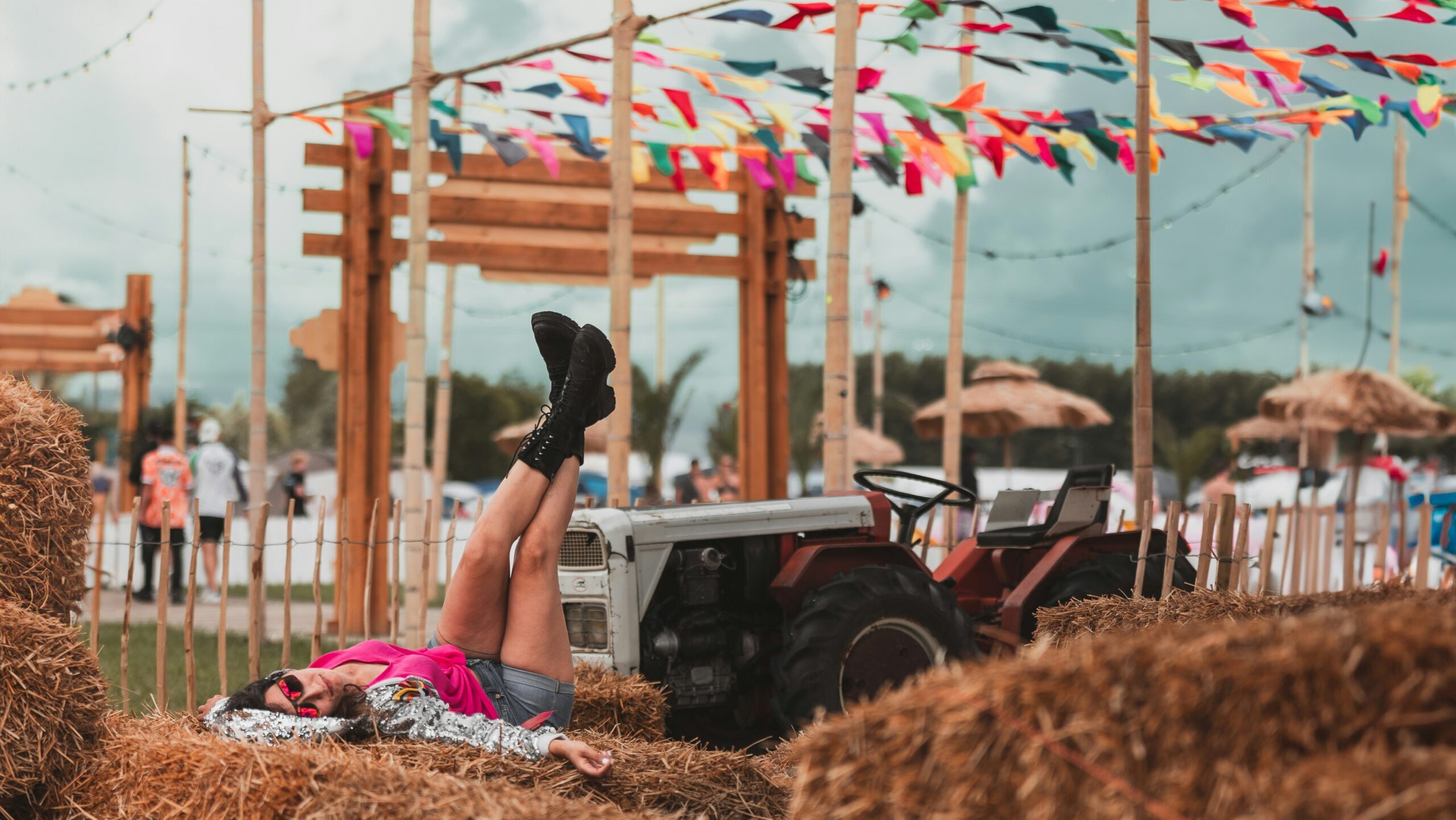
A moment of relaxation at a country party. Photo: Peyman Shojaei (Unsplash)
Young people are turning away from traditional nightlife venues. At the same time, rural youth gatherings and festivals are experiencing remarkable growth. This paradox sheds light on what gives these celebrations their enduring appeal.
It’s now a reality: young people are partying less. Traditional nightlife venues are the first to feel the impact. In France, the number of nightclubs has fallen from about 4,000 in the late 1980s to roughly 1,500 in 2025, according to figures from the Society of Authors, Composers, and Music Publishers (Sacem). In the United Kingdom, the Night Time Industries Association (NTIA) estimates that the number of nightclubs has fallen by 33% in less than five years. In Switzerland, this trend is clearly reflected in people’s nightlife habits. A study by the University of Zurich reveals that in 2007, 30% of young people reported going to clubs at least once a week; by 2022, that figure had dropped to less than 10%.
Alcohol consumption is undergoing an equally dramatic shift. The French Monitoring Center for Drugs and Addiction Trends reports that the percentage of high school students who say that ’at least half of their friends drink alcohol« was cut in half between 2011 and 2024, while the proportion saying they »have no friends who drink« increased tenfold. Social habits are also changing: the World Happiness Report 2026 notes a decline in in-person gatherings across Europe, which is particularly pronounced among Generation Z.
There is no shortage of attempts to explain this phenomenon. In his book The Anxious Generation (2025), American psychologist Jonathan Haidt points the finger in particular at smartphones and social media, which have shifted part of young people’s social interactions to screens. Added to this are social anxiety, the rising cost of going out, a risk aversion, and a more utilitarian approach to time.
The Rural Exception
Yet one need only leave the cities to encounter a curious counterexample: rural youth groups. Typically organized at the level of a single village or several neighboring municipalities, these groups bring young people together for festivities, tournaments, parades, and other group activities. Their main event, the «giron,» is a large traveling festival held annually that attracts thousands of participants over several days.
In Switzerland, the Vaud Federation of Rural Youth now brings together some 200 local clubs and approximately 8,500 members. Every five years, it co-organizes the «Cantonale,» a sort of giant gathering that brings together all the clubs in the canton. The most recent event, held in Givrins in 2024, drew a record 120,000 participants, following the 115,000 who attended the 2019 event in Savigny.
Key point: This vitality isn’t the result of a tradition artificially kept alive by a handful of elders. Its main participants are, in fact, young people. For months, they search for venues and sponsors, set up infrastructure, and organize bars, contests, and security. They don’t just participate in the festival; they font.
New Holiday Traditions
Festivals are experiencing a similar boom. According to the Federal Statistical Office (FSO), the percentage of the Swiss population that attended at least one festival during the year rose from 38% in 2014 to 47% in 2019, and then to 52% in 2024. This is a veritable boom that the pandemic has not slowed down and that is particularly appealing to young people. Also according to the FSO, in 2024, 68% of 15- to 29-year-olds had attended at least one festival, more than in any other age group.
The case of the Paleo is particularly iconic. Founded in 1976, the Nyon festival now brings together five generations who, every year, snap up 250,000 tickets in less than 20 minutes. Over the past fifty years, this event has become a true tradition: parents tell their children about ’their« Paléo, and the children, in turn, make it their own.
Celebrations as a Means of Cultural Transmission
Why do religious gatherings and festivals seem to hold up better than other forms of celebration, even though «their» young people have the same smartphones and face the same concerns as their peers? Perhaps because they are part of something they have inherited and of which they, in turn, become the custodians. In a highly secularized society where religious rituals and grand narratives have lost their significance, festivities that carry a legacy seem to retain an advantage in the long run.
At a nightclub, the patron arrives when everything is ready and enjoys an experience that fades away immediately. At a community festival—whether as a volunteer or a regular participant—young people take part in a story that began before they did, one they help bring to life and believe is worthy of outliving them. Whereas nightclubs offer, above all, yet another form of hedonism, street parties and festivals are part of a continuity that nourishes the sense of belonging among young people in search of meaning. Perhaps this is a prerequisite for the celebration to live on.
Economics graduate and president of the Association Café-philo, Yann Costa is an editor at Regard Libre.
You have just read an excerpt from our feature «Do We Still Want to Party?», published in our print edition (Le Regard Libre No. 130)
You'll also like





 French
  German
  English
Leave a comment