



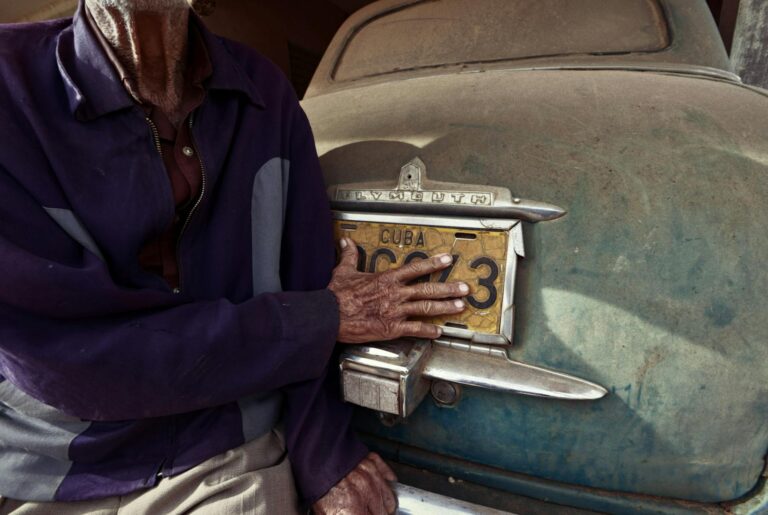
Cuba, a new page turns
News Mondays - Clément Guntern
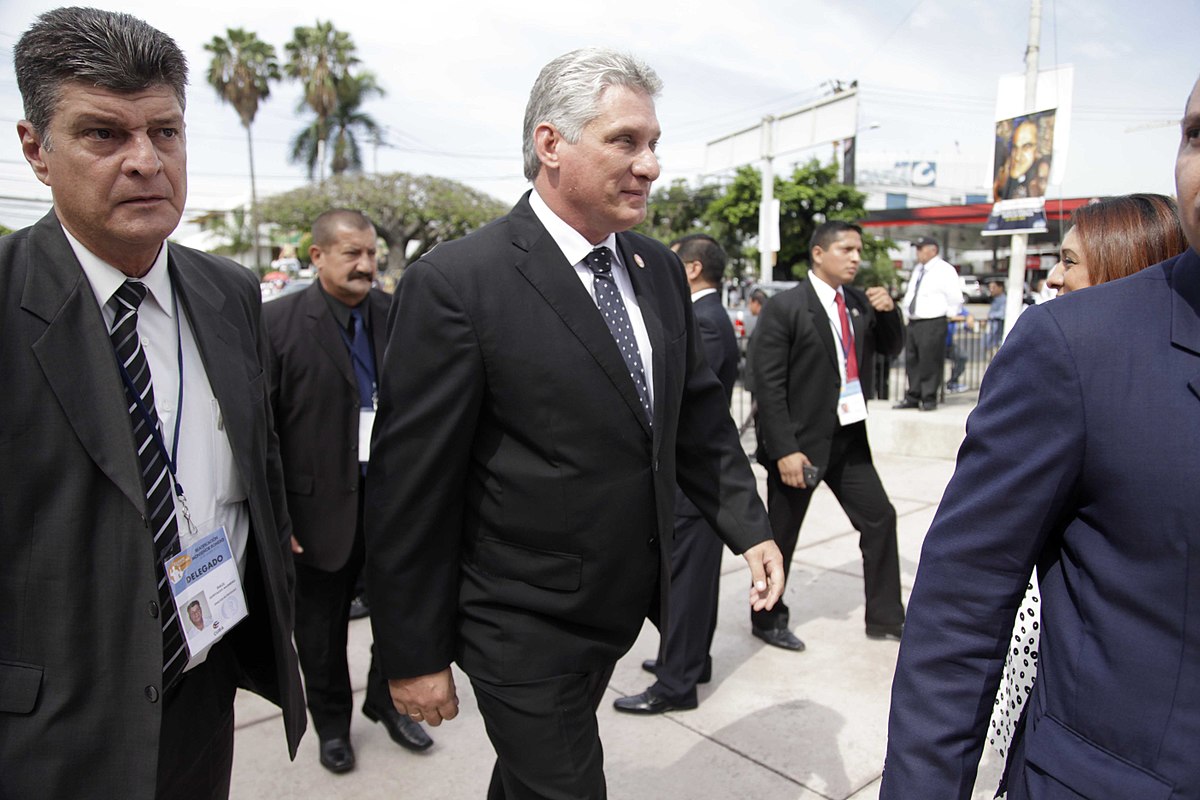
A real page in South American history is being turned. After conquering power in 1959 against the corrupt Batista regime, the Castro clan dominated Cuba's political game until last week. After succeeding his brother Fidel in 2008, Raul Castro in turn handed over power to a certain Miguel Diaz-Canel. Even if Cuba is not a democratic regime, several examples have shown us that not everything is predictable in Cuba, and that Diaz-Canel's election was not necessarily a foregone conclusion.
Cuba's new president is a subtle blend of novelty and continuity. Isn't it one of the hallmarks of authoritarian regimes that they always want to be attractive, while refusing to make any fundamental changes? Normally, he won't be surprised by his reforms. Even if he is Cuba's first non-military president, he has nonetheless received military training and served in Angola. What's more, the new president didn't even live through the Cuban revolution, which he wants to continue. In short, Diaz-Canel is not the typical Cuban president, but he has risen through the ranks of the island's political hierarchy. With this blend of newness and continuity, it's fair to ask whether he'll be able to bring about the changes Cuba sorely needs.
Especially as he will not necessarily have a free hand when it comes to reforms. For the first time, the post of President of the Council of State - Cuba's president - will no longer go hand in hand with that of President of the Cuban Communist Party. Raul Castro will hold the latter post until 2021, health permitting. Such a change seems to show that Castro still wishes to put himself in a position to intervene in Cuban politics, and that any reforms launched by Diaz-Canel will be monitored and moderated.
And the challenges are huge! Economic reforms launched a few years ago, including the opening up to tourism and the authorization to set up small businesses, have fragmented Cuban society. The vast majority of the population is dependent on state employment, but those working in the private sector now earn twenty to thirty times more than this segment of the population. These rising inequalities are not to the liking of Cubans, a people who are extremely sensitive to economic differences.
Finally, the major problem posed by dual currencies needs to be resolved, as there are two currencies in Cuba: one convertible into and pegged to the US dollar; the other, a currency for internal use. These two currencies living side by side are also a source of inequality for Cubans. Society is gradually losing its homogeneity, and one of Miguel Diaz-Canel's tasks will be to get the population to accept that the new inequalities are here to stay.
Write to the author: clement.guntern@leregardlibre.com
Crédit photo : © Wikimedia Commons, CC0
You'll also like
 French
  German
  English
 .jpg)
Leave a comment