




«Pop-Corn Girl» or the American spirit
Ivan Garcia for Le Regard Libre
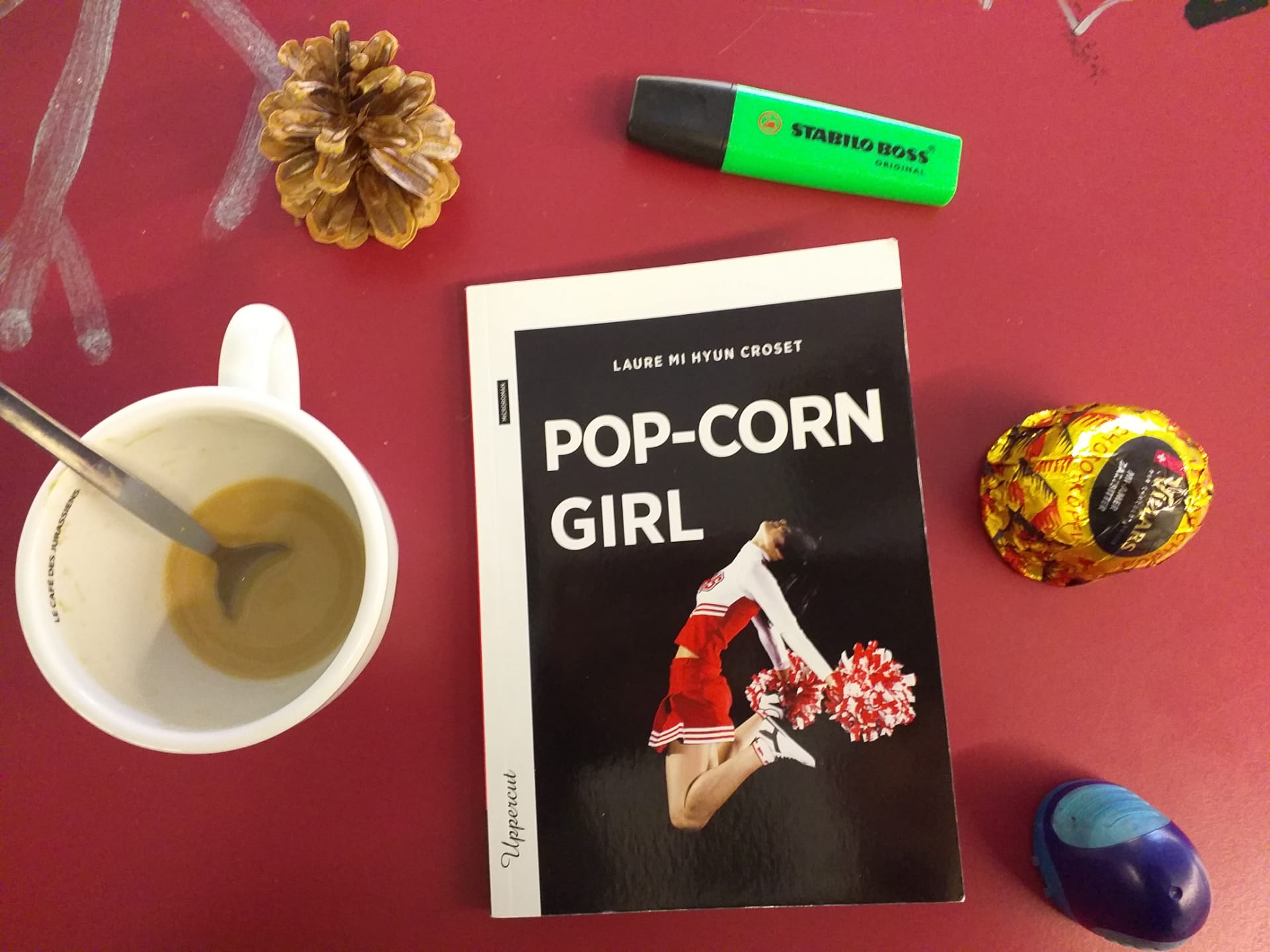
«Microroman» with a full-bodied flavour between teen movies and Voltairian irony, Popcorn girl is an enjoyable and funny read about the (mis-)adventures of a young Genevan exchange student in a Chicago suburb. A mocking ode that appeals to our adolescent fantasies revisited through a slightly cynical adult prism. And it takes a hammer to our illusions, as well as those of the protagonist, which turns out to be very sympathetic.
The story's protagonist, Emma, is a sixteen-year-old teenager from Geneva. As a junior in high school, she leaves to study for a year in the United States, at a high school in the suburbs of Chicago. Of course, Emma, teenager at sixteen, considers herself the luckiest girl in the world: the United States, the American dream within her grasp...
But our dear teenager, a little silly but sympathetic, has a few expectations, one of which is to join the cheerleaders her school and lose her virginity in the arms of the famous captain of the soccer American. Challenge accepted. And so it is that Emma will go from discovery to discovery and disappointment to disappointment, in pursuit of her dream: to become a cheerleader.
«The charm of the deer, the impromptu flea markets, the little restaurants that didn't seem to have changed since the fifties vanished the instant she understood that in Uncle Sam's country, we ate Tic and Tac.»
Cheerlading and a change of scenery
Published in BSN's «Uppercut» collection, Popcorn girl pushes the overstereotyped middle of the 19th century to the forefront of the novelistic scene cheerleading with its procession of mythical figures and pre-established narrative patterns. This is the effect sought by author Laure Mi Hyun Croset, who for the occasion immersed herself in our idealizations, straight out of American TV series.
References to to popular culture anchor the reading in a particular referential universe: that of our own adolescence, a youth between the end of the nineties and the 2000's, fed to electro, American TV series and the junk food. The title and intertitles of the novel are in Shakespeare's language, not Molière's. Shakespeare's language rather than Molière's: a strong narrative and aesthetic choice and aesthetic choice, which suggests that the book could be considered as a kind of diary. A diary in which Emma, hiding behind a third-party narrator behind a third-person narrator, writes about her exchange experience exchange experience in the United States from an adult perspective.
«She waited for her hosts to get up, thinking about what she hoped this year abroad would bring. As is often the case, what had prompted her to go away was less the desire to discover something else than the boredom that had overcome her in Geneva.»
Travel and boredom
Welcomed by two obese American couples, Mary and Bob, then Bea and Bob, Emma quickly integrates into the American Way of Life and finds an irresistible charm. But this only seems to be the solution to exorcise - temporarily - that eternal ghost that haunts the Western traveler: boredom. In many respects, Laure Mi Hyun Croset makes her protagonist the very antithesis of what the Swiss literary tradition, inspired in particular by the figure of Nicolas Bouvier, erects as the archetypal traveler: Emma is consumerist, naïve, an admirer of artifice, a tad superficial and so on.
Yet this one perhaps possesses more humanity than these great figures of travel. Probably because it reminds us of the place we occupied in this world just a few years ago: we don't set off on an exchange to find ourselves or our otherness, but rather to get away from what we already know too closely.
Extending reflection, Emma also reflects the opposite of the mentality of the Beat Generation, embodied by Jack Kerouac, Allen Ginsberg and William S. Burroughs, writers and artists who and artists who advocated a return to real life in opposition to the lifestyle of sixties America. While the beats of a corrupt world, our protagonist, bored in the city of Calvin protagonist, bored in the city of Calvin, lands in the crazy America America she's been dreaming of. What turns her head, even before the first first exercises in cheerleading.
«Alas, if the students came from more privileged social classes than in the schools she had previously attended, their main preoccupation was neither figures of speech nor the meaning of existence. On the contrary, they were trying to escape any metaphysical questioning, trying to get farted on as often as possible and, in rare moments of lucidity, figuring out how to make the most of their bodies, which had recently become objects of desire and pleasure.
The ecstasy sport
The strong point of of this work lies in its depiction of the cheerleading which, to my mind, reflects a kind of contemporary ritual a kind of contemporary ritual that serves to bond the American community. Visit cheerleaders are given goddess status throughout the novel. True modern Aphrodites, their dances bodies occupy a central place in the fable, at once a source of desire source of desire, envy and lust.
Like Greek tragedy in antiquity, they reflect a certain image of society and help and also help to shape it, which of course leaves neither the audience which leaves neither the public, the protagonist nor the reader indifferent. For Emma, they embody success, beauty and everything we dream of becoming when you're in your prime.
«The cheerleaders finally arrived. Cheered on by the crowd, they began a sophisticated choreography in their short, flamboyant skirts. They performed a lascivious dance followed by increasingly perilous figures. These spectacular moves showcased their ample breasts and perfect legs. It was as if they wanted to show the public that they were young and desirable.»
Within his novel, the author holds a double discourse on these American social phenomena that we Europeans tend to idealize through fiction. By manipulating archetypes and clichés, Laure Mi Hyun Croset doesn't hesitate to crush them, with irony and cynicism, against the cruel wall of reality. reality that sooner or later catches up with us. So Emma doesn't realize her dreams: she's Swiss and not Swiss enough. cool. But our heroine doesn't let it get her down, and her company ends up charming us. Finally, we wonder whether, in view of the story's open ending end of the story, we'll soon find her in volume two, once again setting out to conquer once again set out to conquer the elusive Jeff Preston Wilkinson. eludes her.
On reading this short but tasty Popcorn girl, the reader can't help but smile and recall his childhood fantasies. teenager attracted by all things related to Made in USA and wonder if it wasn't better before, when we were sixteen. Emma, like the book's cover and title, evokes that kernel of corn that, when heated, explodes and becomes popcorn. A real firework of passion.
Write to the author: [email protected]

Laure Mi Hyun Croset
Popcorn girl
BSN Press, «Uppercut» series»
May 2019
80 pages

You'll also like




 French
  German
  English
Leave a comment