



«Judy»: a Best Actress Oscar for a weak film

_DCE5096.NEF
Cinema Wednesdays - Loris S. Musumeci
«Is this what you want to become Judy, a poor housewife, a simple mother?»
The setting is idyllic, the scene harshly severe. In fact, totally unbalanced. Cigar in hand, fat and giant, Mr. Mayer addresses a small, fragile girl of barely seventeen. Young Judy Garland, desperate to shine. And it starts well. Because the setting in question, flowery and cute, is that of the film set for Wizard of Oz (1939), one of cinema's most popular films to this day.
She wants to shine. But at what cost? The sacrifice of her youth. Producer Mayer believes in her, straddling the line between kindness and harassment. He praises and encourages her while also reprimanding her. He threatens her. He tells her when to sleep, what to eat, how to speak, how to carry herself, and how to think. She is his property. Judy’s suffering is evident, but her determination to make it big surpasses everything else. Having become a major Hollywood star thanks to the Wizard of Oz, she went on to have the career we all know. Countless films, an endless string of the most prestigious awards, but also divorces, suicide attempts, and alcoholism. Then her death in London in 1969, at the age of forty-seven.
Oscar for Best Actress
Judy, a biopic—but a very selective one. It focuses on the year 1969, with occasional flashbacks to the actress’s youth, when she was a star at MGM. Living only for MGM. Under the dictatorship of MGM and its head, Mayer. At forty-seven, Judy remains a star, but penniless and without the glory of her past. She leaves the United States, leaving her children behind to go to London, where her image has remained untarnished. Everyone there is waiting just for her. A fresh start. A return to the stage—and a fall on stage after one drink too many. Oscillating between the spotlight and disaster, these final months of Judy Garland’s life earned the actress who portrays her the Oscar for Best Actress this year.
Renee Zellweger was crowned the winner, and she dedicated her entire award to Judy Garland. A well-deserved award, despite the film's mediocrity. Yes, Judy is lackluster. Yet the tragic and vibrant life of its protagonist could have made it a masterpiece. It falls short—by a wide margin. Renée Zellweger’s performance could have won the top award with even greater merit. Even if it borders on exaggeration, even the ridiculous. This is a natural risk given the eccentricity of the character she portrays. This is particularly true of her facial expressions. They are both the strength and the weakness of her performance. A weakness, because she eventually wears us down with her tears, her outbursts of anger, and her bursts of joyful laughter.

Somewhere Over the Rainbow
We’d like to believe it, but there’s a stumbling block. On the one hand, there’s Renée Zellweger’s over-the-top performance; on the other, the film’s poor structure. For his direction, Rupert Goold chose to cut back and forth between the characters’ youth at MGM and the ending in London. For starters, he didn’t aim for originality. That’s not a big deal. In any case, the structure remains very conventional. The main problem lies in the complete lack of coherence between the few scenes set in her youth and her new life in England. No connection, no interest. The scenes depicting her early years would have deserved more screen time; but given how they’re handled, it would have been better to cut them entirely. The work feels too fragmented. Rupert Goold was determined to show the suffering of the young Judy as an explanation for her escapades at the end of her life. But what did he show? Nothing.
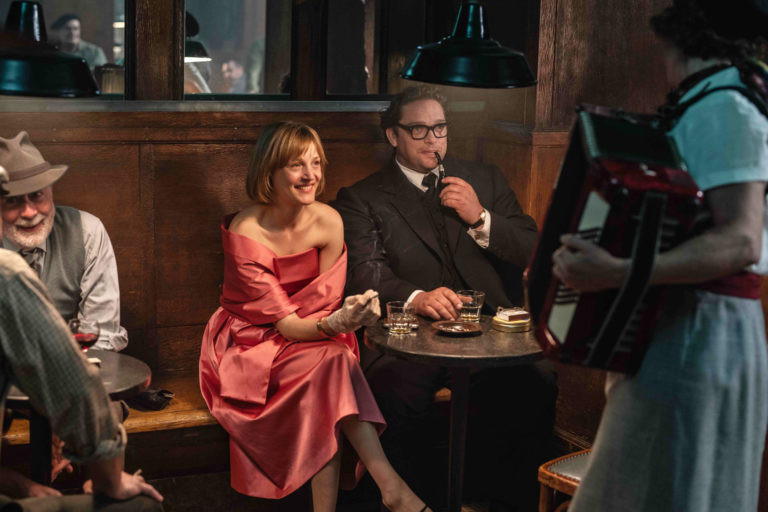
That doesn’t mean we wouldn’t want to cry and break down right along with Judy. The character remains genuinely endearing and captivating. We’d love to believe in her. Especially since, despite its flaws, the biopic effectively captures the colorful, festive, and wild atmosphere of the 1960s. Unfortunately, the viewer doesn’t get those chills. Any emotional response gets stuck at the threshold of a poorly structured film. There’s no passion—except for the final song Judy performs during her last appearance on stage, before she passes away. somewhere over the rainbow.
Write to the author: [email protected]
Photo credit: © Pathé Films
You'll also like

 French
  German
  English
Leave a comment