




Israel: between weariness and neglect
News Mondays - Clément Guntern
On Monday, March 2, Israeli citizens were called to the polls for the third time in a year—a record in the country’s history. On two previous occasions, voters had attempted to give one of the parties enough support to finally govern the country, but without success. It was a rather dreary and repetitive campaign that failed to generate much enthusiasm among the public. It must be said, on the one hand, that the parties did not propose anything different across the three elections and that there are very few differences between the platforms of the right-wing Prime Minister Benjamin Netanyahu’s party and that of his rival, the slightly more centrist Benny Gantz. On the other hand, according to some commentators, Israeli public opinion is not the kind to change its mind or switch parties, so very few shifts in voter support between parties were recorded. This paints a picture of a stagnant political landscape and a complete lack of political momentum.
So it was the outgoing prime minister’s party that won the most seats in the Knesset, but it is not yet certain whether he will be able to form a government with his coalition alone—all amid a general atmosphere of near-indifference on the international stage. And it’s not the coronavirus’s fault! For nothing seems likely to change in the country or in the region, whether in Israeli politics or regarding the Palestinian issue.
A plan that drew no reaction
Earlier this year, the plan proposed by the U.S. government—and particularly by President Trump’s son-in-law—also failed to elicit much of a reaction from Arab countries or European Union member states. Thus, amid general apathy, indifference toward the situation in the region, and an ever-growing weariness regarding the Palestinian issue, the fate of this small corner of the Middle East seems to be playing out.
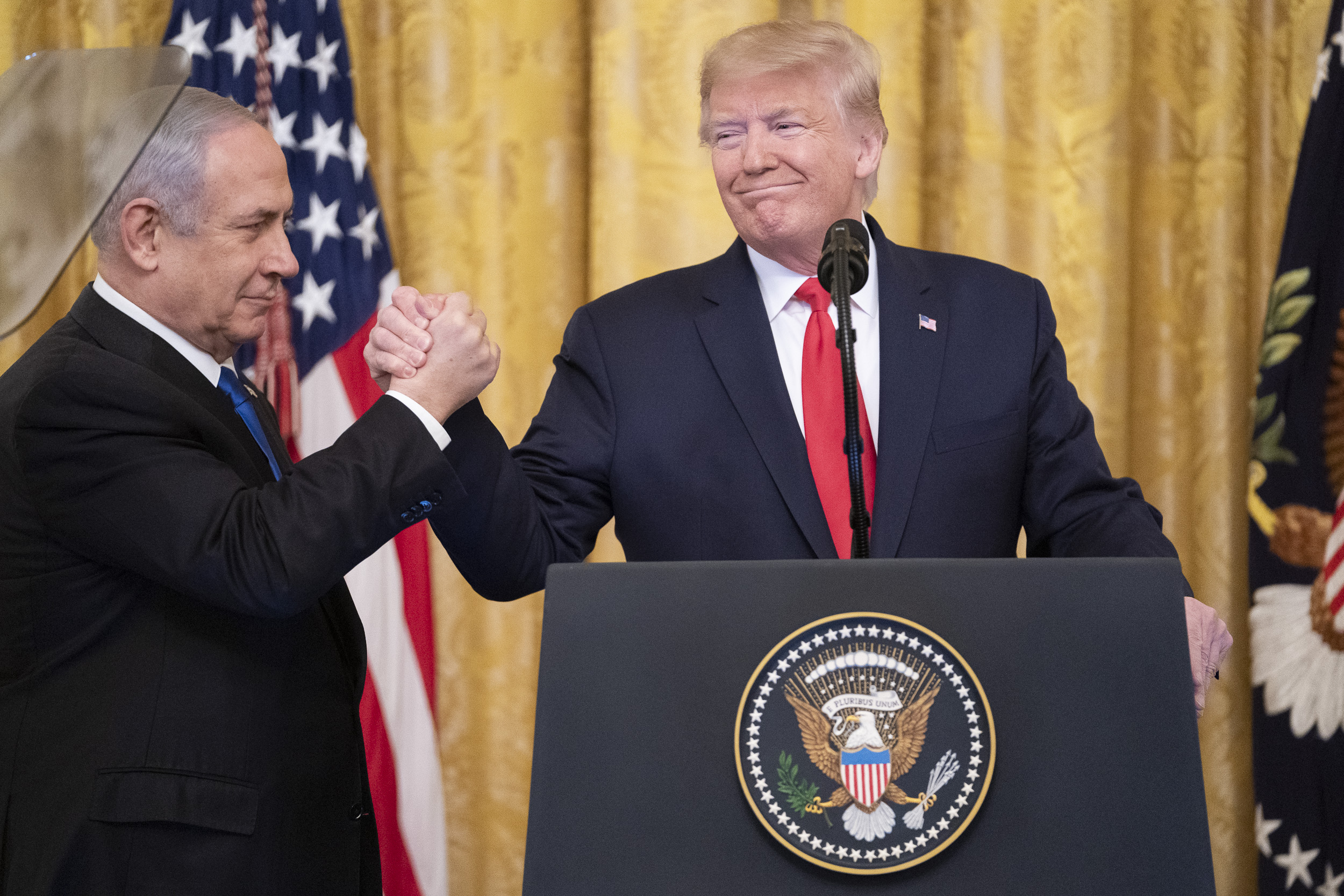
For even within Palestinian territory, reactions to the Trump plan have not been particularly strong. While the plan does propose the creation of a fragmented Palestinian state, it primarily calls for Israel to annex large portions of the region and the border with neighboring Jordan. Under normal circumstances, Arab countries and all Palestinians would have cried foul over this American plan. But in this case, even during the plan’s presentation in Washington, a few small Gulf monarchies were present to applaud Netanyahu’s victory.
A Declaration of Failure
The American proposal imposes nothing less on the Palestinians than a reflection of their failure since 1948: they have been unable to stand up to the Israelis, and this plan marks their near-definitive defeat. Even if the United States knew that the Palestinians would never accept this plan, in Trump’s mind this agreement is a take-it-or-leave-it proposition: the longer they delay in accepting their defeat, the stricter the terms of their surrender will be.
The Arab states are caught in a dilemma from which they can only escape by feigning outrage: on the one hand, their publics remain committed to the Palestinian cause, and on the other, they fear Donald Trump’s erratic reactions. This plan, which came across more as an election ploy among Israeli voters, will have to wait until a new government is formed.
In any case, it is certain that Israel will annex its settlements, and some on the right even believe that this should not be done as part of the Trump plan, since that plan would still grant the Palestinians a state. It remains to be seen what the United States and Israel intend to do with Palestine—an organization that is virtually bankrupt, lacking the means to act, and whose economy is entirely dependent on the Jewish state. After all, we certainly don’t want those three to four million Palestinians to become a burden on Israel! In any case, the rest of the world no longer sees any point in it.
Write to the author: [email protected]
Photo credit: Wikimedia Commons
You'll also like






 French
  German
  English
Leave a comment