



Fascinating «Rebecca»

Twentieth Century Fox
If Psychosis, The Birds or Vertigo are among the titles most often cited when discussing his exceptional filmography, Alfred Hitchcock had to make his mark in the United States before becoming the «master of suspense». His first American film bore the gothic influences of his native England, while also revealing his ineluctable penchant for the "dark". black. A hybrid production, delivered in pain, but which will open the doors of Hollywood for him since Rebecca won the Oscar for Best Picture in 1941.
Black fiction...
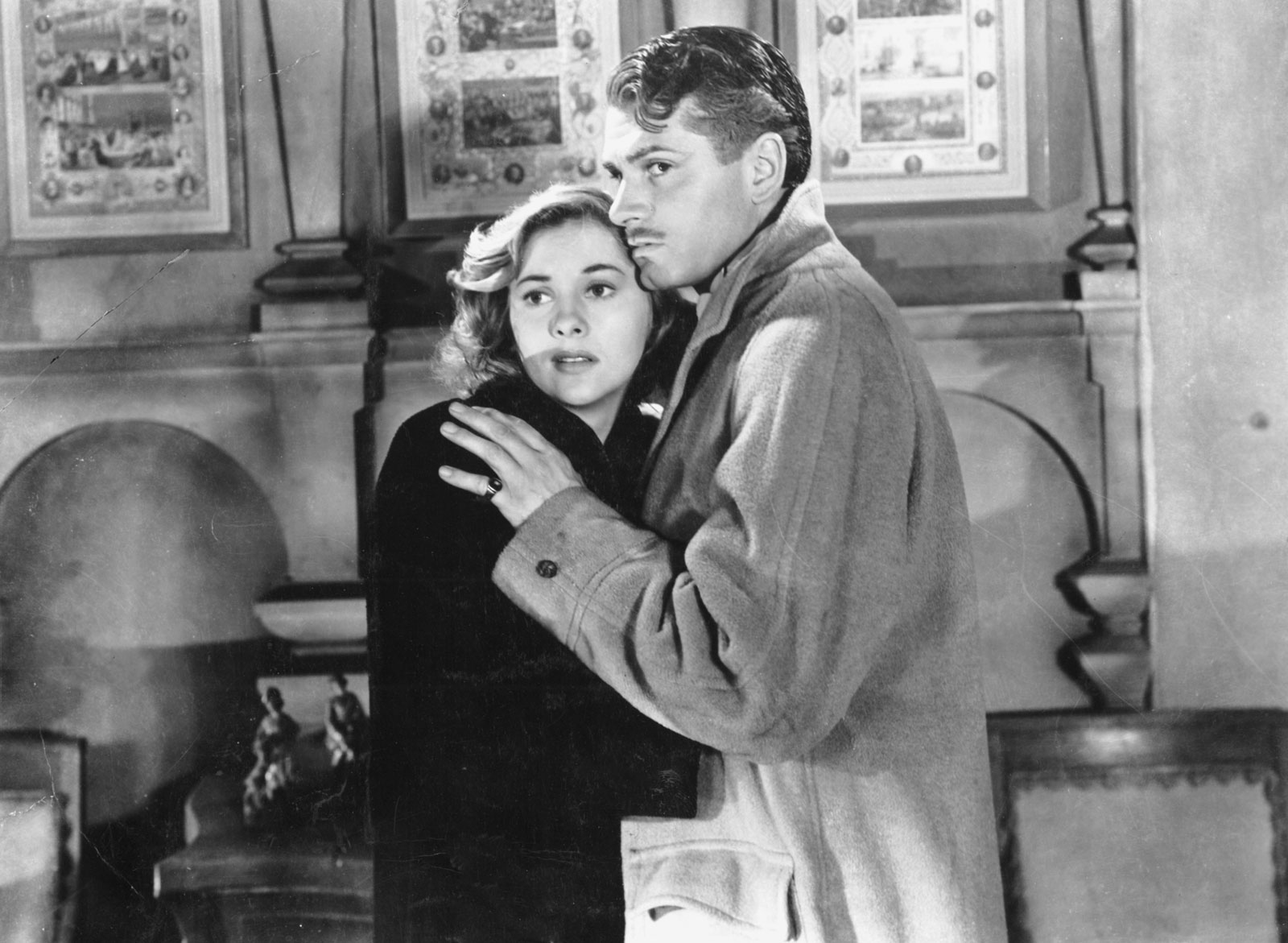
A pretty young woman (Joan Fontaine), an orphan with a weak character, meets an older man (Laurence Olivier), rich, widowed, taciturn and authoritarian. After a hastily arranged wedding, the latter decides to take his docile new wife to Cornwall to become the new mistress of Manderley, a gigantic mansion with the look of a haunted castle. Overlooking the raging ocean in which the late Madame de Winter drowned, the building and its staff are still strongly imbued with her presence.
The recipe is followed to the letter, with all the ingredients that have made the success of the gothic novels between the XVIIIth and XIXth centuries. Indeed, we can't help but draw parallels with Jane Eyre or Wuthering Heights, worthy heirs to the novel noir. Daphne du Maurier drew part of her inspiration for the book that forms the basis of the film from this genre, decried by critics but acclaimed by readers. In part, because the author has the audacity to call on another debated literary genre, the detective story.
Indeed, the mysterious Rebecca is everywhere. Her initials are engraved on every object and her name is on everyone's lips. Faced with the boundless admiration the deceased still inspires, the new arrival, already abandoned by her husband, sinks into loneliness. Overwhelmed by the coldness of the austere housekeeper Mrs. Danvers (Judith Anderson), whose hatred for her matches her passion for Rebecca, the girl who doesn't even have a first name finally learns from her shady husband that he is her murderer.
A provocative femme fatale, Rebecca has left behind many secrets and a man obsessed and tortured by the terrible act he committed. But is he really guilty? Does Mrs. Danvers, friend, confidante and perhaps even lover, know more than she's saying? What about Frank, the steward with eyes only for her? And does Favell, the cousin who takes advantage of Maxim de Winter's absence to sneak into Manderley, have something to hide? This is what the investigation will reveal.
...to film noir
Arriving in Hollywood at the height of its golden age with the mad project of putting a half-gothic, half-political English novel into pictures was quite a challenge. It was a challenge that Hitchcock met with success, despite his stormy collaboration with producer David O. Selznick. Although Selznick instructed the director to follow the plot of the novel to the letter - with the exception of the punchline - Hitchcock knew how to get around this strict rule and impose his own particular vision and aesthetic. Because let's face it, Rebecca is a film in the masterly style of the master.
Opening with a pessimistic voice-over, flashback, A dark atmosphere, juxtaposition of short and long scenes, opposition between the sultry brunette and the sweet blonde, not to mention a few touches of cynicism and irony. Hitchcock's ability to create considerable zones of shadow, through music or camerawork, leaving the suspense intact, was one of the keys to his subtle emancipation from the straitjacket imposed by the Hollywood industry. But Hitchcock's genius is most evident in his treatment of images, inspired by German Expressionism.
The chiaroscuro lighting, sometimes in wide shots, sometimes in close-ups, highlights the actors' faces and intensifies their emotions. The play of contrasts reshapes the silhouettes while magnifying the scenery, creating sublime tableaux. Manderley, proudly set against its steep cliffs, becomes a terrifying character in its own right. An ideal playground for plunging us into the psychological meanderings of the characters, something that Hitchcock would later specialize in to an even greater degree.
You have just read an article from our special operation «All about Hitchcock».
You'll also like

 French
  German
  English
Leave a comment