



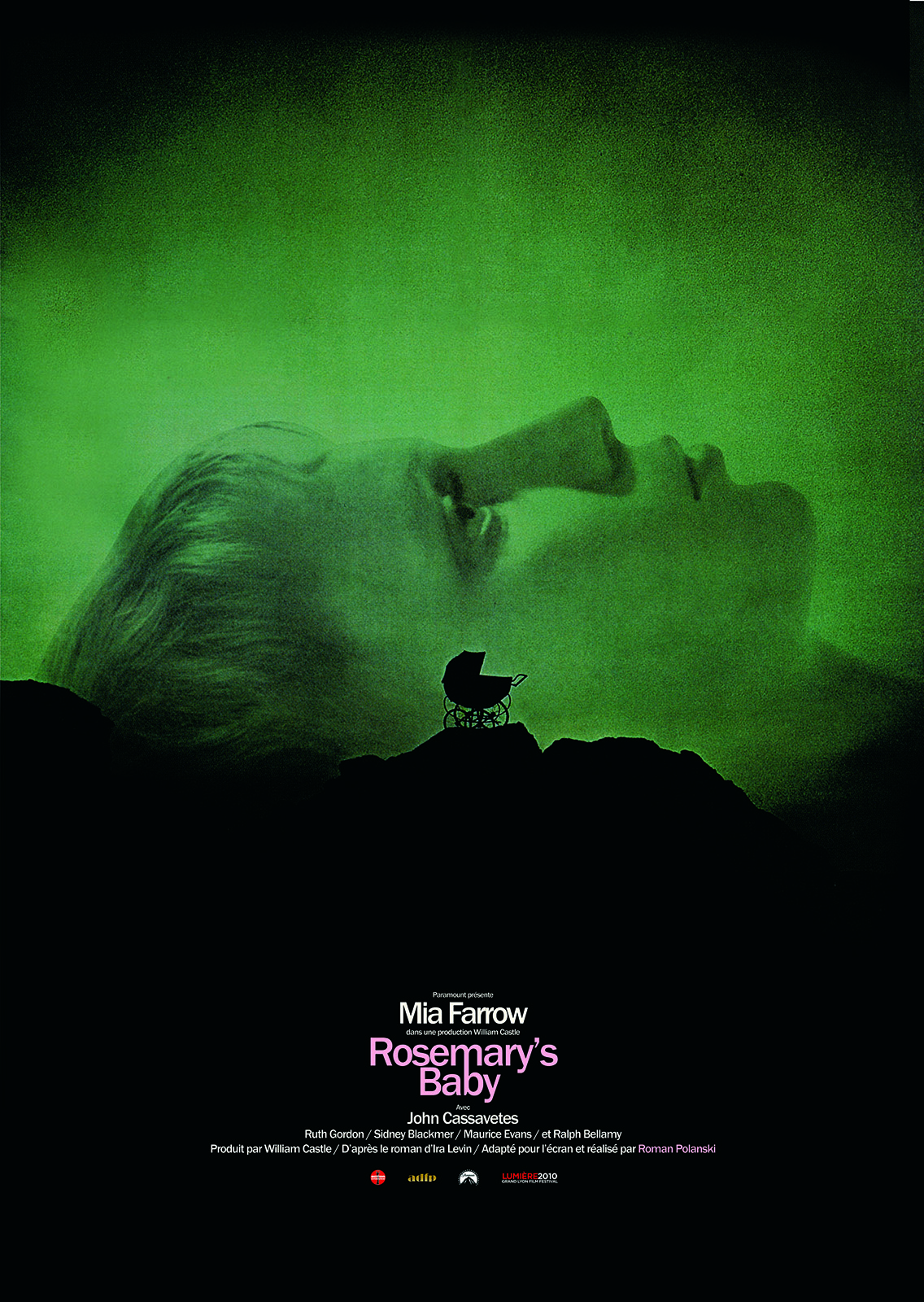
«Rosemary's Baby: devil or madness?

The film has been the subject of many and varied interpretations, especially a year after its release. The similarities between the 1968 film and the 1969 assassination of Polanski's wife Sharon Tate, who was eight months pregnant, have given rise to theories as numerous as they are far-fetched. There's no question of taking part in the great ball of conspiracies and backward questioning. Even if the case is intriguing. Even if we can't help thinking that the Satanists who murdered Polanski's wife may well have been inspired by Polanski's film. Reality catches up with fiction, in dramatic fashion. But that's not cinema. And in any case, it wouldn't change a thing. Madness can't be explained. And it's best not to play with the devil, so to speak. So let's take a look back at this masterpiece of a thriller, and nothing else.
Rosemary and Guy Woodhouse are an absolutely charming young couple. She's a housewife, he's an actor, but struggling to make it big. New beginnings and a move. The couple is seduced by an apartment in a Manhattan building. Bright, spacious and conveniently located, Rosemary insists. It's a the place to be for her. Guy gives in. Despite the sinister reputation of the building in question, which has seen a number of tragedies. It was a writer, a friend of the couple, who warned them. But never mind, «we don't believe in legends like that,» they say, all smiles and love.
A peine ont-ils emménagé qu’ils sont chaleureusement accueillis par leurs voisins de palier. Un peu insistants, voire intrusifs, mais c’est normal: ils sont vieux, ils s’ennuient, alors forcément ils sont contents d’avoir de nouveaux amis avec lesquels passer du temps. Politesse oblige, Rosemary se montre courtoise à leur égard. Du côté de Guy, l’amitié avec ce vieux couple est plus franche. Discuter avec eux lui apporte beaucoup; à tel point qu’il se rend volontiers chez ces voisins si avenants, même sans sa femme. Elle doit se reposer: elle est tombée enceinte, la même nuit de son plus terrible cauchemar. Pas de quoi en faire tout un plat: le déménagement, la fatigue, le sentiment de solitude avec un mari toujours plus carriériste. Tout ça s’explique. Par la suite, la grossesse empire la dépression et les douleurs physiques. Ça s’explique aussi.
For his part, Guy is starting to make a name for himself as an actor. He was able to take over an important role from one of his competitors, who had suddenly gone blind. All in all, all's well. But not so well. Despite the daily assistance of her neighbor, Rosemary is going from bad to worse. To the point where she suspects both her neighbors and her husband of harming her and the child she's carrying. Cut off from all contact, on her husband's orders to «rest», she nevertheless shares her distress with her writer friend. He gives her a lead, but suddenly dies without being able to help her further. The psychosis of a woman now alone, who will try at all costs to save her unborn child. But save him from what? Guy assures her that there's no problem... until the day of the birth.
Confinement
What was once considered a horror film has now been relegated to thriller status. In this case, a psychological thriller. But the change in status doesn't take anything away from the film. You need more gore these days to call yourself a horror film, and that's not always to the advantage of the films in question. Rosemary's Baby is a psychological thriller which, before raising a number of questions through its script, also generates anguish through its staging.
Krzysztof Komeda's music, particularly the opening song in a waltz-like lullaby, announces everything. The gentle, yet too gentle «la, la, la» hints at the future of anguish, anguish in the midst of innocence. Horror in a cradle. The music then evolves throughout the film into sound effects that respect the theme of anguish in innocence, with baby cries, screams, dubious squeaks and sweet, suspicious singing. The music locks us into the context of the plot.
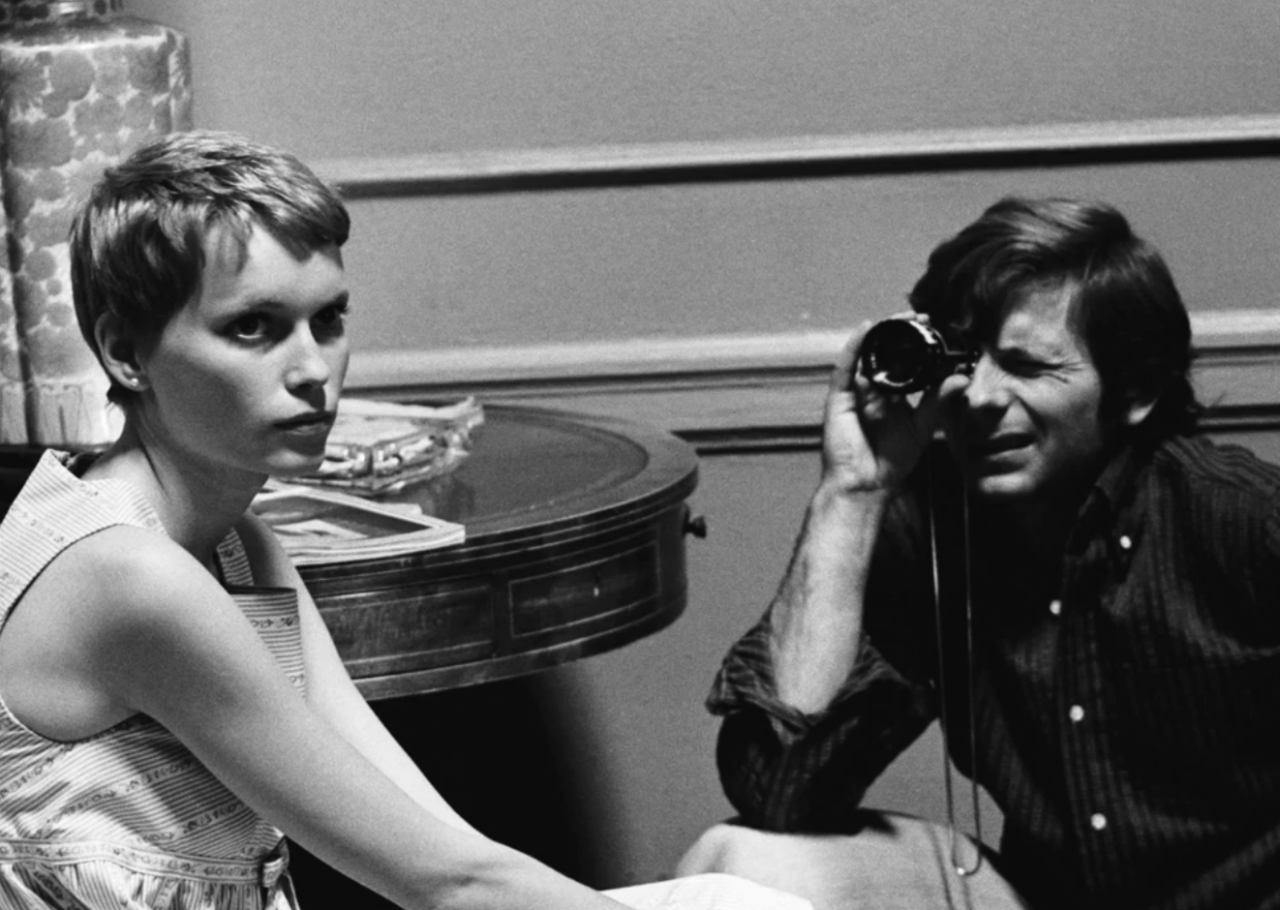
And the staging traps Rosemary, played by a sublime and excellent Mia Farrow. The cameras block and suffocate her. She's confined to her apartment, confined to her suffering pregnancy. Psychologically confined in her psychosis and destructive solitude. The shots that show this character are mostly very narrow. In one sequence, even her face is obliterated: she's walking, and all we can see are her legs up to her pelvis, as well as her husband. What has become of this seemingly happy couple? Who are they? Have the move and the pregnancy transformed them? By losing their faces, they lose their identity. They sell themselves to an existence that is no longer their own.
The transformation
The transformation is most radical in the physical evolution of the characters. Guy becomes darker and more severe. Rosemary, ever paler and skinnier. In Rosemary's case, the transformation is even frightening. She doesn't just look bad because of a difficult pregnancy, she looks like death. All the more so when she cuts her hair: we see it as a gesture of emancipation for the modern woman, and her husband severely criticizes the haircut, but above all we see a face and a head that have lost all their charm, all their breath of freedom, everything that made up Rosemary's physical identity, her personality.
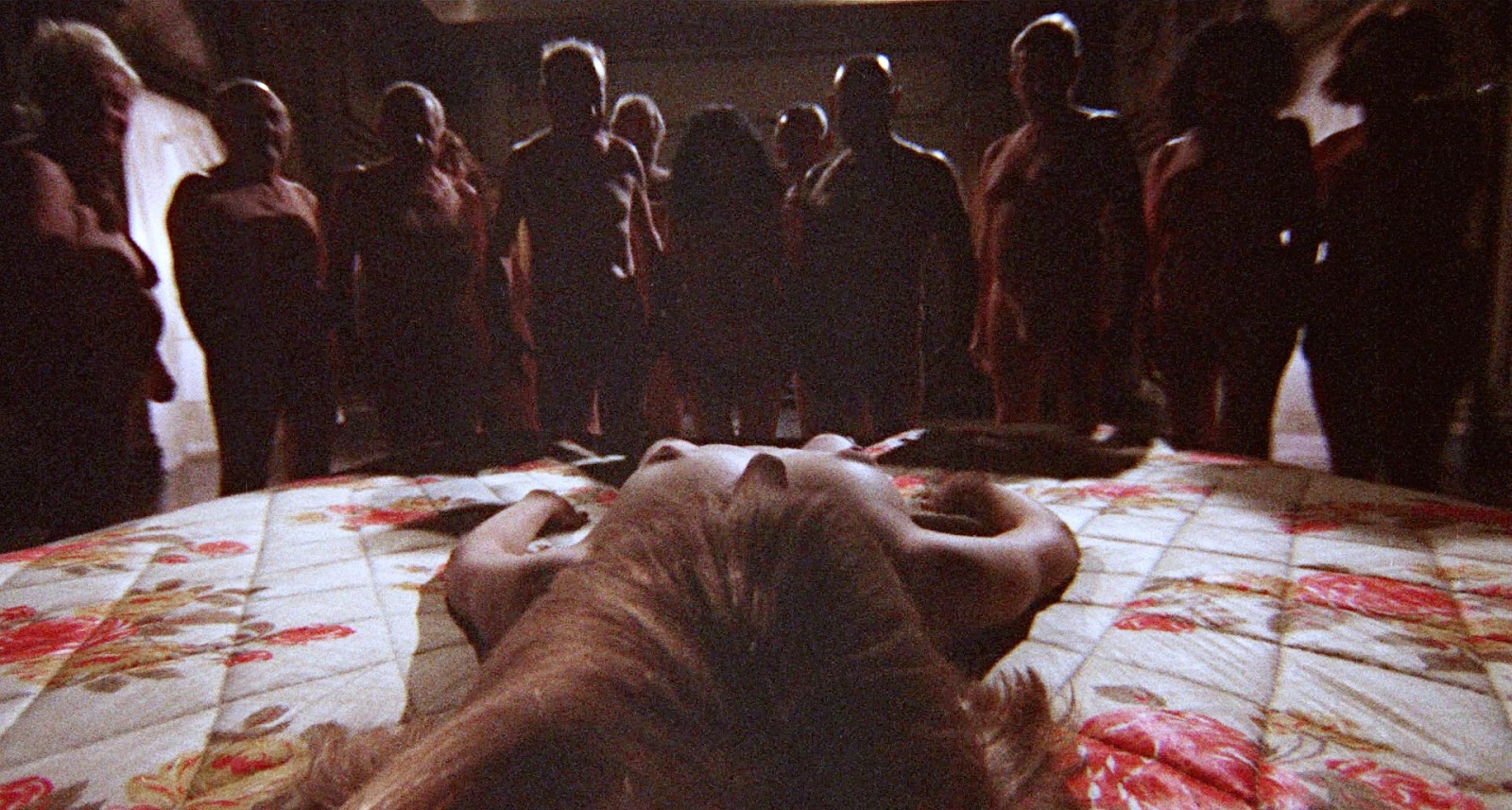
In addition to questions of confinement and loss of identity, there are those of evil, madness and phantasm. The night Rosemary became pregnant, she was unconscious. Her husband claims to have slept with her without her knowledge. «I felt like a necrophiliac,» he laughs. But she dreamt of a macabre rape. Where the rapist was the devil. Pregnant, she aches. She carries evil inside her. Isn't it often the case in life's painful experiences? What hurts us often comes from us, evil is in us. Hatred, anguish, fear and mistrust may be motivated by external factors, but if they make us suffer to the point of being able to transform ourselves, it's because they are within us. In the most intimate part of ourselves.
-
 Youth passFrom: CHF2.50 / month
 -
Digital subscription
From: CHF5.00 / month with a 30-day free trial and a CHF2.50 sign-up fee -
 Standard subscription
From: CHF10.00 / month with a 30-day free trial and a CHF2.50 sign-up fee
And madness. What is madness if not the rupture between our perception of things and the things themselves? Is Rosemary the victim of a plot? Is she living in a nightmarish phantasm? Is Rosemary crazy? Destroyed by her husband's lack of love, by a life that doesn't suit her, by a faith whose reminiscences haunt her, by a baby growing inside her? If there is a plot, does it come from her husband, her neighbors, her gynecologist? Or is there a plot inside her, in her head, in her womb? To each his own interpretation. The conclusions don't matter. What's important is to realize that, whether it's the devil or madness, we're not safe from anything in an existence without freedom of conscience, without trust in others, without self-confidence.
Write to the author: [email protected]
You have just read an open-access article from our retrospective «Polanski's cinema». Debates, analysis, cultural news: subscribe to support us and get access to all our content!
You'll also like

 French
  German
  English


Leave a comment