



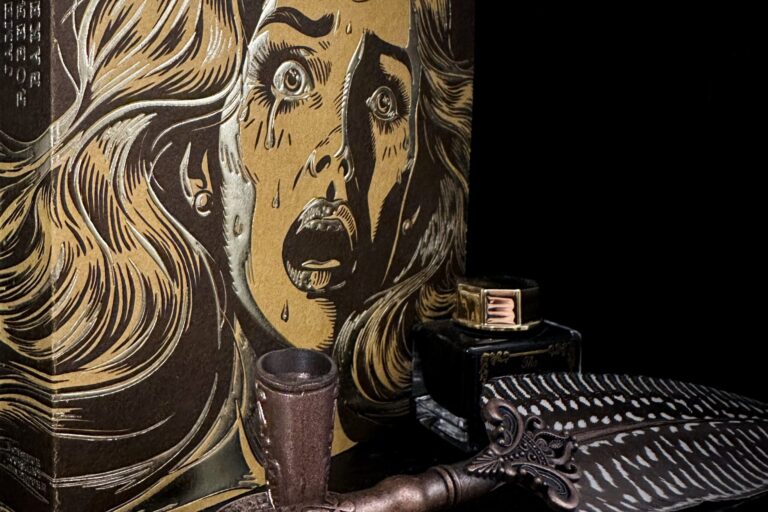
Spend New Year's Eve with «Le Gros Poète» (The Big Poet)»

Tuesday books - Diana-Alice Ramsauer
«Tell me something beautiful», «tell me a story, says kitten.» This is what one of the figures in the book tirelessly asks the fat poet. But the stories are never very happy. Sometimes they're even terrible. Swiss author Matthias Zschokke's writing is one of those books that would be better listened to than read, so poetic is the writing (and Isabelle Rüf's translation). So I read it aloud. I advise you to do the same.
– So, are you done? The Big Poet? Was it good?
– I'm not really sure how to answer that… It was intriguing.
– I guess that means it was boring.
– No, not at all. It’s just not the kind of book I’m used to reading. It’s a bit like going to an exhibition of Impressionist, Pointillist, or even abstract paintings and moving from one painting to the next. Sometimes it’s beautiful, moving; other times you just don’t get it. You soak up the artist’s vibe. You recognize recurring motifs, an evolution in style or in the subject matter. And then you walk out of there—it’s hard to put into words. So you go out for a drink with your friends, and everyone shares what they felt, which piece they liked best. But you’re not going to start telling a «story» about the exhibition. That’s the impression I get from The Big Poet.
– But there is a common thread, after all…
– Yeah, yeah, just a quick one. It’s the story of a writer or a poet. He’s fat. He’s rich. He’s kind. And he’s trying—somewhat desperately—to write the novel of the century set in the Big City, Berlin. His life seems pretty meaningless. As if it were a waiting room before death. And then, he relives that day, December 31, chapter after chapter. It’s always New Year’s Eve. We’re supposed to slip from one year into the next… but we never really move on to the next one. We’re stuck on that last day of the year. In between, the book tells us plenty of anecdotes—lots of things happen—but there’s this ritual of the «Great Poet,» always on December 31. He walks through the streets of Berlin, passes by the zoo, goes to his office, and tries to write. It feels like we’re reliving his experiences with him, over and over. It’s worth noting that the book was originally published in German in 1994. The version that just came out is the French translation. And Matthias Zschokke seems to want to depict Berlin during reunification. But he stumbles. And then suddenly, we find ourselves in spring after all, as if we’d finally moved on. As if this time it were for good, as if the Wall had truly fallen and we could move into a new era. Well… at least that’s one interpretation.
– So what are you going to write about in your column?
– Well… that's exactly it.
In this (actual) discussion, which I’m transcribing for you today, I feel I must add a few points drawn from previous debriefings and subsequent reflections.
First of all, let’s get one thing straight: I could only read this book aloud. When I started it a few weeks ago, I was unable to follow the words, the sentences, or the thoughts of this «Big Poet.» In my head, it was all over the place—just like in his, I imagine. So I tried reading it as if it were poetry. Suddenly, the rhythm of the words made much more sense. It was as if the flow itself was what mattered, rather than each group of words taken separately. It’s worth noting that the sentences sometimes span an entire page, in a succession of commas, verbs, adjectives, and sequential actions.
To round out this review, I still feel it’s necessary to describe a few of the recurring themes in this work. First of all, the character’s relationship with the people around him. He seems to have a girlfriend/lover with whom he shares moments of intimacy, sex, and comfort. And then there’s the one he calls «kitten.» A little «evil elf,» according to the back cover—or perhaps his alter ego, his guilty conscience, or his imaginary friend/enemy. He engages in conversations with this little being, who constantly asks him to tell stories. If possible, «something beautiful.» But it’s never that. Each time, they’re little tales of everyday life stripped of all pretense: we’re presented with the raw, even cynical, vision of a certain reality.
Matthias Zschokke doesn’t paint a pretty picture of the world. There’s a lot of social instability. A woman on the subway being beaten up by her husband. A story we hear, one that frightens us, makes us feel bad, but in no way prompts us to take any kind of action. Homeless people we pass on the street. They’re part of the scenery. They’re just there. And that’s it. Aging men, «in their middle years,» who think they’ve finally figured it all out, only to realize that what they’ve finally grasped now belongs to another world. The past.
Finally, the «Great Poet» waits. Nothing. He rebels against this need to to do. Always doing something. He fights against this demand for usefulness at all costs. He claims the luxury of sleeping and serving no purpose. Simply watching a butterfly land on the windowsill. Wandering through streets that no one will remember.
«That’s how he managed to ensure that, in the very end, when he died, no one actually noticed he was gone.» That was one of the few goals of his life.
One of my former French teachers classified books into three or four categories. There are «bathtub books.» «Armchair books.» «Kitchen-table books.» «Desk books.» In a way, from the «easiest» to the «most demanding.». The Big Poet It oscillates between «the bathtub» and «the office.» «Bathtub,» because it can be approached like a bird’s song. «Office,» because it’s a real maze.
Write to the author: [email protected]
Featured image:
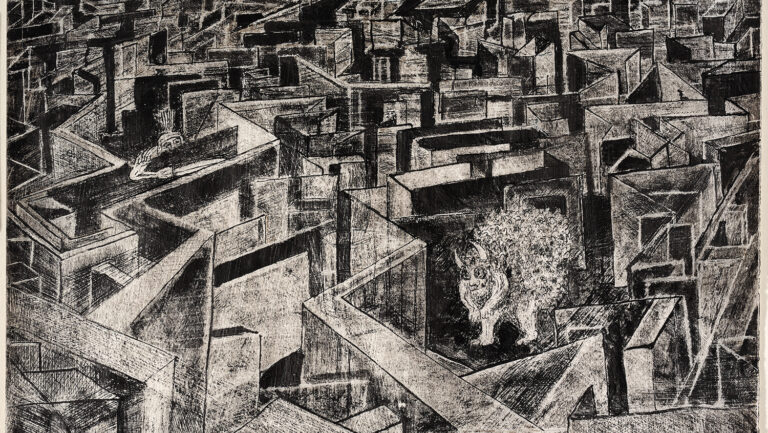
It’s still New Year’s Eve, and we’re stuck on this last day of the year, as if in a cycle: the Great Poet walks through the streets of Berlin, passes by the Zoo, goes to his office, and tries to write.
Photo Credit: © DR

Matthias Zschokke
The Big Poet
Novel translated by Isabelle Rüf
Editions Zoé
2021
205 pages
You'll also like



 French
  German
  English
Leave a comment