




«Nuit scribe», poetry after the cataclysm

Scribe night is Eva Marzi's remarkable first collection of poetry. Remarkable for its literary quality; noticed because it had already been awarded two literary prizes even before its publication: the Prix de poésie de la Société Genevoise des Ecrivains and the Prix Renée Vivien. Let's make ourselves scribes and twist verses.
While this collection officially marks Eva Marzi’s debut as a poet, it is not her first foray into literature. The Geneva-based author has participated in several literary performances at festivals and has written for the theater with the magazine The Epistle and studied and practiced creative writing at the Bern University of the Arts. Scribe night is, in fact, the result of this master's program, under the watchful eye of poets Pierre-Alain Tâche and Pierre Lepori.
«I carve in silence"
Essential Words
that speak more eloquently than the eyes
»the light"
Scribe night begins with the chapter titled «Awakening,» which sets the scene and establishes the mood for the entire collection: while we instantly understand that something has happened and that the world has been changed as a result, we are nevertheless unable to discern exactly what things were like before. The reader wanders, like the poet herself, through a mineral world—a world of lakes, forests, caves, and mountains—a world where nature is out of balance, unsettling, and disturbed.
As she wanders far and wide, the cause gradually becomes clear: language is to blame. The poet herself seems to be searching for the source of her voice, feeling her way through the silences. If she seems so disoriented, it is because she has only just awakened in the wake of a natural disaster—one she has completely forgotten, one that has stripped her of all sense of direction. Not to mention that it has entirely transformed the landscape. In this post-apocalyptic world, there is no longer any order; worse, norms have been turned upside down: trees burrow underground and hide, bees drown in honey, the air collapses, and light has vanished from the stars. Without ceasing to question, the poetess makes her way, seeking to restore order through her words amid this confusion, to restore fluidity and constancy to life, to rebuild this symbiosis, and to make reality habitable once more.
Words wander like wildlife
Eva Marzi’s language, however, does not merely illustrate this world: it is deconstructed and disruptive, yet serene, precise, and finely crafted. Imbued with tranquil images, her work distances itself from the lyricism of poets who glorify nature, since, as the author herself states, «we can no longer write about nature today the way we did a hundred years ago, in a completely romantic and naïve manner.».
There is an undeniable sense of tranquility that emanates from her poetry. Each poem is quite short and takes up little space on the page; the stanzas rarely exceed six lines. Everything seems contained and controlled; nothing spills over. But taking a step back, one can also see words that are almost isolated and lost, devoured by the white silence. Just like the poet who finds herself «suffocating under snow / that is half-pure.».
Eva Marzi's poetry is remarkable in that Scribe night offers the reader a true journey, a literary adventure, almost a chaotic odyssey. Structured in two main parts, each divided into four subparts, the collection builds an entire world and unfolds it in time with the poems. Scribe night is the exact opposite of a collection of poems with no connection to one another: the themes echo one another, the language winds its way, the landscapes shift, and the horizons unfold. Although Eva Marzi’s poetry is not narrative, a story nonetheless takes shape and weaves its way through the musicality. This allows us to affirm a fact that, at first glance, seems rather unsuited to poetry: Scribe night draws the reader in.
In a very subtle and almost imperceptible way, Eva Marzi weaves one of today’s major issues—climate change—into her poetry. She never takes a didactic approach, but instead uses this theme as a creative resource. Scribe night is a collection that very subtly explores the connections between being, nature, and language, delving into their fractures and ruptures—a collection that ultimately raises a question: What would happen if we let nature take charge of words?
«We live our lives buffeted by waves
looking for a meadow
to dry out the sunrises for us
leaving in the morning
»because he isn't growing"
Write to the author: [email protected]
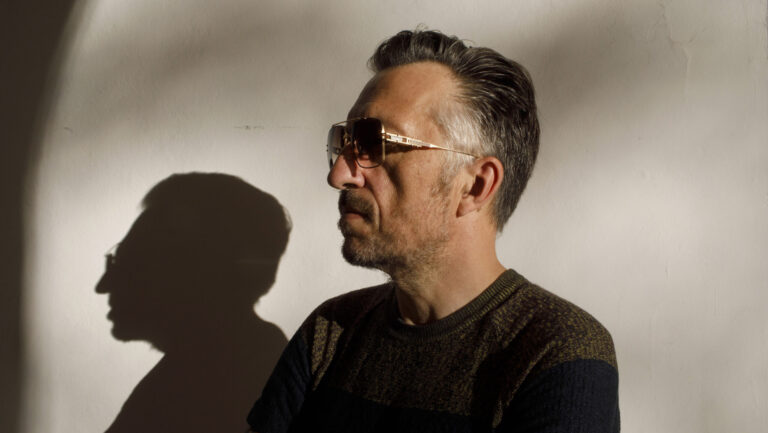
Photo credit: © Quentin Perissinotto for Le Regard Libre
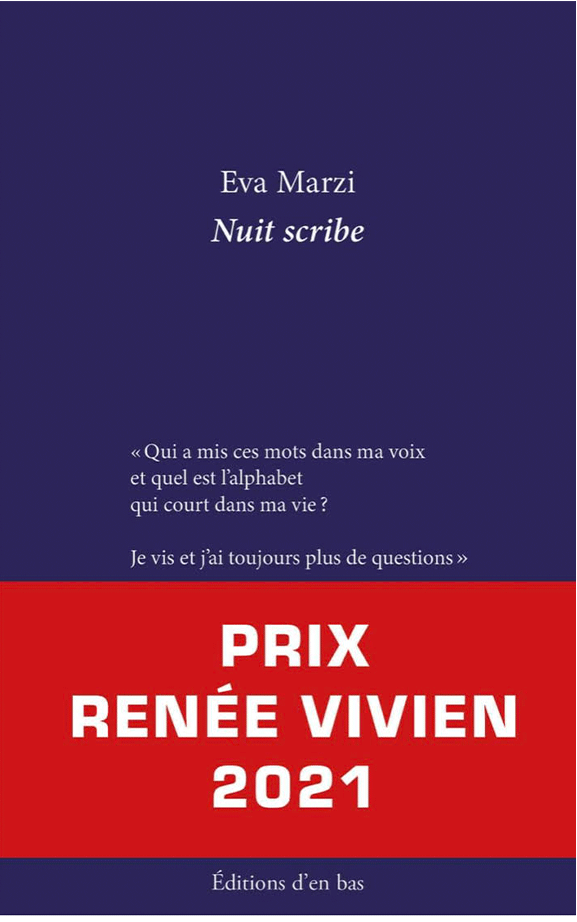
Eva Marzi
Scribe night
Editions d'en bas
2022
96 pages
You've just read an open-access article. Debates, analysis, cultural news: subscribe to support us and get access to all our content!

You'll also like



 French
  German
  English
Leave a comment